Kitchen Sink Clog Repair in Houston TX: Causes & Fixes
Learn how to troubleshoot, diagnose, and fix a kitchen sink clog in Houston, TX. Discover safe DIY steps, hidden plumbing causes, and repair options.

Understanding Your Kitchen Sink Clog
A kitchen sink clog rarely happens all at once. Usually, it begins as a sluggish drain that gradually worsens until water refuses to leave the basin. When dealing with a kitchen sink clog repair in Houston TX, understanding the underlying mechanism is essential before reaching for chemical drain cleaners or taking apart pipes under the cabinet.
Unlike bathroom sink clogs, which are typically composed of hair and soap scum, kitchen sink clogs are driven by cooking oils, grease, fats, food particles, coffee grounds, and starchy residues like rice and pasta. In many Houston homes, older galvanized steel or aging cast-iron drain lines develop interior roughness that catches these materials far more easily than modern smooth PVC pipes.
Why Kitchen Sinks Clog: Common Causes and Hidden Clues
Pinpointing where the restriction lives determines whether a simple home remedy will work or whether professional intervention is required. Here are the primary areas where kitchen sink blockages form:
- The P-Trap: The curved pipe beneath the sink catches heavy debris and foreign objects. Clogs here are usually localized and relatively easy to clear.
- The Branch Drain: The horizontal pipe running from the sink tailpiece into the wall. If grease coats these walls, recurring clogs will happen even after clearing the trap.
- The Garbage Disposal: Internal impeller jamming or a buildup of fibrous waste (like celery or onion skins) can mimic a full drain blockage.
- The Main Vent or Stack: If a drain gurgles or pulls air when another fixture runs, the issue may stem from a blocked plumbing vent on the roof rather than a pipe obstruction.
Safe Homeowner Troubleshooting and DIY Checks
Before calling a plumber, several safe, low-risk checks and steps can help diagnose or temporarily resolve a kitchen sink blockage without risking water damage or personal injury.
- Check the garbage disposal first: Ensure the unit is turned off, then look inside with a flashlight for foreign objects like silverware or bottle caps. Press the reset button on the bottom or side of the disposal housing.
- Inspect the P-trap: Place a bucket beneath the curved pipe under the sink. Unscrew the slip nuts by hand, remove the trap, and inspect it for compacted debris or congealed grease. Clean it out thoroughly and re-tighten the connections, ensuring the rubber washers are seated properly.
- Use a flat-suction plunger: Avoid harsh flange toilet plungers if possible. Fill the sink with a few inches of water to create a seal, place a flat plunger tightly over the drain opening, and use firm, vertical plunges to dislodge minor obstructions near the trap arm.
What DIY Actions to Avoid
Well-meaning homeowners frequently worsen plumbing problems through aggressive DIY methods. Avoid these common pitfalls:
- Avoid chemical drain openers: Caustic or acid-based chemical cleaners sit inside trapped water, generate extreme heat, and can warp PVC pipes or corrode older metal threads. If they fail, they leave hazardous standing chemicals in the pipes that splash back during manual repairs.
- Avoid over-using hand augers: Pushing a standard manual cable snake too aggressively through older, brittle, or corroded pipe bends can puncture the pipe wall or disconnect fittings inside the wall cavity.
- Do not ignore simultaneous slow drains: If running the kitchen sink causes water to back up into the laundry standpipe or bathtub, the problem is not a simple sink clog; it points toward a main sewer line restriction.
Professional Diagnosis and Repair Options
When DIY methods fail, a professional plumber approaches kitchen sink clogs using specialized diagnostic tools and equipment tailored to the exact nature of the blockage.
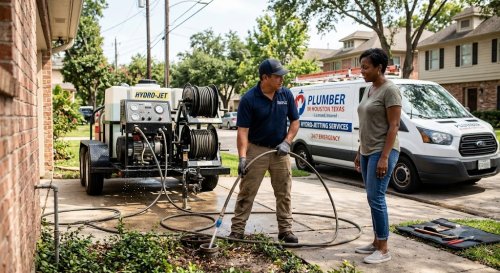
A professional will typically begin by assessing whether the restriction is isolated to the kitchen branch or located deeper in the main drain system. Mechanical drain cleaning using motorized sectional cables or drum machines can clear stubborn grease and scale far more effectively than manual tools. For severe grease buildup or recurrent clogs in older branch lines, hydro jetting—using high-pressure water streams—scours the interior pipe walls completely clean.
When pipes have suffered structural failure, sagging due to soil shifting, or severe interior corrosion, partial pipe replacement or re-piping of the affected kitchen drainage run may be recommended over repeated temporary clearings.
Factors That Affect Repair and Cleaning Costs
Pricing for kitchen sink clog repairs varies depending on the physical labor and technical scope required. Key factors influencing cost include:
- Location and accessibility: Working inside tight cabinet spaces, behind custom cabinetry, or accessing hard-to-reach sub-slab or crawlspace runs takes more time.
- Severity of the blockage: A simple trap cleaning requires minimal time, whereas heavy grease blockages requiring motorized snaking or hydro jetting involve specialized equipment and setup.
- Pipe condition and material: Clearing an obstruction in modern PVC is straightforward, whereas working with fragile, rusted, or deteriorated older piping requires extreme care to avoid breakage.
- Additional repairs: If a failed garbage disposal, leaking tailpiece, or damaged slip joint requires replacement alongside clearing the drain, parts and labor will adjust accordingly.
Questions to Ask Before Approving Major Work
If a plumber recommends extensive cleaning, line repairs, or repiping for a persistent kitchen drain problem, ask these questions before approving the work:
- Is the blockage confined to the kitchen branch line, or is it affecting the main sewer line?
- Would a standard mechanical cleaning suffice, or is hydro jetting necessary due to heavy grease or scale?
- Did a camera inspection reveal any structural pipe damage, offsets, or bellies?
- What warranty or guarantee applies to the drain clearing service?
- Does the repair quote include replacing worn-out slip joints, gaskets, or tailpieces under the sink?
Frequently Asked Questions
Why does my kitchen sink drain slowly only when I run the garbage disposal?
When a disposal drains slowly, the issue is often food buildup inside the disposal's internal chamber, the discharge tube connecting the disposal to the wall, or a partial clog immediately past the sanitary tee. The spinning impellers can also lose momentum or become partially blocked by fibrous waste.
Can pouring boiling water down my kitchen sink prevent clogs?
Boiling water helps melt minor soap and grease residue in smooth PVC pipes, but it will not eliminate solidified grease masses, hardened fat, or solid food objects stuck in pipe bends. In older metal pipes, boiling water alone rarely clears established blockages.
Why does my kitchen sink gurgle when the dishwasher runs?
Gurgling sounds indicate that trapped air is escaping through the drainage system as water forces its way past a restriction or vent limitation. This often happens when the dishwasher shares the garbage disposal inlet and the shared branch line is narrowing due to grease accumulation.
Is it safe to use chemical drain cleaners on a completely blocked kitchen sink?
No. Chemical drain cleaners require standing water to interact or simply sit against the blockage. If the sink is completely blocked, the chemicals will remain pooled in the pipe or sink basin, creating extreme splash hazards when a homeowner or plumber attempts physical disassembly.
How do I know if my kitchen sink clog is actually a main sewer line issue?
If clearing the P-trap and branch line does not restore flow, or if water bubbles up in other household drains—such as floor drains, showers, or toilets—when you run the kitchen sink, the blockage is located further downstream in the main sanitary sewer system.