Introduction
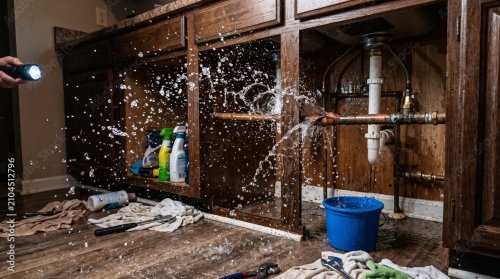
Nothing unsettles a homeowner quite like the faint, persistent sound of dripping behind a sheetrock wall or an inexplicable spike in the monthly utility bill. Water is relentless; given the smallest opportunity, a high-pressure line failure can quietly saturate subflooring, degrade structural framing, and breed aggressive mold spores long before surface moisture ever becomes visible. High ambient humidity, soft clay soil movements, and aggressive municipal water demands make hidden plumbing leaks one of the most common—and costly—property threats facing local residents.
If you are dealing with unexplained damp spots, unexpected drops in line pressure, or warm areas on your ground floor, securing professional leak detection in Houston is the single critical step to safeguarding your foundation and preserving your property value. Below is an exhaustive field manual written from decades of hands-on plumbing experience to help you understand, diagnose, and resolve hidden leak threats before they turn into full-blown structural emergencies.
Critical Warning Signs: When Your Home is Sounding the Alarm
Modern plumbing systems operate under high hydrostatic pressure, meaning even a pinhole breach will continuously release water into your building's envelope. Catching a leak early requires paying close attention to these subtle sensory indicators:
Auditory & Visual Clues
-
Auditory Clues: Hearing a continuous "hissing," whistling, or water-running sound when every faucet, showerhead, and water-using appliance in the house is completely shut off.
-
Unexplained Water Meter Movement: The triangular low-flow indicator or digital reader on your main water meter continues to register flow even after locking the main home shut-off valve.
-
Thermal Floor Anomalies: Cold or unusually warm spots under tile, hardwood, or carpet, which frequently signal a pressurized hot or cold supply line failure inside or beneath the concrete slab.
Structural & Olfactory Indicators
-
Wall & Ceiling Discoloration: Bubbling paint, peeling wallpaper, or dark rings on ceiling sheetrock indicating active overhead pipe breaches.
-
Pungent, Musty Odors: Lingering damp earth, mildew, or sewer gas smells originating from crawlspaces, wall cavities, or floor registers.
-
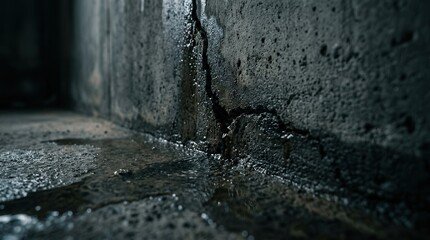
Foundation Cracks & Soil Erosion: Fresh hairline fractures in exterior brick veneer or soil pulling away from the foundation perimeter due to excessive underground saturation.
Ignoring these early warnings accelerates structural degradation. Unresolved leaks rot subflooring, compromise timber framing, destroy insulation performance, and invite costly mold remediation projects that insurance carriers frequently deny if classified as ongoing, neglected maintenance.
Root Causes: Structural and Environmental Culprits
Understanding why pipes fail requires looking at what happens beneath the floorboards and inside structural walls over time:
[System Factors] ──► Soil Shifts & Slab Stress  ──┐
[Chemicals]      ──► Mineral & Chloramine Wear ──┼─► Structural Pipe Failure
[Environmental]  ──► Hydrostatic Pressure Spikes ──┘
-
Ground Movement & Slab Stress: Local soil conditions—predominantly expansive clays—undergo dramatic expansion during wet cycles and severe contraction during dry heat spells. This constant ground shifting places extreme bending stress on copper, galvanized steel, and PVC lines encased in or laid beneath concrete slab foundations.
-
Hard Water Mineral Scaling & Chloramines: Highly chlorinated municipal supply lines, paired with hard water minerals, create an aggressive internal environment. Over years of service, chloramines degrade rubber seals and thin out copper pipe walls via chemical pitting, leading to pinhole leaks.
-
Hydrostatic Pressure Fluctuations: Municipal pressure spikes from municipal main surges flex older pipe joints, weakening soldered fittings and threaded connections until they breach.
-
Aging Infrastructure & Dissimilar Metals: Older homes featuring galvanized steel connected directly to copper without dielectric unions suffer rapid galvanic corrosion, rusting out structural threads from the inside out.
What Is Leak Detection? Decoding the Mechanism
At its core, professional leak detection is the systematic science of pin-pointing hidden liquid breaches without destructively tearing down walls or jackhammering concrete foundations on a guess.
In a perfectly closed residential plumbing system, fluid flows predictably under controlled pressure. When a leak occurs, fluid escapes the pipe geometry into surrounding soil, air, or building materials, creating three distinct phenomena:
-
Acoustic frequency shifts (the physical sound of high-pressure fluid escaping an orifice).
-
Thermal differentials (temperature variance caused by escaping hot or cold fluid).
-
Pressure drops (measurable losses in localized hydrostatic retention).
| Metric / Aspect | Standard Pressurized Line | Breached Internal Line |
| System Pressure | Steady continuous static PSI (40–60 PSI) | Gradual or sudden static pressure drop |
| Acoustic Profile | Silent during non-use periods | Continuous low-to-high frequency hiss/rattle |
| Thermal Footprint | Uniform ambient wall/floor temps | Distinct hot/cold plumes on thermal scans |
| Structural Impact | Moisture equilibrium retained | localized saturation, material swelling |
DIY Reality Check: What You Can Safely Fix vs. When to Step Back
While every property owner wants to save money on maintenance, knowing where safe DIY ends and high-risk professional plumbing begins is crucial for avoiding catastrophic water damages.
Safe Homeowner Actions
-
Visual Appliance Checks: Inspecting exposed flex-braided lines behind toilets, washing machines, ice makers, and under-sink stop valves.
-
Water Meter Isolation Test: Turning off every fixture, recording the water meter dial, waiting 30 minutes, and re-checking to verify if the leak is on the main domestic supply side.
-
Toilet Dye Testing: Dropping food coloring or dye tablets into the toilet tank to check for leaking flush valves and flapper failures leaking into the bowl.
The Professional Danger Zone
-
Jackhammering Concrete Slabs: Never attempt to break concrete to reach a suspected pipe without precise acoustic locating; hitting an electrical conduit, tension cable, or adjacent line will cause thousands in extra damage.
-
Cutting into Enclosed Chase Walls: Blindly cutting sheetrock near high-voltage outlets or main drain stacks can create electrical hazards and structural compromises.
-
Using Chemical Pipe Sealants: Pouring "pour-in" pipe sealant compounds into domestic drinking lines is a health violation that fouls fixtures and clogs entire valve manifolds.
Advanced Diagnostics: The Professional Tool Arsenal
Eliminating guesswork requires utilizing non-invasive diagnostic equipment engineered specifically for pressurized fluid dynamics:
+-------------------------------------------------------------------+
|                  THE PROFESSIONAL DIAGNOSTIC ARSENAL              |
+------------------------------------+------------------------------+
| Tool                               | Primary Function             |
+------------------------------------+------------------------------+
| Digital Acoustic Amplifiers        | Isolate sub-surface noise    |
| Infrared Thermal Cameras           | Map thermal wall/slab plumes |
| Tracer Gas (5% Hydrogen / 95% N2)  | Locate micro pinhole breaches|
| Push-Rod HD Sewer Cameras          | Detect internal line cracks  |
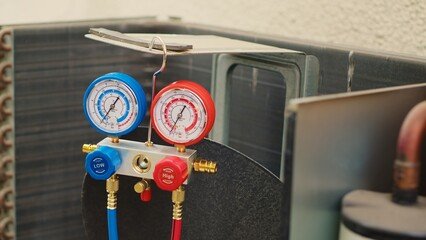
| Digital Manometer Gauges           | Precision static drop test   |
+------------------------------------+------------------------------+
-
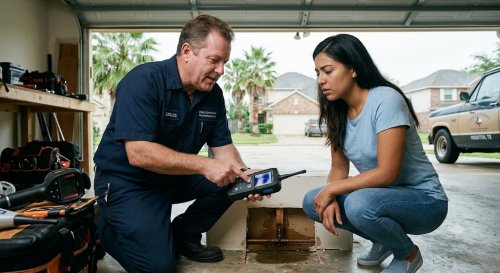
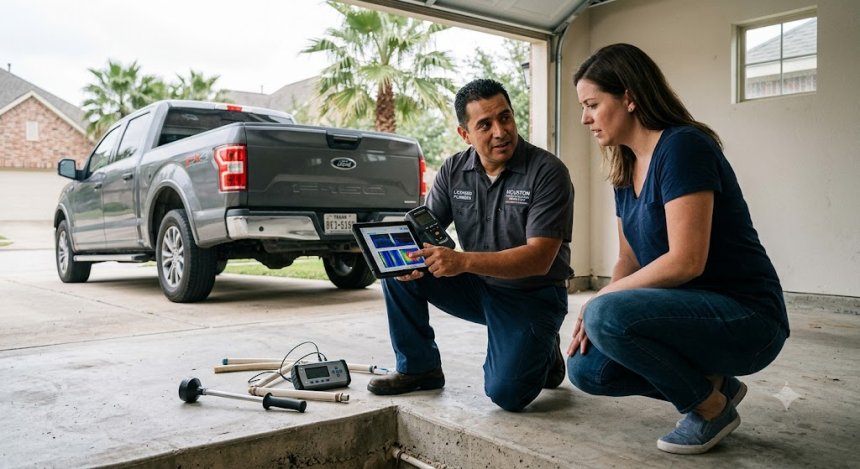
Digital Acoustic Amplifiers & Ground Microphones: These units convert high-frequency escape vibrations traveling through soil, concrete, and piping into audible sound profiles, isolating leak coordinates down to the inch.
-
Infrared Thermal Imaging Cameras: High-resolution thermography registers tiny temperature variations across drywall, subfloors, and concrete, exposing active hot water slab leaks or hidden moisture pathways inside wall cavities.
-
Tracer Gas Leak Detection: For micro-leaks that don't produce enough acoustic energy, a non-toxic mixture of hydrogen and nitrogen is charged into isolated lines. Hydrogen's light molecular structure escapes through micro-fractures, where hand-held sensor probes detect it at ground level.
-
High-Definition Push-Rod Sewer Cameras: Optical inspections allow technicians to travel deep inside 3-inch and 4-inch drain stacks to locate root intrusions, collapsed lines, shifted couplings, or hidden sewer cracks.
Professional Diagnostic & Repair Workflow
Resolving a hidden pipe failure follows a strict, step-by-step technical standard to protect property integrity and meet local plumbing code:
Unique Expert Insights: Hard Truths Homeowners Learn Too Late
-
Temporary Patch Kits Are Short-Lived: Rubber wrap clamps and epoxy putty kits are temporary emergency stops; they do not address system-wide metal fatigue and will fail under continuous high pressure.
-
Chemical Drain Cleaners Destroy Metallic Plumbing: Pouring caustic chemical drain openers into slow lines generates an exothermic reaction that melts thin PVC walls and accelerates severe corrosion in cast iron and copper.
-
Unlicensed Repairs Void Insurance Coverage: Property insurance providers frequently reject water damage claims if the underlying repair was performed by an unlicensed handyman without valid permits or code compliance.
-
Neglecting Small Drips Leads to Foundation Heave: A slow, sub-slab leak releasing just a few gallons a day can expand underlying clay soil, cracking foundation beams and leading to structural stabilization costs.
-
Annual Preventive Inspections Cost Far Less Than Emergency Restorations: A single midnight emergency extraction and structural drying protocol costs vastly more than maintaining routine pressure checks and annual plumbing tune-ups.
Comprehensive Home Plumbing Maintenance Framework
Safeguarding a home requires consistent, seasonal attention to prevent unexpected line failures and sudden plumbing emergencies:
+-------------------------------------------------------------------+
|               PREVENTIVE MAINTENANCE CHECKLIST                    |
+------------------------------------+------------------------------+
| Season                             | Maintenance Task             |
+------------------------------------+------------------------------+
| Spring / Summer                    | Clear spigots & check PRV    |
| Fall / Winter                      | Insulate exposed copper      |
| Year-Round                         | Monitor water meter dial     |
+------------------------------------+------------------------------+
Spring / Summer Actions
-
Check Pressure Reducing Valves (PRVs): Ensure incoming municipal water pressure stays within the safe 45–65 PSI operating range using a simple hose-bib gauge.
-
Inspect Exterior Hose Spigots: Check vacuum breakers and outdoor hose bibs for winter freeze damage or subtle packing-nut leaks.
-
Test Irrigation Isolation Valves: Inspect double-check backflow preventers for minor weep leaks before turning on seasonal lawn sprinklers.
Fall / Winter Preparation
-
Insulate Exposed Line Transitions: Wrap all exposed copper lines in unconditioned attics, garages, and exterior chase enclosures with foam insulation.
-
Disconnect Outdoor Hoses: Disconnect garden hoses before cold fronts to allow hose bibs to drain fully and prevent trapped water from bursting internal pipes.
-
Flush Water Heater Sediment: Drain accumulated mineral scale from tank bottoms to protect lower heating elements and maintain proper heat transfer efficiency.
Year-Round Preventive Habits
-
Monitor the Main Water Meter: Conduct a quarterly shut-off test on your water meter to catch non-audible leaks early.
-
Install Braided Stainless Steel Flex Lines: Replace all old rubber supply lines on toilets, washing machines, and ice makers with durable braided stainless steel connectors.
-
Install Strainers & Avoid Chemicals: Use mesh drain strainers in sinks and tub drains to block hair and debris, and avoid using harsh chemical drain cleaners entirely.
Financial Breakdown: Cost Factors & Investment Realities
Plumbing repair rates are dictated by localized labor demands, structural accessibility, and the scope of modern diagnostic equipment required:
Cost Factors Breakdown:
- Diagnostic & Equipment Fees (Acoustic, Thermal, Gas)
- Pipe Depth & Structural Accessibility (Open Access vs. Slab Tunneling)
- Material Selection (PEX-a Tubing vs. Type L Hard Copper)
- Municipal Permitting & Code Inspection Fees
-
Diagnostic & Dispatch Fees: Professional leak detection utilizes tens of thousands of dollars in specialized digital technology. Diagnostic fees usually cover accurate pin-pointing and written findings.
-
Accessibility Challenges: Locating a leak above an open crawlspace costs significantly less than accessing a buried line beneath a reinforced concrete slab, which requires precision tunneling or targeted jackhammering.
-
Material Selection: High-grade PEX-a expansion systems offer cost efficiency, corrosion resistance, and flexible routing options, whereas heavy-wall Type L hard-drawn copper requires precision soldering and specialized fittings.
-
Permitting & Code Requirements: Major water line replacements or main yard line pulls require city permits and official inspections to ensure long-term structural compliance and property resalability.
Emergency Protocol: When Immediate Dispatch Is Non-Negotiable
Not all plumbing issues can wait for regular business hours. Seek 24/7 emergency dispatch immediately if you encounter any of these dangerous conditions:
-
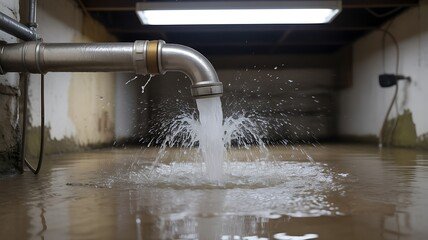
Uncontrollable Pressurized Burst Pipes: Active water gushing through ceilings, light fixtures, or sheetrock walls that cannot be stopped by local fixture shut-off valves.
-
Sewage Backing Up Into Living Spaces: Main sewer line blockages causing blackwater to overflow through shower bases, floor drains, or toilets.
-
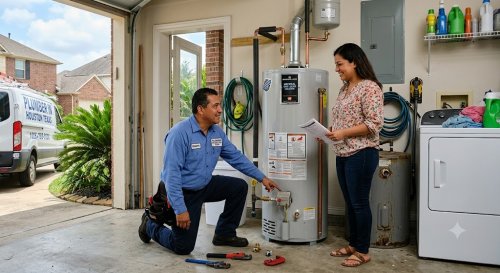
Gas-Fueled Water Heater Leaks: Water pooling around gas water heaters accompanied by hissing sounds or gas odors, posing immediate thermal and electrical hazards.
-
Water Flooding Electrical Outlets or Panel Boxes: Active leaks dripping directly onto service panels, sub-panels, or major home appliances.
Frequently Asked Questions (FAQs)
How do plumbers locate a leak inside or underneath a concrete slab without tearing up the floor?
Plumbers utilize digital acoustic amplification equipment, ground microphones, and infrared thermal imaging cameras. These non-destructive tools allow technicians to listen through concrete, detect sub-surface temperature variations, and pin-point line breaches before making surgical access cuts.
Why did my water bill suddenly double when I haven't changed my water usage habits?
A sudden, unexpected jump in your monthly water bill usually indicates a continuous, pressurized supply line failure. Even a tiny pinhole leak in a domestic supply line running at 60 PSI can waste over 1,000 gallons of water per day if left unrepaired.
Can a hidden water leak cause foundation problems in my home?
Yes. Continuous underground water leaks saturate expansive clay soils, causing them to expand and push upward against foundation beams (heave). Once the water stops or drains away, the soil collapses, leading to foundation settling, floor cracks, and door frame misalignment.
Will property insurance cover the cost of locating and repairing a hidden pipe leak?
Most standard homeowners policies cover the costs associated with accessing and repairing structural damage caused by sudden and accidental water discharges (such as opening up a wall or tearing down damaged drywall). However, they may not cover the specific pipe fitting itself if deemed maintenance-related. Always verify policy details with your insurance carrier.
What is the difference between spot-repairing a slab leak and completely rerouting the line?
A spot repair involves breaking through the concrete floor or tunneling underneath to fix a single damaged section of pipe. A line rerout bypasses the damaged, underground pipe entirely by running a fresh, seamless PEX line through the home's attic and wall chases, avoiding future slab breaks.
How can I quickly test if my home has a hidden water leak right now?
Turn off every faucet, showerhead, hose bib, and water-using appliance inside and outside your property. Locate your main water meter box, open the lid, and observe the low-flow indicator (a small dial, triangle, or digital read-out). If the indicator continues to move while all fixtures are off, water is escaping somewhere in your system.
Why are chemical drain cleaners bad for my plumbing system?
Chemical drain openers rely on harsh caustic agents like sodium hydroxide or sulfuric acid. These chemicals generate intense heat inside the pipe (an exothermic reaction) that softens PVC joints, corrodes copper walls, and degrades older cast iron lines, leading to major leaks down the road.
Is PEX piping better than copper for underground pipe repairs?
Modern PEX-a piping offers significant advantages over copper in subterranean applications. It is fully flexible, resists chemical pitting from chloramines and hard water minerals, expands slightly under freezing conditions without bursting, and eliminates underground soldered joints that can fail over time.
How high should my home's incoming water pressure be?
Standard residential water pressure should safely range between 45 and 65 PSI (pounds per square inch). Water pressure exceeding 80 PSI damages appliance valves, flex lines, and pipe solder joints, significantly increasing the risk of sudden pinhole leaks.
Why Local Property Owners Choose Leak Detection in Houston
When dealing with hidden water line leaks, choosing the right plumbing partner makes all the difference between a swift, clean repair and weeks of destructive disruption.
Our team approaches every service call with deep local expertise and field-proven diagnostic technology:
-
Licensed, Insured, & Background-Checked Technicians: Every member of our plumbing team holds current state licensing, receives ongoing technical training, and undergoes strict background checks.
-
Upfront, Flat-Rate Pricing: We provide comprehensive digital estimates before any work begins. You will never face unexpected hidden charges or surprise overtime fees.
-
Advanced Non-Invasive Diagnostic Gear: We invest in high-resolution acoustic listening devices, thermal imaging scanners, and tracer gas systems to isolate leaks accurately while protecting your flooring and drywall.
-
Local Service Expertise: We bring extensive, practical knowledge of local housing architectures, clay soil behaviors, and municipal water systems.
-
Customer-First Workmanship Guarantees: We back every repair, repipe, and diagnostic inspection with robust warranties to ensure total peace of mind for your home or commercial property.