Critical Warning Signs: When Your Water Heater Calls for Help
Before a water heater completely fails and leaves you taking ice-cold showers, it usually sends out clear signals. Ignoring these early warning signs often leads to unexpected flooding, structural water damage, and inflated utility bills. Keep an eye out for these direct indicators:
-
Inconsistent Temperatures or Cold Spurt: If your hot water runs out halfway through a short shower or fluctuates rapidly between scalding and freezing, your heating elements or gas burner assemblies are likely degrading.
-
Rusty or Discolored Water: Brown, red, or hazy water coming exclusively from your hot water taps points directly to internal tank corrosion. Once the steel lining deteriorates, a tank leak is imminent.
-
Auditory Clues (Rumbling, Popping, and Whistling): Heavy popping or deep rumbling sounds coming from the unit mean thick mineral sediment has trapped water at the bottom of the tank, causing it to boil excessively against the lower metal plates.
-
Visible Moisture or Standing Water: Any pooling water around the base of the tank, temperature-pressure relief (TPR) valve, or line connections requires immediate professional assessment.
-
Olfactory Indicators (Rotten Egg or Mildew Smells): Foul odors from your hot water fixtures generally point to bacterial growth inside the tank reacting with the sacrificial anode rod.
Root Causes: Why Water Heaters Fail prematurely in Houston Homes
Houston’s unique coastal environment and water infrastructure present distinct challenges for residential and commercial water heating systems. Understanding these local factors helps explain why units degrade faster here than in other regions.
Hard Water Mineral Scaling and Calcification
Houston’s municipal water source carries high concentrations of dissolved minerals, specifically calcium and magnesium. Over time, these minerals precipitate out of the water as it heats, forming a hard layer of scale at the bottom of the tank. This scale acts as an insulating barrier, forcing your burner or heating element to work twice as hard, overheating the tank metal and drastically shortening its lifespan.
High Humidity and Coastal Corrosion
The gulf coast humidity accelerates external corrosion on metal fittings, gas lines, and venting systems. When high ambient humidity combines with small, minor plumbing leaks, external rust develops rapidly on top connections and shut-off valves.
Water Pressure Spikes and Thermal Expansion
City water mains in the greater Houston area frequently experience pressure shifts. As water inside a closed plumbing system heats up, it expands. Without a properly sized thermal expansion tank installed, this repeated internal pressure spike strains the internal welds of your water heater, eventually causing a catastrophic wall rupture.
Sacrificial Anode Rod Exhaustion
Every tank water heater relies on a sacrificial anode rod to attract corrosive elements away from the steel tank walls. In regions with dense water chemistry, these rods deplete in as little as 2 to 3 years. Once the anode rod is fully consumed, corrosive elements begin eating directly into the tank body.
Financial Breakdown: Cost Factors & Investment Realities
Replacing or installing a hot water system involves a dynamic combination of equipment selections, structural modifications, and labor considerations. Here is a breakdown of the primary variables that shape your overall investment:
-
Unit Type (Tank vs. Tankless): Traditional tank-style water heaters generally carry lower upfront equipment costs but higher long-term energy operational costs. On-demand tankless units require a higher initial equipment investment but offer superior energy efficiency and a significantly longer operating lifespan.
-
Power Source Requirements: Transitioning between fuel sources—such as converting from an electric system to gas or vice versa—requires updating electrical subpanels, installing dedicated circuits, or retrofitting gas lines to handle higher BTU requirements.
-
Venting & Code Compliance Upgrades: Modern local plumbing codes require specific venting protocols to prevent dangerous carbon monoxide buildup. Older homes often need upgraded venting pipes, pan drains routed to the exterior, or thermal expansion tank additions to pass official inspection.
-
Accessibility & Installation Complexity: Units tucked away in tight attics, cramped closets, or multi-story commercial spaces require specialized handling equipment, additional labor, and careful staging to ensure a safe, damage-free removal and installation process.
What Is Water Heater Replacement & Installation in Houston? Decoding the Mechanism
At its core, a home water heating system is a carefully balanced pressurized vessel designed to heat, store, or continuously deliver potable hot water to your home's taps. When you schedule a professional Water Heater Replacement & Installation in Houston, you are replacing a complex appliance that balances high-voltage electricity or natural gas, high thermal energy, and constant water pressure.
In a standard storage-tank system, cold water enters through a dip tube that directs incoming water to the bottom of the tank. Thermostats signal the heating elements (electric) or gas burner (gas) to raise the water to the set temperature, typically 120°F. As water heats, it naturally rises toward the top outlet pipe, ready for delivery when you turn on a faucet.
When a water heater fails, this delicate balance breaks down. Internal tanks corrode, thermostat controls fail, gas control valves fall out of calibration, or sediment traps heat, causing severe internal metal fatigue. A full replacement involves safely isolating energy sources, draining gallons of heavy sediment-laden water, modifying gas, water, and vent lines to current local codes, and setting a precision-engineered system designed to perform reliably for years to come.
Comprehensive Home Plumbing Maintenance Framework
Proactive care extends the life of your plumbing system, saves money on utility bills, and prevents sudden water damage emergencies. Use this structured maintenance framework to keep your home's system running smoothly:
Spring/Summer Checks
-
Inspect Exterior Hose Bibs: Check outdoor spigots for hairline cracks caused by seasonal pressure changes or minor cold snaps.
-
Test the Sump Pump: Pour a bucket of water into the sump pit to ensure the float switch activates and pumps water away cleanly.
-
Verify Main Water Shut-off: Turn your home's main water valve off and on once a year to make sure the gate or ball valve doesn't freeze in place due to mineral buildup.
Fall/Winter Preparation
-
Flush the Water Heater Tank: Drain several gallons from the water heater drain valve to clear out accumulated bottom sediment.
-
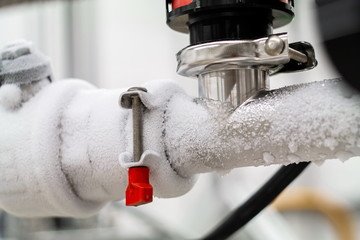
Insulate Exposed Pipes: Wrap exposed plumbing pipes in garages, unconditioned crawl spaces, or exterior walls with high-density foam sleeves.
-
Test the Pressure Relief (TPR) Valve: Lift the lever on your water heater’s TPR valve briefly to ensure it discharges water freely and seats back down tightly without dripping.
Year-Round Habits
-
Avoid Chemical Drain Cleaners: Use mechanical snakes or enzyme-based cleaners instead of harsh chemical agents that weaken pipe walls.
-
Keep Strainers in All Drains: Catch hair, soap scum, and debris in showers and sinks before material enters the main branch lines.
-
Monitor Static Water Pressure: Keep a low-cost water pressure gauge on an outdoor spigot to ensure your municipal water pressure stays safely between 45 and 65 PSI.
Professional Diagnostic & Repair Workflow
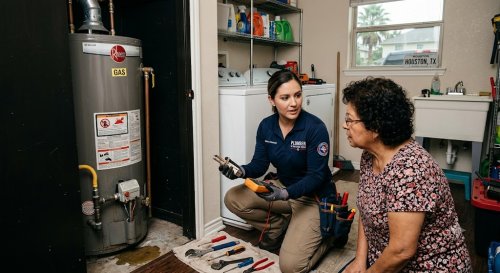
A licensed plumbing professional approaches water heater installations and replacements with systematic precision to guarantee safety, local code compliance, and long-term operating efficiency. Here is how the process works from start to finish:
-
Non-Invasive Triage & Safety Isolation: The technician immediately shuts off the gas supply line or flips the dedicated electrical circuit breaker, followed by isolating the cold water shut-off valve to make the job site safe.
-
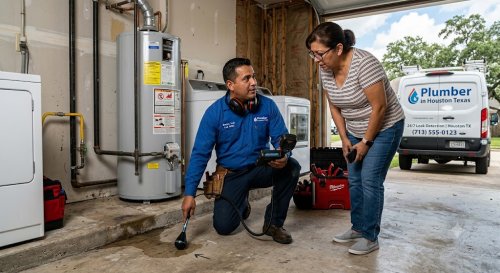
Precision Diagnostic & System Assessment: The technician checks static line pressure, tests electrical continuity, evaluates vent clearances, and checks thermal expansion parameters to determine if a simple repair or full unit replacement is necessary.
-
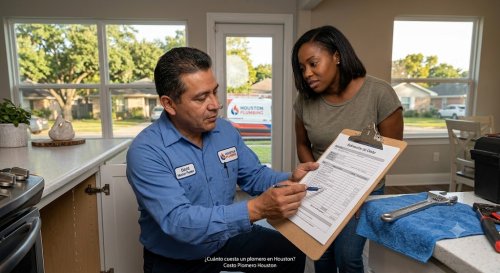
Transparent, Upfront Options & Written Estimating: You receive clear, itemized options outlining unit choices, sizing calculations (GPM/First-Hour Rating), and full project costs before any physical installation work begins.
-
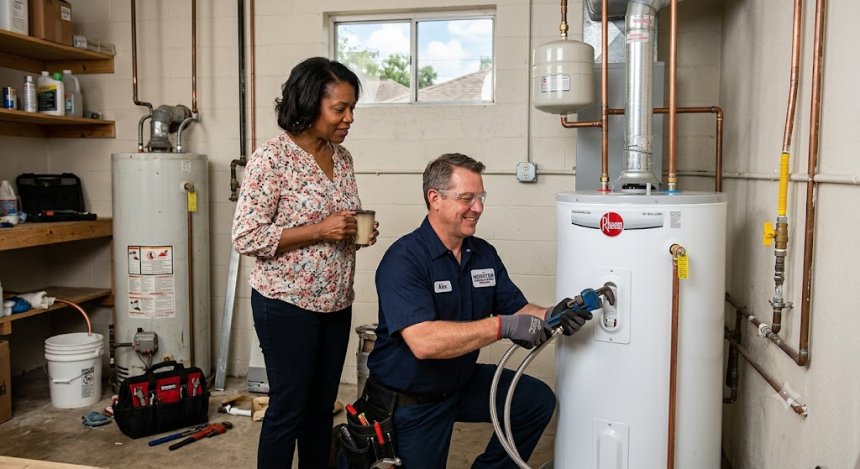
Code-Compliant Removal & Installation: The old system is drained and safely removed. The new unit is leveled, plumbed with code-compliant copper, PEX, or flex connectors, connected to dedicated gas or electric feeds, and fitted with an expansion tank and drip pan.
-
Pressure Testing, Flow Verification, & Site Clean-Up: The line is fully pressurized to verify zero leaks, gas lines undergo electronic bubble/leak detection, hot water flow is confirmed at every indoor fixture, and the work area is thoroughly cleaned and restored.
Unique Expert Insights: Hard Truths Homeowners Learn Too Late
-
Flush Valves Made of Plastic Are Ticking Time Bombs: Original factory drain valves made of cheap plastic turn brittle over time. Upgrading to a solid brass full-port drain valve during installation allows easy annual flushing without the risk of the valve snapping off in your hands.
-
Chemical Drain Chemicals Destructive Potential: Pouring harsh acid or lye drain openers down household pipes does little to clear heavy mainline blockages, but it aggressively corrodes pipe walls, melts PEX fittings, and creates serious hazards for the technician who eventually unblocks the pipe physically.
-
Anode Rods Are Cheaper Than New Tanks: Replacing a consumed $40 anode rod every 3 to 5 years can double the lifespan of your storage water heater tank, saving you thousands in early replacement costs.
-
Ignoring Water Pressure Ruptures Appliances: High municipal water pressure (over 80 PSI) ruins dishwasher valves, washing machine hoses, and water heater tanks from the inside out. Installing and maintaining a reliable Pressure Reducing Valve (PRV) protects every fixture in your building.
-
Unlicensed Handyman Work Voids Manufacturer Warranties: Major water heater manufacturers explicitly state in their warranty terms that installation or service by an unlicensed individual immediately voids all parts and tank replacement coverage.
Advanced Diagnostics: The Professional Tool Arsenal
Modern plumbing and water heating diagnostics rely on specialized technology to locate problems accurately without unnecessary demolition or structural damage:
-
Thermal Imaging Cameras: Technicians use infrared thermal imagery to detect hidden hot water leaks behind drywall, beneath slab foundations, or inside insulated structural walls.
-
Digital Manometers & Fuel Gas Analyzers: These instruments measure exact gas line pressures and evaluate exhaust gas composition to ensure gas burners burn efficiently without leaking dangerous uncombusted fuel or carbon monoxide.
-
Electronic Acoustic Leak Detectors: High-frequency listening devices magnify sound waves underground or inside floors, allowing plumbers to pinpoint pressurized water line ruptures precise to the inch.
-
Push-Rod High-Definition Inspection Cameras: Waterproof HD fiber-optic cameras travel through branch lines and drain networks to display internal pipe conditions, root intrusions, or heavy corrosion in real time on color monitors.
Emergency Protocol: When Immediate Dispatch Is Non-Negotiable
Not every plumbing problem can wait for regular business hours. Certain severe conditions demand immediate dispatch from an emergency licensed plumber to prevent property destruction and health hazards:
-
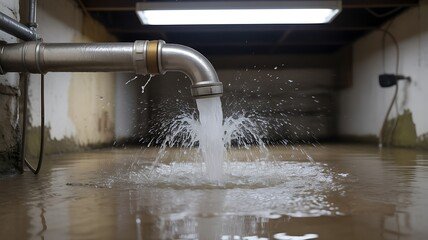
Active Tank Ruptures: A water heater tank that has split or rusted through can discharge dozens of gallons per minute into your home's interior, creating an immediate flooding emergency.
-
Gas Odors Near Appliance Connections: If you smell a persistent rotten egg odor (sulfur) near your water heater's gas valve, turn off the main gas line, evacuate the building immediately, and call for emergency response.
-
Sewer Line Backups into Living Areas: Wastewater overflowing from floor drains, tubs, or toilets presents a biological hazard that requires immediate professional containment and hydro-jetting remediation.
-
Uncontrollable Main Pressure Line Breaks: Water leaking uncontrolled before your home's main shut-off valve quickly damages structural foundations, washouts soil, and ruins interior flooring.
DIY Reality Check: What You Can Safely Fix vs. When to Step Back
Working on water heating systems involves simultaneous exposure to high voltage, combustible gases, scalding water under pressure, and strict municipal building codes. Knowing your limits keeps your family and property safe.
Safe Homeowner Actions
-
Resetting a tripped thermal high-limit switch on an electric water heater control panel once.
-
Clearing clear dust, lint, or pet hair from the external burner air intake screens at the base of the unit.
-
Visually inspecting connections, valves, and surrounding flooring for minor dampness or white scale buildup.
-
Adjusting the external thermostat dial down to a safer 120°F (49°C) to prevent scalding and lower energy usage.
The Danger Zone (Call a Licensed Professional Immediately)
-
Replacing gas control valves, pilot assemblies, or modifying gas flex lines.
-
Rewiring 240-volt electrical circuits, heating elements, or upper and lower thermostats.
-
Modifying exhaust vent pipes, draft hoods, or penetration points through roofs and walls.
-
Removing or capping thermal expansion tanks and temperature-pressure relief (TPR) discharge lines.
Frequently Asked Questions (FAQs)
How long does a standard water heater usually last?
A standard tank-style water heater typically lasts between 8 to 12 years, depending heavily on local water hardness and routine maintenance. On-demand tankless systems can last 20 years or more when properly descaled and serviced regularly.
Should I replace my old tank water heater with a tankless model?
Upgrading to a tankless model offers continuous hot water, uses up to 30% less energy, and saves valuable indoor floor space. However, converting requires evaluating whether your current gas line diameter or electrical panel capacity can support the higher peak energy demand of on-demand units.
Why does my hot water run out so much faster than it used to?
This issue typically stems from broken electric heating elements, a failed thermostat, or excessive mineral sediment accumulation inside the tank. In gas units, severe sediment isolates heat at the bottom of the tank, preventing efficient heat transfer to the water above.
What causes a water heater temperature-pressure relief (TPR) valve to leak?
A dripping TPR valve usually indicates either excessively high water pressure coming from your municipal supply, thermal expansion issues from a failed expansion tank, or simple mechanical failure caused by mineral scale trapped inside the valve seat.
How do I know what size water heater my household needs?
Tank sizing is calculated based on your household's peak "First-Hour Rating" (FHR), which measures how many gallons of hot water the unit delivers during a busy morning hour. Tankless sizing relies on Total Gallons Per Minute (GPM) demand combined with the incoming groundwater temperature.
How often should I flush my water heater?
In areas with moderate-to-hard water, storage water heaters should be flushed once a year. Flushing removes loose sediment buildup, protects internal tank linings, and keeps heating components operating efficiently.
Is permit approval required for a water heater replacement?
Yes, local municipal codes require building permits for water heater installations. Obtaining proper permits ensures your installation meets strict local safety standards, including proper venting, drain pan routing, seismic strapping (where required), and gas line testing.
What are the signs that my water heater tank is about to leak?
Key warning signs include visible rust along outer tank seams, damp insulation near the lower access panels, persistent popping noises during heating cycles, and discolored hot water coming from taps throughout your home.
Why Local Homeowners Choose Plumbers in Houston Texas
When you need dependable, high-quality water heater services, working with local experts makes all the difference. Plumbers in Houston Texas provides full-service plumbing and water heater solutions tailored specifically to the structural demands and water conditions of the local area.
-
Licensed, Insured, and Experienced Technicians: Our team brings deep industry experience, local code knowledge, and technical expertise to every project, ensuring safe, compliant installations.
-
Upfront, Transparent Pricing: We believe in honest, straightforward service without unexpected fees or hidden costs. You receive a clear, detailed estimate before any work begins.
-
Advanced Equipment and Techniques: From high-definition camera inspections to precision thermal leak detection, we utilize modern tools to complete installations and repairs efficiently and correctly.
-
Comprehensive Warranty Coverage: We stand behind our workmanship and equipment with strong warranty commitments that give property owners lasting peace of mind.
-
Customer-First Service: We treat every property with respect, maintaining clean work sites, clear communication, and dependable service throughout the entire process.