Introduction
Nothing disrupts your morning routine faster than stepping into a shower expecting warm, relaxing water, only to be blasted by an icy stream. When your hot water system fails, daily household tasks—from bathing to washing dishes and doing laundry—come to a screeching halt. Homeowners and business owners alike experience these sudden failures due to continuous operational stress, sediment accumulation, and mechanical wear. Addressing thermal performance issues immediately is critical to preventing minor component failures from cascading into severe structural water damage or costly property remediation.
If you are currently experiencing cold showers, strange tank noises, or active leaks, securing dependable water heater repair in houston is the fastest path to restoring comfort, safety, and operational efficiency to your property. While local infrastructure in coastal Texas does not face harsh midwestern freeze-thaw cycles, regional water conditions and high daily usage demand immediate attention when heating systems begin to deteriorate.
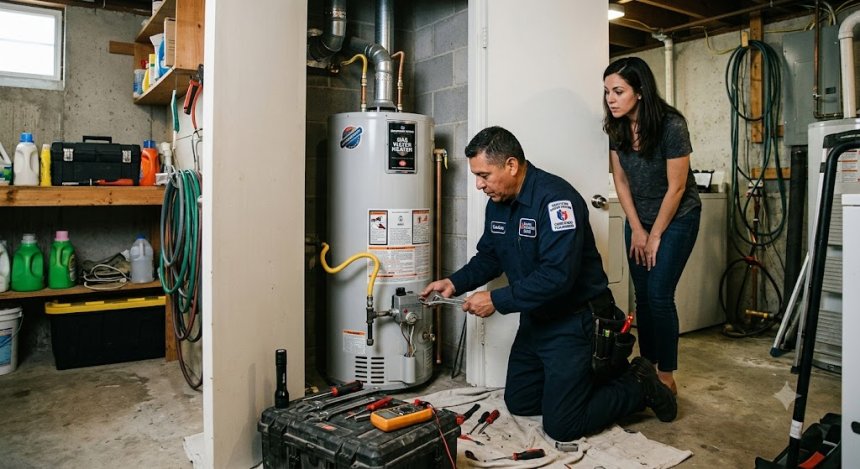
What Is Water Heater Repair? Decoding the Mechanism
A standard water heater relies on a continuous balance of thermodynamics, pressure regulation, and electrical or gas control systems. Cold water enters the bottom of the tank through a dip tube, where heating elements (in electric units) or a burner assembly beneath the tank (in gas units) raise the water temperature to your set thermostat level. Heated water naturally rises to the top of the tank, where it is drawn into your home’s hot water supply lines upon demand.
When a system fails, this mechanical sequence breaks down. For instance, a broken dip tube allows cold incoming water to mix directly with hot outgoing water, resulting in lukewarm temperatures. Alternatively, a failing lower heating element leaves you with limited hot water reserve. In a typical residential scenario, a family might notice their morning shower turns lukewarm after just five minutes—a classic sign of element failure or heavy sediment buildup displacing heating volume.
       [ Cold Water In ]         [ Hot Water Out ]
               │                         ▲
               ▼                         │
   ┌───────────────────────────────────────────┐
   │             Water Heater Tank             │
   │                                           │
   │  [Dip Tube] ──► Directs cold water down  │
   │                                           │
   │  [Upper Heating Element / Thermostat]     │
   │  [Lower Heating Element / Thermostat]     │
   │                                           │
   │  [Sediment Zone] ──► Traps mineral scale │
   └───────────────────────────────────────────┘
               ▲
               │
    [ Gas Burner / Electric Power ]
Emergency Protocol: When Immediate Dispatch is Non-Negotiable
Not every plumbing issue can wait for a regular business hour appointment. Certain scenarios demand immediate 24/7 emergency response to protect life, health, and property:
-
Catastrophic Tank Ruptures: An actively leaking or bursting tank releasing gallons of water per minute into your living areas.
-
Gas Leaks or Burning Odors: The smell of natural gas (rotten eggs) or burning electrical components near your heating unit.
-
Ruptured Temperature & Pressure (T&P) Valves: A blowing or stuck T&P valve discharging high-pressure steam or scalding water continuously.
-
Total Loss of Water Pressure with Active Flooding: Main line or supply valve failures threatening electrical panels, subfloors, or drywall structural integrity.
Critical Warning Signs: When Your Home is Sounding the Alarm
Your plumbing system rarely fails without warning. Recognizing early sensory cues prevents minor component failures from becoming major disasters.
Auditory Clues
-
Rumbling or Popping: Trapped water boiling beneath thick sediment layers at the bottom of the tank.
-
High-Pitched Whistling: Excessive pressure escaping through tiny cracks or a misaligned safety valve.
-
Gurgling Drains: Negative pressure or venting issues within connected drainage lines.
Visual and Sensory Indicators
-
Discolored or Rusty Water: Internal tank corrosion or degrading anode rods releasing iron particles into your supply lines.
-
Foul Olfactory Smells: Rotten egg or sulfur odors caused by anaerobic bacteria interacting with a sacrificial magnesium anode rod inside the tank.
-
Unexplained Moisture or Meter Spikes: Damp floorboards around the unit base, dripping fittings, or unexplained increases in monthly utility bills.
DIY Reality Check: What You Can Safely Fix vs. When to Step Back
Safe Homeowner Actions
-
Visual Inspections: Checking for visible moisture, rust, or loose external fittings.
-
Thermostat Adjustment: Safely turning the temperature dial down to 120°F (49°C) to prevent scalding and reduce energy consumption.
-
Circuit Breaker & Valve Management: Resetting a tripped breaker once or turning off the cold water shut-off valve during an active leak emergency.
The Danger Zone (Call a Professional)
Attempting to disassemble gas control valves, replace internal electrical wiring without proper testing equipment, or plugging a leaking safety relief valve can lead to explosive pressure buildup, severe scalding, dangerous electrical shock, or flammable gas accumulation. If an intervention requires opening a gas line, rewiring 240-volt electrical circuits, or soldering pipe fittings, drop the wrench and contact a licensed professional immediately.
Advanced Diagnostics: The Professional Tool Arsenal
Modern plumbing diagnostics rely on advanced technology rather than guessing games. Certified technicians utilize specialized equipment to identify defects quickly and non-invasively:
-
Thermal Imaging Cameras: Highlight temperature differentials along tank walls and trace hidden pipe leaks behind finished drywall or beneath slab foundations.
-
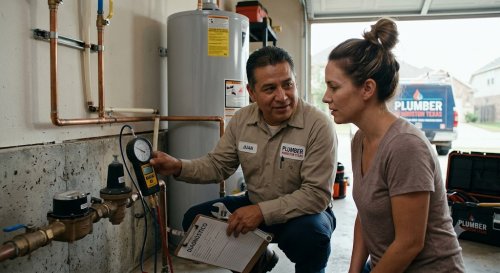
Digital Manometers & Pressure Gauges: Accurately measure static and dynamic gas pressure as well as home water line pressure.
-
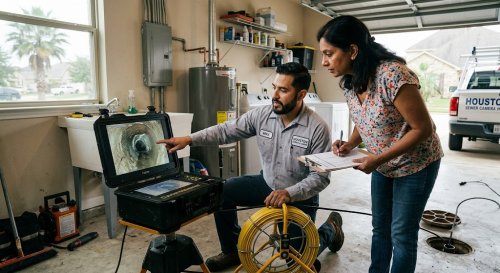
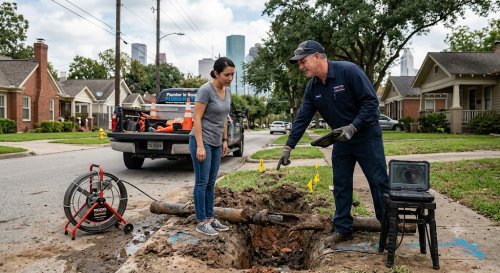
High-Definition Inspection Cameras: Flexible, push-rod cameras inspect interior supply and drain paths for calcification, corrosion, or blockages.
-
Electronic Acoustic Leak Detectors: Amplify high-frequency sound waves generated by pressurized water escaping from hairline pipe fractures.
Professional Diagnostic & Repair Workflow
A systematic approach ensures every repair meets strict local plumbing codes and industry safety standards.
┌────────────────────────────────────────┐
│ Step 1: Non-Invasive Triage & Safety   │
│         Isolation                      │
└───────────────────┬────────────────────┘
                    │
                    ▼
┌────────────────────────────────────────┐
│ Step 2: Precision Diagnostic & Digital │
│         Inspection                     │
└───────────────────┬────────────────────┘
                    │
                    ▼
┌────────────────────────────────────────┐
│ Step 3: Upfront Written Estimate       │
└───────────────────┬────────────────────┘
                    │
                    ▼
┌────────────────────────────────────────┐
│ Step 4: Code-Compliant Remediation &   │
│         Part Replacement               │
└───────────────────┬────────────────────┘
                    │
                    ▼
┌────────────────────────────────────────┐
│ Step 5: Pressure Testing, Flow         │
│         Verification, & Clean          │
└────────────────────────────────────────┘
-
Non-Invasive Triage & Safety Isolation: Shutting down power or gas feeds and isolating the water supply to secure the workspace.
-
Precision Diagnostic & Digital Inspection: Testing heating elements, thermostats, thermocouple assemblies, and pressure relief valves with calibrated instruments.
-
Transparent, Upfront Options & Written Estimating: Presenting clear repair versus replacement solutions with upfront flat-rate pricing before work begins.
-
Code-Compliant Remediation & Part Replacement: Removing failed components and installing high-grade, manufacturer-approved replacement parts.
-
Pressure Testing, Flow Verification, & Clean: Restoring supply pressure, bleeding air from lines, verifying thermal efficiency, and restoring the work area.
Root Causes: Operational & Environmental Stress Factors
Plumbing systems experience severe internal strain caused by both operating conditions and local water quality:
-
Hard Water Scale & Calcification: High concentrations of dissolved minerals (calcium and magnesium) precipitate out of water as it heats, forming a thick thermal barrier over burners or electric elements.
-
Thermal Expansion Stress: Repeated heating and cooling cycles cause metal tanks to expand and contract constantly, eventually cracking internal glass linings.
-
Corrosive Water Chemistry: Low pH levels or high chemical content accelerate internal metal oxidation once the sacrificial anode rod depletes.
-
Galvanic Corrosion: Incompatible metals directly joined without dielectric unions cause accelerated localized corrosion at pipe connections.
Financial Breakdown: Cost Factors & Investment Realities
Understanding the financial variables of plumbing service helps you make informed choices between simple repairs and total system upgrades.
| Cost Variable | Impact on Overall Investment | Description |
| Diagnostic & Service Call | Low to Moderate | Standard fee covering site arrival, physical testing, and expert evaluation. |
| Component Replacement | Moderate | Direct cost for parts such as thermostats, heating elements, anode rods, or gas valves. |
| Material Upgrade (PEX/Copper) | Moderate | Converting outdated supply lines or installing mandatory dielectric fittings during repair. |
| Permitting & Code Upgrades | Variable | Local municipal requirements for expansion tank installation or venting modifications. |
| Unit Age & Repair vs. Replace | High | If a tank is over 10-12 years old, unit replacement often provides better long-term ROI than major repairs. |
Unique Expert Insights: Hard Truths Homeowners Learn Too Late
-
Chemical Drain Cleaners Cause Hidden System Damage: Corrosive off-the-shelf drain chemicals generate heat inside pipes, softening PVC connections and accelerating corrosion on metal lines.
-
Ignoring the Anode Rod Destroys the Tank: A simple anode rod replacement every 3 to 5 years can double your water heater's operating lifespan; ignoring it guarantees premature tank failure.
-
Over-Pressurization Voids Warranties: Failing to install or maintain an expansion tank on a closed water system creates pressure spikes that crack tank linings and void manufacturer warranties.
-
Unlicensed Work Costs Double: Hiring uncertified handymen for plumbing repairs frequently leads to code violations that cause real estate transaction delays and costly retrofits during home inspections.
-
Flush Delays Bake Sediment Solid: Waiting years to flush a water heater allows soft mineral sediment to turn into hardened rock, requiring total component replacement rather than a simple routine flush.
Comprehensive Home Plumbing Maintenance Framework
Proactive maintenance protects your home, maintains system efficiency, and extends the life of your equipment.
Spring/Summer Care
-
Test exterior spigots and check hose bibs for winter freeze damage or internal packing nut leaks.
-
Inspect sump pumps by pouring water into the basin to ensure automatic float switches activate properly.
-
Clear debris around outdoor AC condensate drains and heat pump lines to prevent secondary backup flooding.
Fall/Winter Preparation
-
Insulate exposed water pipes in garages, unheated crawlspaces, or attic cavities.
-
Disconnect, drain, and store all garden hoses before overnight cold snaps hit.
-
Drain 2-3 gallons of water from your heating tank to clear sediment settling near the lower drain valve.
Year-Round Preventive Habits
-
Keep mesh strainers over sink, tub, and shower drains to catch hair and debris before it enters main lines.
-
Check your home's main Pressure Reducing Valve (PRV) annually to keep municipal line pressure between 45 and 65 PSI.
-
Avoid flushing non-degradable items, wipes, or grease down residential drainage systems.
Frequently Asked Questions (FAQs)
How long does a standard residential water heater typically last?
A traditional tank-style water heater usually lasts between 8 and 12 years. Tankless water heaters can operate efficiently for 20 years or more with proper maintenance and hard water management.
Why is my hot water running out much faster than it used to?
This usually indicates a broken upper dip tube mixing cold and hot water prematurely, a failed lower heating element on electric units, or significant sediment buildup displacing heat storage capacity.
What causes a water heater to make loud rumbling or popping noises?
Rumbling or popping occurs when water gets trapped underneath a thick layer of mineral scale at the bottom of the tank. As the burner heats the metal floor, trapped water boils into steam, popping through the sediment layer.
Is it better to repair or replace an aging water heater?
If your unit is under 8 years old and the repair cost is less than half the price of a new installation, repairing is generally cost-effective. If the tank is over 10 years old, leaking from the main vessel, or requiring frequent repairs, replacement offers superior long-term energy efficiency and reliability.
Can high municipal water pressure damage my home's plumbing components?
Yes. Water pressure consistently exceeding 80 PSI damages internal appliance seals, accelerates pipe joint wear, snaps toilet fill valves, and forces water heater safety valves to blow open unexpectedly.
How often should I have my water heater professionally serviced?
An annual professional inspection and tank flush are recommended to remove mineral sediment, test safety relief valves, inspect sacrificial anode rods, and check gas/electrical connections for optimal operation.
What are the signs of a leaking gas line near my heating appliance?
A sulfur or "rotten egg" odor, a persistent hissing sound near gas flex lines, dead or yellow vegetation near exterior gas piping, or unexplained physical symptoms like lightheadedness demand immediate evacuation and professional utility shut-off.
Why does my tap water smell like sulfur when running hot water?
A sulfur odor confined exclusively to hot water is usually caused by a reaction between anaerobic sulfate-reducing bacteria inside the tank and a magnesium anode rod. Replacing the magnesium rod with an aluminum-zinc anode typically solves the problem.
Why Local Property Owners Trust Water Heater Repair in Houston
When your property faces hot water disruptions or critical plumbing challenges, having a dependable local partner makes all the difference. At
-
Licensed & Experienced Technicians: Our team undergoes continuous technical training to handle gas, electric, and advanced tankless heating technologies safely and efficiently.
-
Upfront, Flat-Rate Pricing: You receive clear, transparent written estimates before any diagnostic or repair work begins—no hidden fees or surprises.
-
Advanced Diagnostic Tools: We utilize high-definition video inspection tools, thermal cameras, and digital testing equipment to pinpoint issues accurately without destructive guessing.
-
Comprehensive Service Coverage: Proudly serving residential and commercial properties with professional, code-compliant solutions tailored to local plumbing requirements.
-
Satisfaction Guaranteed: Every repair and installation is backed by industry-leading warranties and a commitment to quality craftsmanship.