How Often Should You Flush a Water Heater in Houston, TX?
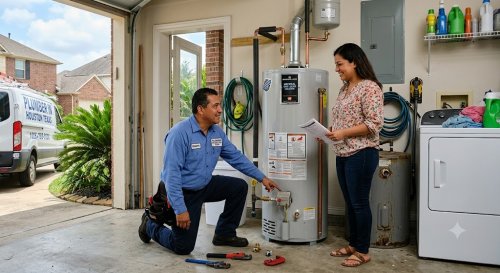
Flushing a water heater helps remove sediment and mineral deposits that can collect inside the tank over time. For many Houston homeowners, an annual inspection and flushing schedule can help maintain heating efficiency, but the ideal frequency depends on water quality, household usage, heater age, and manufacturer recommendations. This guide explains how often to flush a water heater, signs that it needs attention, the flushing process, costs, safety considerations, and when professional water heater service is recommended.
How Often Should You Flush a Water Heater in Houston, TX?
For most Houston homeowners with a traditional tank-style water heater, flushing the tank about once a year is a reasonable maintenance guideline. However, the ideal schedule depends on the heater's age, water quality, household usage, manufacturer recommendations, and the amount of sediment accumulating inside the tank.
Houston homes can experience mineral and sediment buildup over time. When these materials settle at the bottom of a water heater, they can reduce heating efficiency, contribute to popping or rumbling noises, and increase stress on the equipment.
Regular water heater maintenance isn't simply about getting more hot water. It can help homeowners identify leaks, corrosion, failing components, and other problems before they become expensive emergencies.
What Does Flushing a Water Heater Mean?
Flushing a water heater means draining water from the tank to remove accumulated sediment and mineral deposits.
A traditional tank water heater stores and heats a large volume of water. Over time, minerals and other particles can settle at the bottom of the tank.
When sediment becomes thick enough, it can interfere with normal heating.
A professional water heater flush generally involves:
- Turning off the appropriate energy source
- Connecting a suitable drain hose
- Allowing water to drain safely
- Removing accumulated sediment
- Refilling the tank
- Checking connections
- Restoring operation
- Testing the system
The exact procedure varies depending on whether the unit is gas or electric and according to the manufacturer's instructions.
Why Does Sediment Build Up in a Water Heater?
Sediment can come from naturally occurring minerals and particles in the incoming water supply.
As water is heated repeatedly, minerals can settle inside the tank.
Over time, this may create a layer of material at the bottom.
Common contributors include:
- Mineral deposits
- Calcium
- Magnesium
- Sand or other particles
- Corrosion debris
- Water-quality conditions
- Older plumbing
The amount of buildup varies from one property to another.
Why Is Water Heater Flushing Important in Houston?
Houston homeowners may benefit from regular water heater maintenance because sediment and mineral deposits can affect the performance of a tank-style unit.
A neglected water heater may develop:
- Reduced heating efficiency
- Longer heating times
- Less available hot water
- Popping or rumbling sounds
- Increased energy consumption
- Corrosion-related problems
- Premature tank failure
Flushing doesn't guarantee that a water heater will last longer, but removing excessive sediment can help maintain the equipment when performed appropriately.
How Often Should You Flush Your Water Heater?
For many homes, once every 12 months is a practical starting point.
However, some homes may need more frequent attention.
Consider a more frequent maintenance schedule if:
- Your water contains significant sediment or mineral content.
- The water heater is heavily used.
- The household has several occupants.
- The heater produces unusual noises.
- The unit has a history of sediment buildup.
- Your plumbing professional recommends a different schedule.
- The manufacturer's maintenance instructions call for it.
On the other hand, flushing an older water heater isn't automatically beneficial in every situation. If the tank is severely corroded or already failing, professional evaluation is important before performing maintenance.
How Do You Know Your Water Heater Needs Flushing?
Your water heater may need attention if you notice:
Popping or Rumbling Sounds
A popping or rumbling noise can occur when water is heated around sediment at the bottom of a tank.
These sounds shouldn't automatically be assumed to mean the tank is failing, but they are a good reason to have the unit inspected.
Reduced Hot Water
If your household is running out of hot water faster than usual, sediment buildup or another water heater problem could be contributing.
Longer Heating Times
A water heater that takes noticeably longer to produce hot water may not be operating efficiently.
Cloudy or Discolored Hot Water
Discolored water can have several causes, including corrosion or issues with the water heater.
If discoloration persists, professional evaluation is recommended.
Leaking Around the Tank
Water around the base of a water heater can indicate a serious problem.
A leaking tank may require replacement rather than simply flushing.
Higher Energy Bills
A decline in efficiency can contribute to higher energy consumption, although many other factors can affect utility bills.
Can You Flush a Water Heater Yourself?
Some experienced homeowners can perform basic water heater maintenance, but flushing a water heater isn't completely risk-free.
The tank contains very hot water, and improper handling can cause burns or property damage.
Gas water heaters also involve combustion equipment, while electric units involve electrical components.
If you aren't familiar with the manufacturer's procedures, shutoff requirements, drain connections, and safety precautions, professional service is the safer option.
How to Flush a Water Heater Safely
The general process for a traditional tank-style water heater involves several steps.
Step 1: Turn Off the Energy Source
A gas water heater and an electric water heater have different shutdown procedures.
Follow the manufacturer's instructions.
Step 2: Allow the Water to Cool
Hot water can cause serious burns.
Professional plumbers take precautions to control temperature and discharge safely.
Step 3: Connect a Drain Hose
A suitable hose is connected to the drain valve and routed to an appropriate drainage location.
Step 4: Shut Off the Water Supply
The cold-water supply to the tank is shut off according to the appropriate procedure.
Step 5: Drain the Tank
Water is drained from the tank.
Depending on the amount of sediment, the draining process may need additional steps to help remove accumulated material.
Step 6: Flush the Tank
Fresh water can be used to help move remaining sediment out of the tank.
Step 7: Refill the Tank
The tank must be properly refilled before restoring the energy source according to manufacturer instructions.
Step 8: Inspect for Leaks
Connections, valves, and the drain area should be checked.
Step 9: Restore Operation
The water heater is returned to normal operation following the manufacturer's procedures.
Because improper operation can damage the heater or create safety hazards, homeowners should consult the unit's manual or use a qualified professional.
Why Should You Not Turn On an Electric Water Heater Before the Tank Is Full?
Electric water heaters contain heating elements that are designed to operate while submerged in water.
If an electric heating element is energized without adequate water covering it, it can become damaged.
This is one reason water heater maintenance should be performed carefully and according to manufacturer instructions.
Can Flushing an Old Water Heater Cause Problems?
This is an important consideration.
If a water heater is very old, heavily corroded, or already showing signs of failure, professional evaluation should come before aggressive maintenance.
A plumber may determine that:
- The tank is still serviceable.
- Sediment should be removed carefully.
- A component needs replacement.
- The unit is approaching the end of its useful life.
- Replacement is more practical than continued repair.
Don't assume that every noisy or old water heater simply needs flushing.
Is Water Heater Flushing Necessary for Tankless Water Heaters?
Tankless water heaters don't store a large tank of hot water, but they can still develop mineral buildup inside their heat exchanger.
Instead of a traditional tank flush, tankless units generally require descaling or flushing according to the manufacturer's maintenance requirements.
The recommended frequency depends on water conditions and manufacturer instructions.
If a tankless heater hasn't been serviced for an extended period, professional maintenance may be appropriate.
What Happens If You Never Flush a Water Heater?
Skipping maintenance doesn't guarantee that a water heater will fail, but excessive sediment can contribute to reduced performance.
Potential problems include:
- Reduced efficiency
- Noisy operation
- Longer heating times
- Reduced hot-water capacity
- Component stress
- Increased operating costs
- Corrosion
- Premature failure
The longer sediment accumulates, the more difficult maintenance can sometimes become.
Does Hard Water Affect Water Heaters?
Hard water contains higher levels of dissolved minerals, particularly calcium and magnesium.
When heated, these minerals can contribute to scale deposits.
Inside a water heater, scale can interfere with heat transfer and contribute to sediment accumulation.
If your home regularly experiences:
- White mineral deposits
- Scale around faucets
- Clogged aerators
- Reduced fixture flow
- Water heater noise
it may be worthwhile to evaluate the home's water quality.
How Long Does a Water Heater Flush Take?
A straightforward water heater maintenance visit may take around an hour or more, depending on the unit and the amount of sediment.
Additional time may be required if:
- The drain valve is difficult to operate.
- Sediment is heavy.
- The unit has corrosion.
- A component needs replacement.
- The heater is difficult to access.
- The plumber identifies another problem.
A complete service visit can take longer than simply draining the tank.
How Much Does Water Heater Flushing Cost in Houston?
There is no single price that applies to every Houston property.
The cost can depend on:
- Water heater type
- Tank size
- Accessibility
- Sediment buildup
- Labor
- Diagnostic work
- Replacement parts
- Additional repairs
- Emergency service
- Whether other maintenance is performed
A simple maintenance service will generally be different from a visit involving a failing valve, leaking tank, damaged heating element, or other repair.
Ask the plumber what is included in the quoted service.
What Other Water Heater Maintenance Should Be Performed?
Flushing is only one part of water heater maintenance.
A professional may also inspect:
- Temperature and pressure relief valve
- Drain valve
- Water connections
- Gas connections where applicable
- Electrical connections where applicable
- Heating components
- Anode rod on applicable tank systems
- Venting on gas-fired units
- Signs of corrosion
- Tank condition
- Expansion tank where applicable
The exact maintenance requirements depend on the water heater model.
What Is an Anode Rod?
An anode rod is a component found in many traditional tank water heaters.
Its purpose is to help protect the steel tank from corrosion by attracting corrosive elements.
Over time, the anode rod can become depleted.
If the tank is otherwise in good condition, replacing a depleted anode rod may help protect the tank, depending on the unit and manufacturer's design.
A plumber can inspect the component and determine whether replacement is appropriate.
15 Common Water Heater Maintenance Mistakes
1. Never Flushing the Tank
Allowing sediment to accumulate indefinitely can affect performance.
2. Ignoring Strange Sounds
Popping or rumbling noises can be an early indication of sediment buildup or another issue.
3. Ignoring Small Leaks
A small leak can become a larger water-damage problem.
4. Turning on an Empty Electric Tank
This can damage heating elements.
5. Flushing Without Understanding the Equipment
Different water heaters require different procedures.
6. Ignoring the Manufacturer's Instructions
Maintenance should follow the model's specific requirements.
7. Forgetting About the Anode Rod
The tank's protective components also require attention.
8. Ignoring Corrosion
Visible corrosion can indicate a more serious issue.
9. Assuming Every Noisy Heater Needs Replacement
Noise can have several possible causes.
10. Assuming Every Old Heater Needs Flushing
An old, failing tank may require replacement rather than maintenance.
11. Installing Incorrect Parts
Replacement components should be compatible with the heater.
12. Ignoring Water Pressure
Excessive pressure can affect plumbing fixtures and water heaters.
13. Delaying Professional Inspection
Repeated problems deserve investigation.
14. Using Incorrect Temperature Settings
Water temperature should be set appropriately according to manufacturer guidance and household safety needs.
15. Waiting Until There Is No Hot Water
Preventive maintenance is preferable to waiting for a complete failure.
How Can Houston Homeowners Maintain Their Water Heater?
A practical maintenance routine includes:
- Inspect the tank periodically.
- Look for water around the base.
- Listen for unusual sounds.
- Monitor hot-water availability.
- Check visible connections.
- Follow manufacturer maintenance recommendations.
- Schedule periodic professional inspections.
- Address leaks promptly.
- Monitor water pressure.
- Consider water-quality testing when scale is persistent.
- Have the anode rod inspected where applicable.
- Keep the area around the heater accessible.
- Don't store combustible materials around gas-fired equipment.
- Have gas venting inspected where appropriate.
- Replace a deteriorated unit before an emergency when practical.
When Should You Call a Houston Plumber?
Professional water heater service is recommended when:
- The tank is leaking.
- You hear persistent popping or rumbling.
- Hot water is running out unusually quickly.
- Water is discolored.
- The heater isn't heating properly.
- A relief valve is leaking.
- The unit is showing significant corrosion.
- The water heater repeatedly trips a breaker.
- A gas-fired unit has combustion or venting concerns.
- You're unsure how to safely perform maintenance.
When Is a Water Heater Problem an Emergency?
Contact a plumber promptly if you have:
- A rapidly leaking tank
- Significant water pooling
- A burst water heater
- No way to stop an active leak
- A serious plumbing connection failure
- Gas odor around a gas appliance
- A damaged venting system
- Electrical hazards involving the water heater
If you smell gas, don't attempt to diagnose or repair the gas system yourself. Follow appropriate gas-safety procedures and contact qualified professionals.