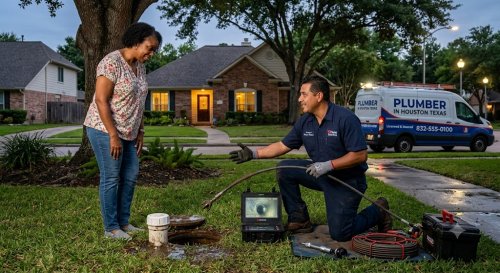
Emergency Plumbing in Katy: Main Water Line Break
Main water line break in Katy? Learn what to do immediately, warning signs, repair options, costs, timelines, and when to call an emergency plumber.
What to Do When Your Main Water Line Breaks
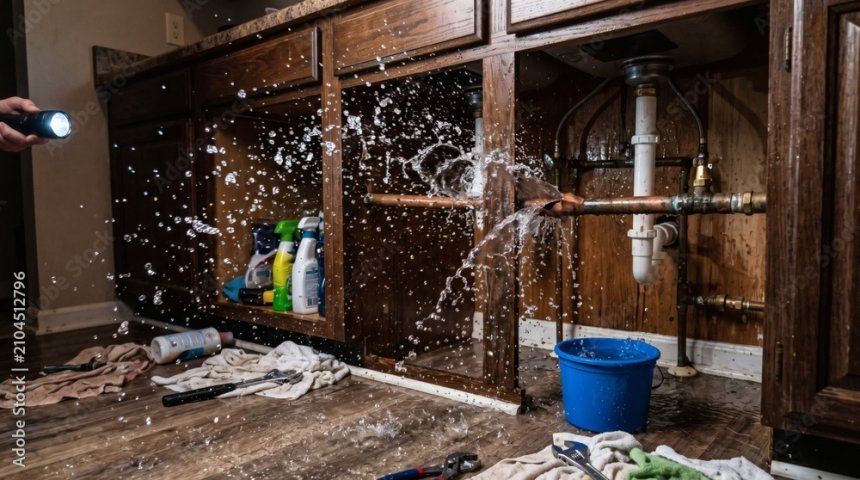
A broken main water line can quickly become one of the most expensive plumbing emergencies a homeowner faces.
Unlike a leaking faucet or clogged sink, a main water line problem can affect the entire property. Water may enter the yard, foundation area, driveway, walls, or other parts of the property while reducing or completely stopping water service inside the house.
For homeowners in Katy, Texas, recognizing the warning signs and knowing what to do before the plumber arrives can help reduce unnecessary water damage.
A main water line carries water from the utility connection toward the property's plumbing system. When that line breaks, cracks, separates, or develops a major leak, the consequences can escalate quickly.
The most important rule is simple:
If you suspect a major water-line break, shut off the water if you can do so safely and arrange professional assistance as soon as possible.
What Is a Main Water Line Break?
The main water line is the pipe that supplies fresh water to your property from the public water system or another water source.
A main line break can occur underground, beneath landscaping, under a driveway, near the foundation, or in another difficult-to-access location.
Common causes include:
- Aging pipes
- Corrosion
- Ground movement
- High water pressure
- Tree-root activity
- Poor installation
- Physical damage
- Freezing conditions
- Deteriorated fittings
- Accidental excavation damage
A main-line problem is different from a small fixture leak because it can affect water supply to the entire home.
Why Do Main Water Lines Break in Katy?
Several conditions can contribute to water-line failures.
Aging Plumbing Materials
Older water lines may deteriorate over decades.
The outside of a pipe can look acceptable while corrosion or weakening occurs internally.
Ground Movement
Underground pipes are exposed to soil movement and changing ground conditions.
Movement can place stress on joints and connections.
High Water Pressure
Water pressure that is consistently higher than the plumbing system is designed to handle can increase stress on pipes, fittings, valves, and appliances.
High pressure does not necessarily cause every pipe failure, but it can contribute to premature wear.
Tree Roots
Roots normally seek moisture.
A small crack or weakened connection can become an entry point for roots, potentially affecting underground plumbing.
Improper Installation
Poor pipe bedding, inadequate connections, unsuitable materials, or incorrect installation practices can contribute to premature failure.
Physical Damage
Underground water lines can be damaged by excavation, landscaping, construction, or other activities.
Signs Your Main Water Line May Be Broken
A major water-line problem can sometimes be obvious.
Other times, the symptoms are subtle.
Sudden Loss of Water Pressure
If pressure suddenly drops throughout the house, investigate promptly.
A broken or severely leaking supply line can prevent the home from receiving normal water flow.
No Water Throughout the House
If every fixture stops supplying water, check whether the problem is isolated to your property or affects the neighborhood.
If neighbors still have water, your home's plumbing may require investigation.
Unusually Wet Yard
A saturated area in the yard without recent rain or irrigation can indicate underground water leakage.
Look for:
- Muddy soil
- Standing water
- Constantly wet grass
- Unexpectedly lush vegetation
- Soil erosion
These signs do not prove a broken water line because irrigation and drainage problems can create similar conditions.
Water Near the Foundation
Water accumulating near the home's foundation deserves prompt attention.
A plumbing professional can determine whether the source is the water line, drainage system, irrigation, or another cause.
Unexpectedly High Water Bill
A major underground leak can cause water consumption to increase dramatically.
If your bill suddenly rises without a corresponding change in usage, investigate the possibility of a hidden leak.
Hissing or Running-Water Sounds
Unusual water sounds when fixtures are turned off can indicate a leak.
Water Meter Activity
If every fixture is turned off and the meter continues registering water use, there may be a leak somewhere on the property.
What Should You Do Immediately?
If you believe the main water line has broken, take these steps.
Step 1: Stop Using Water
Turn off faucets, showers, washing machines, dishwashers, and other fixtures.
Reducing water demand can limit additional loss.
Step 2: Shut Off the Main Water Valve
If you know where the property's main shutoff valve is located and it can be operated safely, shut off the water.
Do not force a severely corroded valve.
If the valve is damaged or inaccessible, contact a plumbing professional or the appropriate water utility.
Step 3: Keep Away From Electrical Hazards
If water has entered electrical areas, do not touch electrical equipment while standing in water.
Contact the appropriate emergency service when electrical safety is uncertain.
Step 4: Keep People Away From Contaminated Water
If wastewater or sewage is involved, avoid contact with the water.
A clean-water main-line break is different from a sewer backup, but both can cause serious property damage.
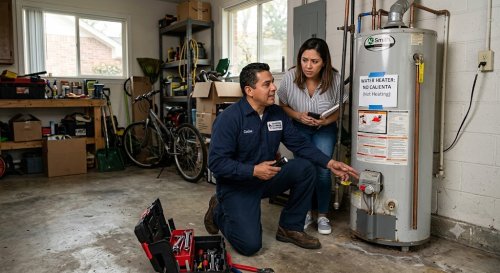
Step 5: Call a Qualified Plumber
A professional can determine whether the failure is located on the private property side or whether the utility should be involved.
Step 6: Document the Damage
Take photographs or video if it can be done safely.
Documentation may be useful for communicating with your plumber, property manager, or insurance company.
Is a Main Water Line Break an Emergency?
A significant main water-line break should be treated as an urgent plumbing problem.
The urgency increases when:
- Water is flooding the property
- Water is entering the home
- The main shutoff cannot stop the leak
- Pressure suddenly disappears
- Water is accumulating near the foundation
- The leak is rapidly worsening
- The property has extensive water damage
Even when the water is shut off successfully, the damaged line still needs to be repaired.
Can You Repair a Main Water Line Yourself?
A homeowner can generally shut off an accessible water valve and take basic protective steps.
The actual underground repair is usually best left to a qualified plumbing professional.
Main water-line work can involve:
- Excavation
- Pipe locating
- Pressure testing
- Underground utilities
- Specialized fittings
- Pipe cutting
- New pipe installation
- Soil conditions
- Permits or inspections
- Restoration
Digging without knowing where other underground utilities are located can create serious safety hazards.
Do not begin excavation simply because the wet spot appears to identify the leak location.
The visible water may travel through soil before reaching the surface.
How Does a Plumber Find a Main Water Line Leak?
Finding the leak accurately is an important part of the repair.
Step 1: Review the Symptoms
The plumber determines when pressure changed, where water is appearing, and whether the property has experienced previous leaks.
Step 2: Check the Water Meter
The technician may evaluate water usage when all fixtures are shut off.
Step 3: Inspect the Main Shutoff
The valve and nearby connections are examined.
Step 4: Test Pressure
Pressure testing can help determine whether the supply system is losing pressure.
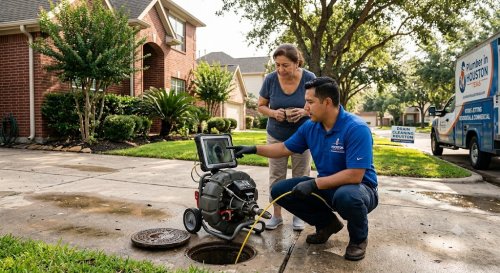
Step 5: Locate the Line
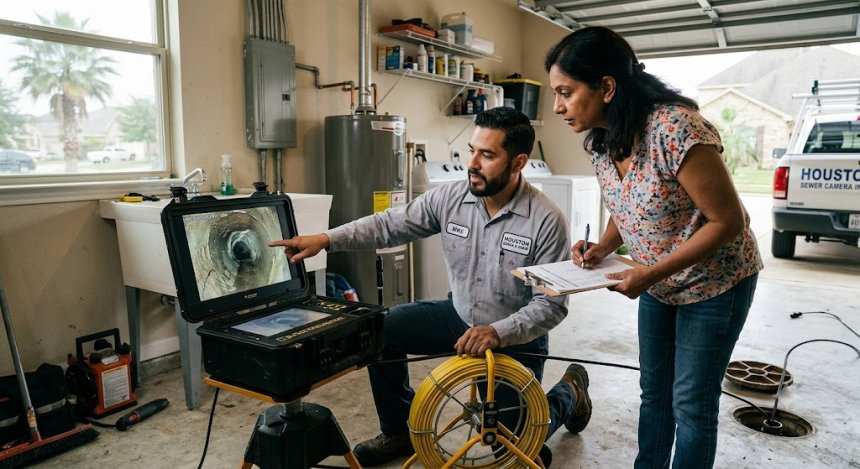
Pipe-locating equipment may help identify the path of the underground water line.
Step 6: Identify the Leak
Depending on the situation, electronic leak-detection equipment or other diagnostic methods may be used.
Step 7: Determine Repair Scope
The plumber determines whether the problem is:
- A damaged fitting
- A small section of pipe
- A longer section of damaged pipe
- A complete line failure
Step 8: Repair and Test
After repair, the system should be pressure-tested and checked for leaks before the area is restored.
What Tools Do Professionals Use?
Main water-line diagnosis and repair may involve:
- Electronic leak detection
- Acoustic listening equipment
- Pressure gauges
- Pipe locators
- Underground utility locating equipment
- Excavation tools
- Pipe cutters
- Specialized repair fittings
- Pressure-testing equipment
The exact equipment depends on pipe material, leak location, property layout, and accessibility.
Repair vs. Replacement: Which Is Better?
A localized failure does not automatically mean the entire water line needs replacement.
Repair May Be Appropriate When:
- The damage is limited to one section
- The remaining pipe is in good condition
- The failure has a clear localized cause
- Access is reasonable
- The plumbing professional determines the existing line remains reliable
Replacement May Be Worth Considering When:
- The line has multiple leaks
- The pipe material is extensively deteriorated
- Repairs have repeatedly failed
- Corrosion is widespread
- The line is approaching the end of its useful service life
- Repairing one section is unlikely to solve recurring failures
A professional should explain why replacement is being recommended rather than simply presenting it as the default option.
What Is Trenchless Water Line Repair?
Depending on the location, pipe material, and condition, certain underground plumbing projects may be completed using methods that reduce the amount of excavation required.
Trenchless approaches can potentially limit disturbance to:
- Landscaping
- Driveways
- Walkways
- Patios
- Other finished surfaces
However, trenchless repair or replacement is not appropriate for every property or every type of pipe failure.
Ask the plumber whether conventional excavation or a trenchless option is suitable for the specific situation.
How Long Does Main Water Line Repair Take?
The repair timeline depends heavily on the location and severity of the problem.
Minor Localized Repair
A straightforward accessible repair may be completed relatively quickly.
Underground Section Repair
A buried repair may require locating the line, excavation, replacement, pressure testing, and backfilling.
Major Replacement
A full replacement can take longer because of excavation, pipe installation, testing, and surface restoration.
Factors include:
- Leak depth
- Pipe length
- Soil conditions
- Landscaping
- Concrete
- Driveways
- Utility locations
- Pipe material
- Permit requirements
- Weather
- Repair method
Emergency repairs may be stabilized first, followed by additional restoration work.
How Much Does Main Water Line Repair Cost?
There is no responsible fixed price for a main water-line repair.
Costs vary according to:
- Diagnostic work
- Labor
- Pipe material
- Excavation
- Leak location
- Repair length
- Accessibility
- Equipment
- Landscaping restoration
- Concrete or driveway restoration
- Permits
- Emergency service
- Repair versus replacement
- Local labor rates
A short, accessible repair can cost significantly less than replacing a long underground line beneath a driveway or landscaped area.
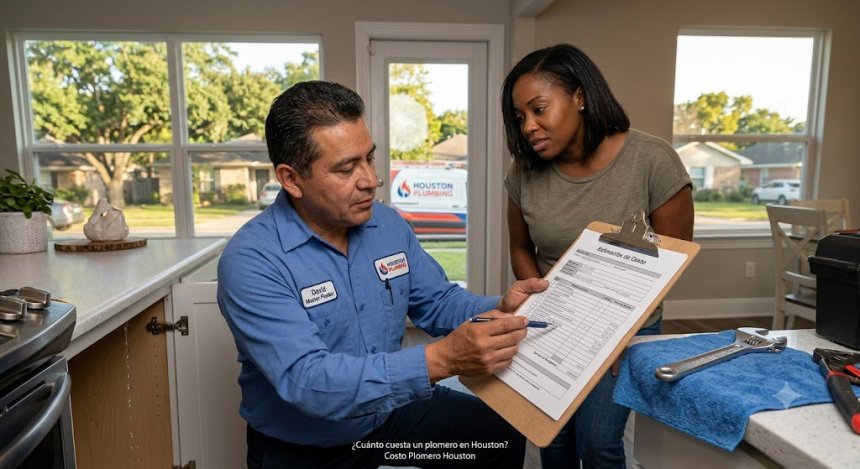
Ask for a written estimate explaining the scope of work and what restoration is included.
Hidden Truths Homeowners Should Know
The Wet Spot Is Not Always the Leak
Water can travel underground before reaching the surface.
A Small Leak Can Become a Major One
A weakened pipe may continue deteriorating even if the initial leak appears manageable.
Shutting Off the Water Is Not the Repair
The shutoff prevents additional water loss, but the damaged section still needs professional evaluation.
Replacing One Section May Not Solve a System-Wide Problem
If the pipe has widespread deterioration, repeated spot repairs can become expensive.
Underground Repairs Have Restoration Costs
The plumbing repair may not be the only expense. Landscaping, concrete, soil, and other surfaces may also require restoration.
Not Every Leak Requires a Complete Repiping
A professional diagnosis should determine the extent of the actual damage.
Utility Responsibility Matters
A water-line problem may fall on the property owner or the local water utility depending on where the failure occurs. Do not assume responsibility without confirming the location and applicable local rules.
15 Common Mistakes Homeowners Make
- Ignoring a sudden pressure drop — It can be an early warning of a major leak.
- Waiting for the water bill — A major leak can waste substantial water before the next bill arrives.
- Leaving the main valve open — Continued flow can increase water damage.
- Forcing a corroded shutoff valve — An old valve can break when excessive force is applied.
- Digging immediately — Underground utilities may be nearby.
- Assuming the wettest spot is the leak — Water can travel underground.
- Using temporary clamps as a permanent solution — Temporary measures may not address deteriorating pipe.
- Ignoring recurring leaks — Multiple failures can indicate broader pipe deterioration.
- Choosing a contractor only by the lowest price — The scope and quality of work matter.
- Skipping pressure testing — The system should be tested after repair.
- Ignoring water near the foundation — Persistent moisture can cause additional property concerns.
- Failing to document damage — Photographs can be useful for records and insurance discussions.
- Assuming all water-line problems are plumbing-company problems — Utility responsibility may apply in some situations.
- Attempting major excavation without experience — Underground work has safety and utility risks.
- Delaying permanent repairs after an emergency shutoff — The underlying failure remains.
Maintenance Tips for Katy Homeowners
- Know where your main water shutoff valve is located.
- Make sure the valve is accessible.
- Learn how to shut off the water before an emergency occurs.
- Monitor monthly water bills.
- Watch for unexplained increases in consumption.
- Inspect exposed plumbing connections.
- Pay attention to sudden pressure changes.
- Investigate persistent wet areas in the yard.
- Keep landscaping records around buried plumbing.
- Be careful when digging on your property.
- Use appropriate utility-locating procedures before excavation.
- Address small leaks promptly.
- Have recurring pressure problems professionally evaluated.
- Consider a plumbing inspection for older properties.
- Keep records of previous water-line repairs.
- Ask about pipe material when purchasing an older home.
- Have pressure problems investigated rather than simply increasing pressure.
- Know whether your property has a pressure-reducing valve.
- Inspect irrigation systems separately from household plumbing.
- Keep a trusted emergency plumber's contact information available.
When Should You Call an Emergency Plumber?
Contact an emergency plumbing professional when:
- The main water line has visibly ruptured
- Water is flooding the yard or house
- The main shutoff does not stop the leak
- Water is entering the structure
- You have suddenly lost water throughout the home
- A major underground leak is suspected
- Water is accumulating around the foundation
- A pipe has burst inside or beneath the property
- Significant property damage is occurring
If water is approaching electrical equipment, prioritize personal safety and contact the appropriate emergency service rather than entering a dangerous area.
People Also Ask About Main Water Line Breaks
What are the signs of a broken main water line?
Common signs include sudden loss of water pressure, no water throughout the home, unexplained wet areas, unusually high water usage, hissing sounds, and water pooling in the yard.
How do I know if my main water line is leaking?
Turn off fixtures and observe the water meter if possible. Continued water movement can indicate a leak somewhere on the property. A professional can perform additional testing to locate the source.
What should I do if my main water line breaks?
Stop using water, shut off the main valve if it is safe and accessible, keep away from electrical hazards, and contact a qualified plumber.
Can a main water line break cause low water pressure?
Yes. A significant leak can reduce the pressure available to the home's plumbing system.
Can a broken water line cause a high water bill?
Yes. A hidden or underground leak can cause substantial water loss and increase the utility bill.
How do plumbers find underground water leaks?
Depending on the situation, professionals may use pressure testing, acoustic equipment, electronic leak detection, pipe locators, and other diagnostic methods.
Can tree roots break a water line?
Roots can affect underground plumbing, particularly where existing cracks or weakened joints allow intrusion. They are not the only possible cause of a water-line failure.
Should I repair or replace my main water line?
A localized failure may be repairable. Widespread corrosion, repeated failures, or severely deteriorated piping may make replacement more practical.
How long does a main water line repair take?
A simple accessible repair may be completed quickly, while underground repairs or complete replacements can require substantially more time because of excavation, testing, and restoration.
Does homeowners insurance cover a broken water line?
Coverage depends on the policy, cause of the loss, location of the line, exclusions, and circumstances. Contact your insurance provider for a coverage determination rather than assuming the repair is covered.
Is a main water line break an emergency?
A major active leak should be treated as an urgent plumbing problem, particularly when water is entering the home or causing flooding.
Can I dig up the broken water line myself?
It is generally safer to have underground plumbing located professionally. Digging can damage other buried utilities and may create additional hazards.
Why Choose a Qualified Emergency Plumber in Katy?
A main water-line break is not the time to guess at the cause.
The plumber you choose should be able to identify the source, explain whether the problem is localized or widespread, and recommend a repair method based on the actual condition of the line.
When selecting a plumbing professional serving Katy and the surrounding Houston area, consider:
- Appropriate Texas licensing and qualifications
- Experience with underground water-line repairs
- Emergency response capability
- Leak-detection equipment
- Pressure-testing capability
- Clear estimates
- Transparent repair recommendations
- Experience with different pipe materials
- Knowledge of applicable local requirements
- Clear warranty information when applicable
Avoid agreeing to a complete water-line replacement without understanding why replacement is necessary.
Emergency Plumbing Help in Katy
A main water-line break can waste water quickly and cause damage long before the problem becomes obvious.
If you notice sudden loss of water pressure, unexplained water pooling, a rapidly increasing water bill, wet areas in the yard, or water entering your home, take the situation seriously.
Shut off the water if it is safe to do so and arrange professional plumbing assistance.
For plumbing service in Katy, Harris County, Fort Bend County, West Houston, Cinco Ranch, Fulshear, Richmond, and nearby Houston communities, contact Emergency Plumbing in Houston Heights at 844-833-2093.
A professional inspection can determine whether you need a localized repair, partial replacement, or a larger water-line solution.