How Professional Drain Cleaning Works in Houston Homes
Learn how professional drain cleaning works in Houston homes, what methods plumbers use, why clogs return, and what factors influence repair costs.

Understanding Professional Drain Cleaning in Houston Properties
When water begins to pool in a shower basin, a kitchen sink refuses to empty, or multiple plumbing fixtures backup simultaneously, standard homeowner methods often fall short. While liquid chemical drain cleaners and manual hand augers can temporarily punch a small hole through a soft blockage, they rarely solve the root cause of stubborn or recurring drainage failures. Professional drain cleaning goes far beyond clearing a simple pathway; it involves diagnosing the physical nature of the restriction, selecting specialized mechanical or high-pressure equipment, and completely restoring the inner diameter of the drain pipe.
In residential and commercial properties throughout Houston, Texas, drainage systems face unique environmental and structural challenges. The combination of shifting expansive clay soils, mature tree roots seeking moisture, high humidity, and heavy seasonal rainfall can place unusual stress on underground drain lines and private sewer laterals. Understanding how a professional approaches a clogged or sluggish drainage system helps homeowners make informed decisions when basic plunging fails.
The Underlying Plumbing Mechanism and Why Clogs Persist
Drainage networks rely on gravity to move wastewater safely away from fixtures through a sloped system of branch lines and main building drains. These pipes depend on proper venting to maintain atmospheric pressure, allowing wastewater to flow smoothly without creating air locks or siphoning traps. When a restriction forms, it creates a bottleneck that slows the velocity of water. As velocity drops, suspended solids drop out of the water column and accumulate, compounding the blockage over time.
A common misconception is that a drain is completely clear simply because water begins to drain after a brief intervention. Hand snakes and chemical treatments often bore a small hole through grease, scale, or soft clogs. However, the residual buildup clinging to the pipe walls remains intact. In many Houston homes, especially older properties with cast iron or aging clay piping, interior wall scaling creates a rough surface that rapidly snags grease, hair, and soap scum, leading to recurring clogs in the exact same location.
Symptoms and Clues That Matter
Observing how fixtures behave throughout a property provides crucial diagnostic clues before a plumber even arrives. A single slow-draining sink usually indicates a localized obstruction trapped within the fixture trap or the immediate branch line, often caused by hair, soap accumulation, or food waste.
Conversely, when multiple plumbing fixtures act up at the same time—such as a washing machine drain causing water to bubble up in a nearby bathtub, or flushing a toilet causing water levels to rise in the shower pan—the issue almost always points deeper into the main drain or the private sewer lateral. Gurgling sounds heard in a toilet bowl when a sink empties are another vital warning sign, indicating that wastewater is struggling to find adequate air, often due to a partial downstream blockage or a compromised vent stack.
Safe Homeowner Checks and Low-Risk Troubleshooting
Before calling for professional service, homeowners can perform several safe, non-invasive checks to evaluate the scope of the problem:
- Isolate the affected area: Determine whether only one fixture is draining slowly or if multiple fixtures on the same floor or line are backing up.
- Inspect visible traps: Carefully look underneath accessible bathroom or kitchen sinks for signs of leaks or loose slip joints around the P-trap.
- Check the cleanout plug: If accessible, locate the main building cleanout outside the home or in the garage to see if it is leaking or weeping moisture, which often indicates an exterior blockage.
- Monitor weather patterns: Note whether drainage issues worsen immediately following heavy downpours or intense storms, which can point toward exterior stormwater intrusion or a compromised sewer lateral.
Homeowners should avoid pouring harsh chemical drain cleaners down backed-up fixtures. These caustic chemicals can linger in standing water, posing severe splash hazards during manual plunging or professional servicing, and they can accelerate corrosion in older metal pipes.
Hidden Causes Often Overlooked
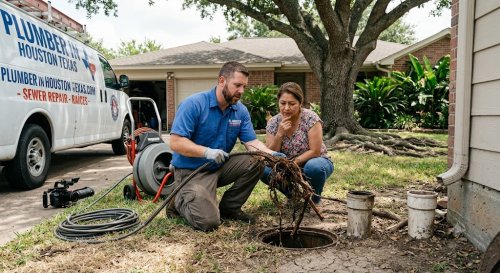
Professional drain cleaning often uncovers hidden issues that standard troubleshooting cannot detect. Tree root intrusion is a prominent factor in many established Houston neighborhoods, where vigorous root systems penetrate tiny joints or hairline cracks in underground sewer lines seeking water and nutrients. Once inside, roots form dense fibrous masses that trap toilet paper and debris.
Another overlooked factor is structural pipe sagging, often referred to as a "belly." Ground settling or shifting expansive soils can cause a section of a buried drain line to lose its downward slope or dip downward, creating a low spot where water and solid waste pool permanently. No amount of standard snaking will permanently fix a pipe belly; it requires physical repair or replacement to restore proper drainage pitch.
How Professionals Diagnose Drainage Issues
A qualified plumber does not rely on guesswork. Diagnosis typically begins with a thorough evaluation of symptom patterns across the building. If a blockage resists initial clearing or recurs frequently, a professional will often recommend a sewer camera inspection. This involves inserting a specialized waterproof camera on a flexible push-rod directly into the drain line.
The camera provides a real-time visual assessment of the pipe interior, revealing the exact nature of the obstruction, whether it is grease, scale, root infiltration, broken pipe segments, or a structural offset. However, a camera inspection has limitations; while it excellent for viewing interior pipe conditions, it cannot always determine the exact structural wall thickness or underlying material degradation without complementary locating equipment.
Professional Drain Cleaning Methods
Depending on the diagnostic findings, professionals utilize different techniques to clear and clean drain lines:
- Mechanical Augering (Snaking): Utilizes heavy-duty motorized cables equipped with specialized cutting heads to punch through and retrieve hard blockages, scale, or root masses in smaller branch lines.
- Hydro Jetting: Employs high-pressure streams of water delivered through specialized nozzles to scour the entire interior circumference of the pipe. Hydro jetting effectively blasts away stubborn grease, mineral scale, and heavy root intrusions, leaving pipe walls remarkably clean.
- Rooter Machine Service: Heavy-duty drum or sectional machines designed for larger main lines and private sewer laterals to clear heavy obstructions.
Factors That Influence Drain Cleaning Costs
Pricing for professional drain cleaning is never a one-size-fits-all figure. Several variables determine the overall scope and investment required:
- Access and Location: Easily accessible indoor cleanouts simplify the process, whereas lines lacking cleanouts may require removing a toilet or accessing hard-to-reach crawl spaces.
- Severity and Type of Blockage: Routine hair clogs require less time and equipment than removing thick grease buildup, heavy scale, or dense tree root mats.
- Technology Used: Standard mechanical snaking involves different labor and equipment costs compared to comprehensive high-pressure hydro jetting or combined camera inspections.
- Pipe Condition and Material: Extremely fragile or deteriorated older pipes require delicate handling to avoid causing accidental pipe collapse during the cleaning process.
A transparent plumbing estimate should clearly itemize diagnostic fees, the proposed cleaning method, any required access procedures, and what steps will be taken if primary cleaning methods reveal structural pipe damage.
Frequently Asked Questions
Why do my drains keep clogging even after I use a hand snake?
A hand snake only punches a temporary hole through the center of a blockage, leaving grease, soap scum, or mineral scale clinging to the pipe walls. Until these interior deposits are thoroughly scoured, new debris will quickly catch and form a new clog.
Can high-pressure hydro jetting damage older plumbing pipes?
Yes, in severely deteriorated, rusted, or structurally compromised pipes, excessive water pressure can cause further damage. A professional must always inspect the pipe condition with a camera first to determine whether hydro jetting or gentler mechanical cleaning is appropriate.
What causes multiple drains in my house to back up at the same time?
When multiple fixtures fail simultaneously, the restriction is almost always located in the main building drain or the private sewer lateral rather than an individual fixture branch line.
How often should main drain lines be professionally cleaned?
Most homes do not require routine main line cleaning unless there are recurring slow drains, persistent root intrusion issues, or older cast iron pipes prone to heavy interior scaling.
Is it safe to use chemical drain openers before calling a plumber?
It is generally discouraged. Chemical drain openers are highly corrosive, pose severe safety hazards to skin and eyes, and can ruin plumbing fixtures or react dangerously if professional equipment must later be used in the line.