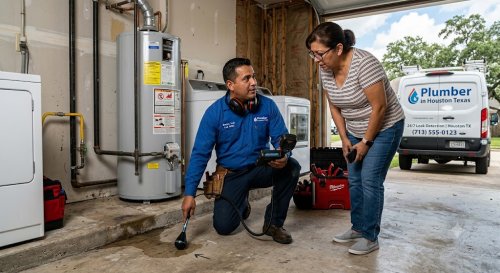
Raíces Tubería Alcantarillado Houston | Guía Plomería
Elimine las raíces en su tubería de alcantarillado en Houston. Diagnóstico profesional, inspección con cámara y soluciones definitivas de drenaje.
Critical Warning Signs: When Your Home is Sounding the Alarm
The presence of tree roots inside your lateral line does not stay hidden for long. Before total hydraulic blockage occurs, your plumbing system emits clear sensory signals that demand immediate evaluation:
-
Auditory Clues: Gurgling noises emitting from toilet bowls, floor drains, or shower traps after running the washing machine or draining a bathtub. This bubbling sound indicates trapped air forced upward as wastewater struggles against a root mass constraint.
-
Olfactory Indicators: Distinct sewer gas odors ($H_2S$) venting from lower-level fixtures or unexplained damp, rich earth smells inside the home or near the exterior foundation perimeter.
-
Drainage Slowdowns Across Multiple Fixtures: A single clogged sink points to a branch line problem. However, simultaneous slow drainage in showers, tubs, and toilets indicates a main mainline obstruction—most commonly caused by persistent root intrusion.
-
Exterior Landscape Anomalies: Unexplained patches of lush, vivid green grass directly above the main sewer line path, or localized sinkholes and muddy depressions along the front yard.
Delaying intervention when these signals emerge creates escalating structural risks. Hydrostatic pressure behind a root mass forces sewage out through compromised joints, eroding surrounding soil framing, causing slab instability, and triggering black mold acceleration within crawl spaces and wall cavities.
Root Causes: Why This Problem Occurs in Houston Homes
The environmental conditions in Southeast Texas create a high-risk environment for root intrusion into underground drainage infrastructure:
[Soil Contraction / Expansion] ➔ [Joint Misalignment / Cracks] ➔ [Moisture & Nutrient Leakage] ➔ [Root Attraction & Expansion]
-
Aggressive Native Flora & Tree Species: Fast-growing local species such as Live Oaks (Quercus virginiana), Water Oaks, and Crape Myrtles feature aggressive, shallow root systems that extend up to three times the width of the tree's canopy in search of moisture.
-
Houston's Expansive "Black Gum" Clay Soils: Highly reactive clay soil contracts during dry summer periods and expands heavily during rainy seasons. This continuous shifting places severe stress on underground piping, shearing joints, creating micro-cracks, and opening gaps for root hair intrusion.
-
Aging Infrastructure & Legacy Pipe Materials: Homes built prior to the late 1970s often feature clay tile (vitrified clay), cast iron, or orangeburg piping. Clay tile pipe sections are joined every few feet; over time, the sealants decay, leaving unsealed joints that attract hungry roots.
-
Subtropical Climate & High Water Tables: Houston's warm temperatures allow root systems to grow year-round without a winter dormancy period, continually expanding inside lines 365 days a year.
What Is Root Intrusion? Decoding the Mechanism
A home's sewer lateral functions via gravity, sloping downward from the foundation to the municipal main connection. Wastewater flowing through this pipe carries warmth, moisture, vapor, and nutrients.
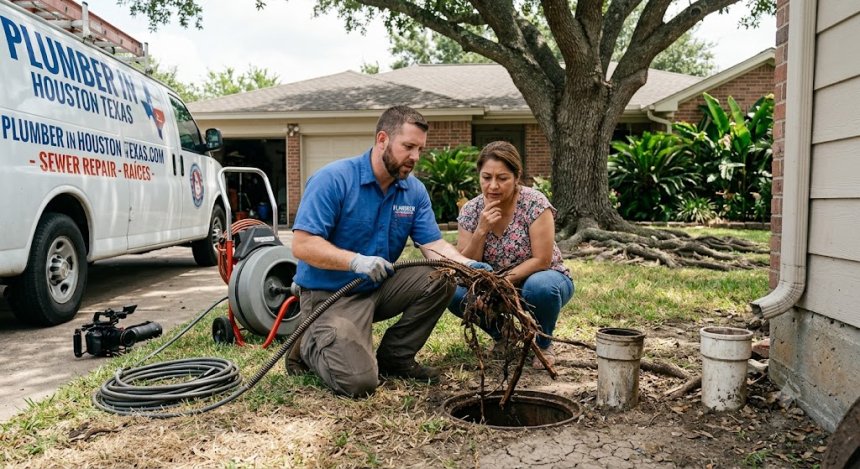
When a micro-fracture or failed pipe joint permits vapor release into the surrounding dirt, tree roots detect this nutrient gradient through hydrotropism. Hair-like root fibers penetrate the smallest seam, fracture, or joint gap.
+-----------------------------------------------------------------------+
|                         TREE ROOT INTRUSION                           |
+-----------------------------------------------------------------------+
|                                                                       |
|                     / \  / \                                          |
|                    /   \/   \  (Tree Base)                            |
|                   /________  \                                        |
|                        ||                                             |
|                        ||                                             |
|    ~~~~~~~~~~~~~~~~~~~~||~~~~~~~~~~~~~~~~~~~~~~~ [Ground Surface]    |
|                        ||                                             |
|              Main Roots||                                             |
|                       /  \                                            |
|                      /    \                                           |
|    +----------------/------\------------------------------------+    |
|    | Micro-crack   /        \   Sewer Pipe                      |    |
|    |              /   ROOT   \                                  |    |
|    |=============(   MASS    )==================================|    |
|    |              \          /  Wastewater Flow  ===>           |    |
|    +---------------\--------/-----------------------------------+    |
|                     \      /                                          |
|                      \    /                                           |
+-----------------------------------------------------------------------+
Once inside, microscopic root tip cells encounter ideal growth conditions. The hair roots quickly mature into dense, woody masses that catch toilet paper, grease, and solid waste, clogging the pipe completely and threatening to rupture the main line under pressure.
Introduction
Experiencing a sudden mainline backup into your home shower or floor drain is one of the most frustrating challenges a homeowner can face. When wastewater rises through low-lying fixtures, time is of the essence. In Southeast Texas, the single most common culprit behind severe main sewer line failures is the invasion of raíces tubería alcantarillado Houston.
Whether you live in historic homes in The Heights, established properties in Meyerland, or suburban developments across Spring and Katy, mature tree root systems aggressively target underground pipes. Understanding how root intrusion occurs, recognizing early warning indicators, and implementing code-compliant repairs can save thousands of dollars in emergency structural restoration.
Professional Diagnostic & Repair Workflow
Resolving a root-invaded mainline requires a systematic approach executed by a licensed plumber:
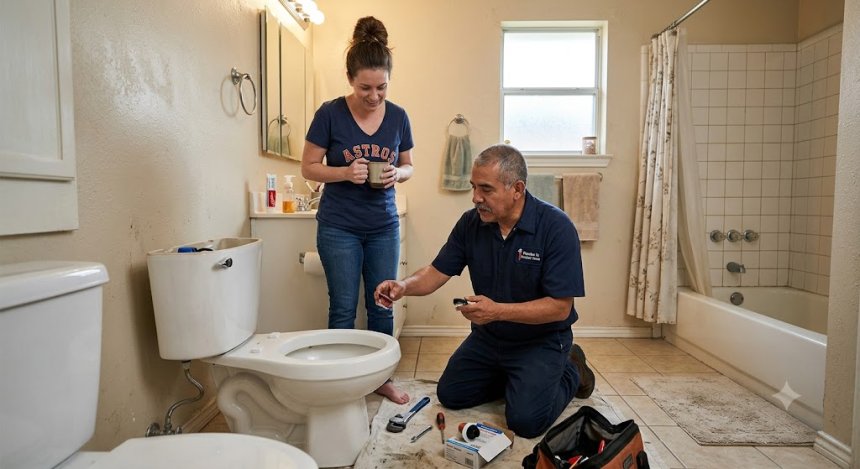
Step 1: Non-Invasive Triage & Safety Isolation
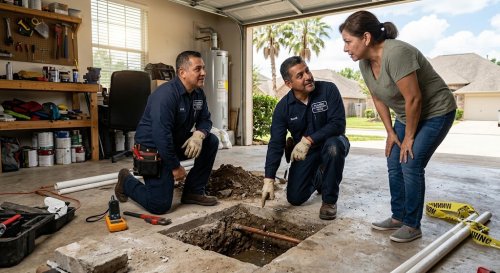
The technician locates the main cleanout access point outside the home structure, isolates running water fixtures to prevent internal property flooding, and assesses safety risks near electrical panels or water heaters.
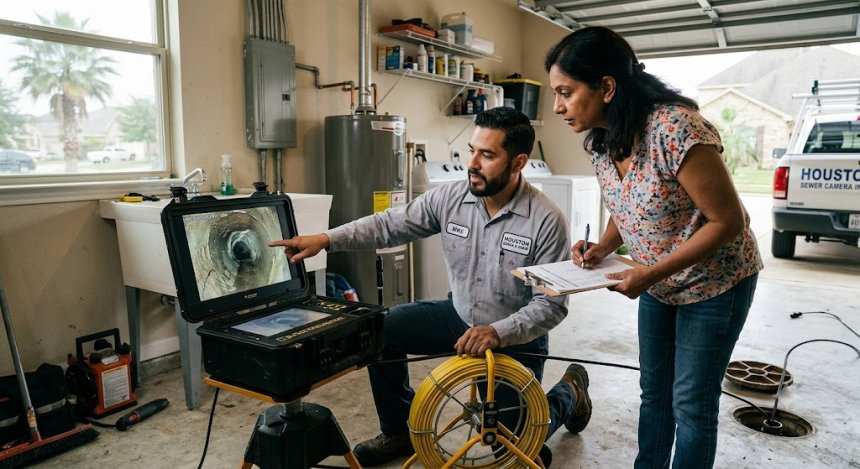
Step 2: Precision Digital Video Inspection
A self-leveling HD push-rod camera is deployed down the sewer line. The technician locates the exact footage distance, depth, and severity of root masses, while verifying whether pipe wall structure remains intact or has collapsed.
Step 3: Transparent, Upfront Options & Written Estimating
Based on the video findings, the plumber presents clear options—ranging from mechanical mechanical cutting and chemical treatment to trenchless lining or open-cut pipe replacement.
Step 4: Code-Compliant Remediation
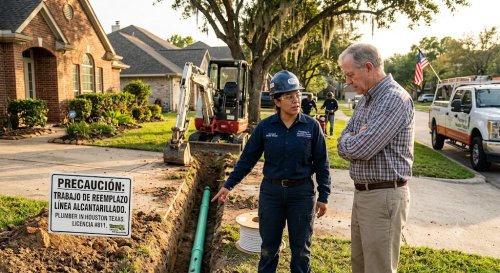
Using heavy-duty mechanical rodding, hydro-jetting, or trenchless CIPP (Cured-In-Place Pipe) lining, the line is restored to full inner-diameter clearance according to local plumbing codes.
Step 5: Final Pressure Testing & Flow Verification
A post-clearing camera pass and flow testing ensure all debris is removed, joints are sound, and wastewater drains at standard gravity velocity.
DIY Reality Check: What You Can Safely Fix vs. When to Step Back
Working on main sewer lines presents serious health, structural, and financial risks. Distinguishing safe home measures from complex plumbing tasks protects your property:
| DIY-Safe Actions | Danger Zone: Call a Professional |
| • Clearing minor surface drain traps with a plunger | • Renting commercial cable machines without safety training |
| • Pouring preventative copper sulfate tree root treatments down toilets | • Pouring caustic liquid chemicals into completely blocked main lines |
| • Clearing debris away from outdoor sewer cleanout caps | • Digging around underground gas or main utility lines without locators |
| • Shutting off the main water valve during an active backup | • Attempting trenchless repairs or structural pipe replacements |
Safety Warning: Commercial drain cables generate immense torque. If a heavy cable binds against a dense root mass underground, it can whip back, snapping hands or wrists, or break off inside the main pipe—turning a routine clearing job into a major excavation.
Advanced Diagnostics: The Professional Tool Arsenal
Eliminating root blockages without damaging existing infrastructure requires specialized, commercial-grade equipment:
-
HD Push-Rod Sewer Cameras: High-definition waterproof cameras equipped with 512Hz sondes transmit real-time video footage and precise depth location data to line-locating receivers above ground.
-
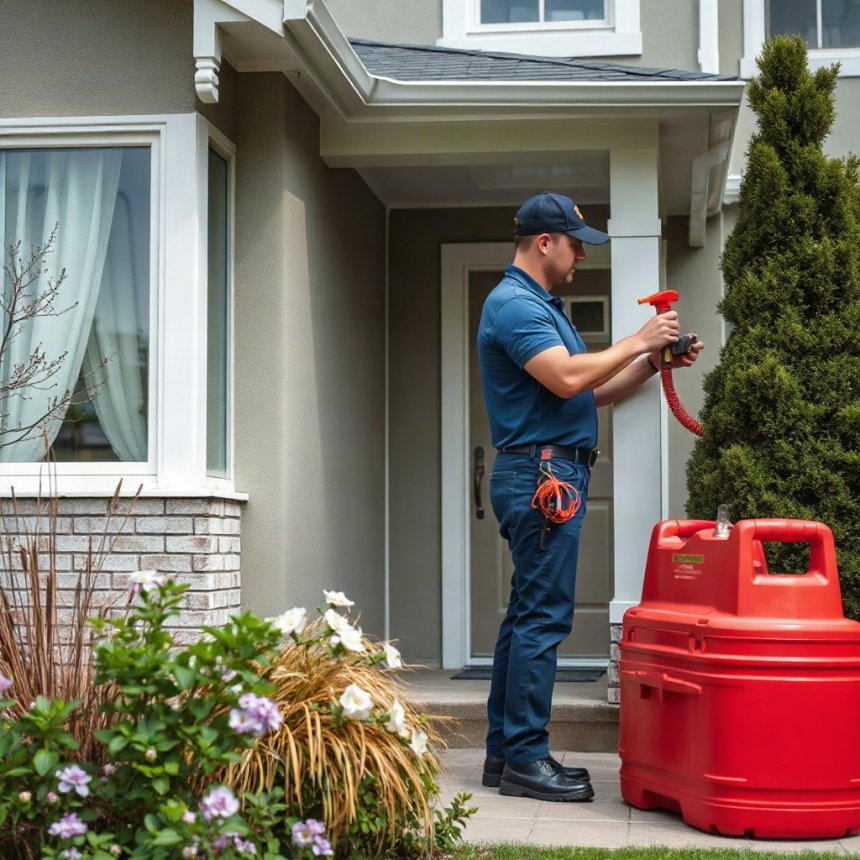
Hydro-Jetting High-Pressure Cleaning Units: Industrial units operating between 3,000 and 4,000 PSI blast water through specialized rotating nozzle heads to shear roots flush with pipe walls and wash away oil, scale, and accumulated solids.
-
Mechanical Flex-Shaft Chains: High-speed rotating chain cutters expand to the exact inner diameter of cast iron or PVC pipes, grinding tough, woody root structures into fine mulch without harming structural pipe walls.
-
Copper-Based Root Foaming Treatments: Professional EPA-registered foaming herbicides coat the top and sides of the entire interior pipe wall, dehydrating residual root tips and inhibiting regrowth for up to 12 months.
Comprehensive Home Plumbing Maintenance Framework
Preventing sudden sewer emergencies requires disciplined maintenance habits throughout the year:
Spring/Summer Checks
-
Schedule an annual sewer camera inspection if your home features mature trees within 30 feet of the lateral path.
-
Locate and mark your main cleanout cap, keeping it free of mulch, soil, and concrete overlays.
-
Perform a visual check of exposed soil along your sewer line path for unexpected sinkholes or damp patches.
Fall/Winter Preparation
-
Apply an EPA-approved copper sulfate or foaming root inhibitor treatment down a main toilet fixture before rainy seasons.
-
Drain and insulate exterior hose bibs to prevent pressure spikes across internal supply and waste systems.
-
Flush your water heater tank to remove sediment buildup that impacts overall household drainage pressure dynamics.
Year-Round Best Practices
-
Never flush paper towels, flushable wipes, feminine products, or dental floss down toilets.
-
Maintain mesh strainers over sink and shower drains to catch hair and debris that bind to root hairs inside main pipes.
-
Keep cooking fats, oils, and grease (FOG) out of kitchen sinks.
-
Monitor your water pressure with a gauge; ensure your Pressure Reducing Valve (PRV) maintains water pressure between 45 and 65 PSI.
Unique Expert Insights: Hard Truths Homeowners Learn Too Late
-
Chemical Drain Cleaners Do Not Fix Root Blockages: Over-the-counter chemical liquid cleaners sit behind root dams, heating up and warping PVC pipes or eating away at old cast iron, without clearing the mass.
-
"Flushable" Wipes Are Root Magnets: Even if wipes clear your toilet bowl, their synthetic fibers catch on fine root hairs inside the lateral, turning minor root wisps into complete line blockages within weeks.
-
Standard Homeowner Insurance Excludes Sewer Line Root Intrusion: Most standard home policies view root growth as a gradual maintenance issue. Without an explicit "Water and Sewer Line Backup" endorsement rider, main line repairs come out of pocket.
-
Clearing a Line Is Not the Same as Repairing It: Mechanical cutting removes the current blockage, but it leaves open entry points. Roots will return stronger within 6 to 18 months unless the pipe joint is structurally sealed or relined.
-
Unlicensed Handyman Repairs Can Ruin Real Estate Sales: Improper repairs or unpermitted underground work often fail municipal plumbing inspections during home sales, leading to mandatory teardowns and unexpected repair bills.
Financial Breakdown: Cost Factors & Investment Realities
Every property's lateral line layout is unique, meaning repair costs vary based on several site-specific variables:
[Diagnostic Camera Inspection] ➔ [Hydro-Jetting / Mechanical Clearing] ➔ [Trenchless Lining or Excavation Repair]
        ($250 - $450)                      ($450 - $900)                          ($3,000 - $8,000+)
-
Severity & Extent of Intrusion: A localized hair-root mass caught early requires basic mechanical clearing or hydro-jetting ($350 - $750). Severe intrusions that have crushed or cracked sections of pipe require trenchless lining or open excavation ($3,000 - $8,000+).
-
Depth & Pipe Accessibility: Cleanouts located in accessible soft yards cost less to service than lines running underneath concrete driveways, patios, or slab foundations requiring saw-cutting and restoration.
-
Pipe Material Composition: Old cast iron or vitrified clay pipes require specialized cutting tools and preparation compared to modern schedule 40 PVC lines.
-
Permitting & Municipal Inspections: Major structural repairs or street main tie-ins require city permits and municipal sign-offs, which are calculated into the final scope of work.
Emergency Protocol: When Immediate Dispatch Is Non-Negotiable
A mainline failure can quickly turn into a health hazard. Shut off your main household water valve immediately and call for emergency service if you experience:
-
Raw sewage backing up into shower pans, bathtubs, or floor drains when flushing toilets.
-
Multiple plumbing fixtures overflowing simultaneously throughout the ground floor.
-
Sewage odors accompanied by water pooling around electrical panels, water heaters, or living area flooring.
-
Total loss of drainage capacity during heavy rainfall combined with wastewater overflow in outdoor cleanouts.
Frequently Asked Questions (FAQs)
How do I know if tree roots are clogging my main sewer line?
Common signs include multiple slow drains throughout the home, gurgling noises from toilets when other fixtures run, sewer smells inside or outside, and raw sewage backing up into lower showers or tubs.
Will pouring bleach or chemical cleaners kill roots in my pipes?
No. Chemical drain cleaners and bleach are ineffective against dense root systems and can damage your pipes, harm the environment, and burn plumbing technicians working on the line.
How often should I treat my sewer line for roots in Houston?
In areas with mature trees and clay soil, perform a video inspection every 12 to 18 months and apply professional foaming root treatments annually to prevent root hair expansion.
What is trenchless pipe lining, and does it stop roots?
Trenchless pipe lining (CIPP) inserts an epoxy-saturated resin liner inside your existing pipe, creating a seamless, joint-free interior pipe wall that prevents roots from entering without requiring broad yard excavation.
Can tree roots destroy a cast iron or PVC pipe completely?
Yes. Roots enter through small joints or hairline cracks, expanding as they absorb water. Over time, this growth exerts outward pressure that can shear cast iron joints or crack PVC lines underground.
Who is responsible for fixing the main sewer line?
As a rule of thumb, homeowners are responsible for the lateral line running from the house structure up to the property line or utility easement connection. The city handles issues within the municipal main line.
How much does it cost to clear roots out of a main sewer line?
Basic mechanical rodding or hydro-jetting to clear a root obstruction typically ranges from $350 to $850, depending on line accessibility and severity. Structural repairs or complete relining require custom written estimates.
Why Houston Homeowners Trust Plumber in Houston Texas
-
Licensed & Field-Experienced Plumbers: Every service technician brings extensive diagnostic experience in addressing local Houston soil movement and piping systems.
-
Transparent, Upfront Flat-Rate Pricing: Detailed written evaluations provided before work begins—no hidden fees or unexpected emergency surcharges.
-
State-of-the-Art Trenchless & Jetting Technology: Equipped with high-definition self-leveling cameras, high-pressure hydro-jetters, and epoxy lining tools to repair your lines with minimal yard disruption.
-
Local Expertise Across Greater Houston: Dedicated service coverage across Houston, Katy, Spring, Cypress, The Woodlands, Sugar Land, and surrounding Harris County communities.
-
Satisfaction & Code Compliance Commitment: All structural lateral repairs meet local plumbing code standards and are backed by comprehensive warranties.