Sewer Line Problems in Memorial: Warning Signs
Learn the warning signs of sewer line problems in Memorial, Houston, when to schedule an inspection, repair options, costs, and emergency signs.

Sewer Line Problems Can Start With Small Warning Signs
A sewer line problem rarely announces itself with a dramatic failure on the first day.
In many Memorial, Houston homes, the first warning may be a toilet that gurgles, a drain that repeatedly slows down, an unusual sewage odor, or several fixtures that begin draining poorly at approximately the same time.
These symptoms are easy to dismiss because the plumbing may continue working.
That can be a mistake.
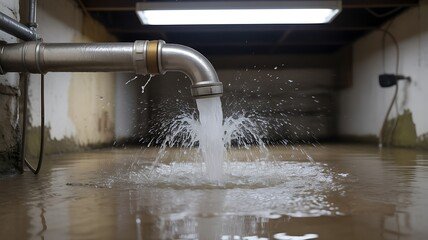
A sewer line carries wastewater away from your home. When the line becomes blocked, damaged, displaced, or invaded by roots, wastewater may eventually have nowhere to go. A minor drainage problem can progress into a sewage backup or underground leak.
Houston Public Works explains that sewer overflows can contaminate water, cause property damage, and create public-health concerns. The city also distinguishes between problems in the public sewer system and problems in private wastewater pipes closer to the home.
For Memorial homeowners, the goal should not be to wait until wastewater enters the house.
The goal is to recognize the warning signs early enough to determine whether a professional sewer inspection is warranted.
What Is a Sewer Line Problem?
Your home's sewer line is the drainage pipe that carries wastewater from fixtures such as toilets, sinks, showers, tubs, and washing machines toward the public sewer system or an applicable private wastewater system.
A sewer problem can occur anywhere along that route.
Common problems include:
- Tree-root intrusion
- Grease and debris buildup
- Pipe corrosion
- Cracked sewer pipes
- Collapsed sections
- Offset or separated joints
- Pipe scaling
- Bellied or sagging sections
- Improper installation
- Foreign objects
- Soil movement
- Aging pipe materials
A localized fixture clog is different from a main sewer-line problem.
If only one sink is slow, the problem may be close to that fixture. If several drains throughout the home become slow or back up together, the main drainage system deserves closer attention.
Why Do Sewer Line Problems Happen in Memorial Homes?
Several factors can contribute to sewer problems.
Aging Sewer Pipes
Older homes may contain plumbing materials that have experienced decades of use.
Even when a pipe continues to function, corrosion, cracking, scaling, and joint deterioration can gradually reduce reliability.
Tree Root Intrusion
Roots naturally seek moisture.
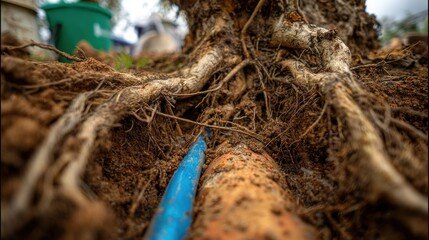
If a sewer pipe has a damaged joint or small opening, roots can enter the line and grow around the interior.
Roots can trap toilet paper, grease, and other debris, eventually creating recurring blockages.
Corrosion
Metal sewer pipes can deteriorate over time.
Corrosion may roughen the interior surface and reduce the effective opening available for wastewater.
Pipe Cracks
Ground movement, age, physical stress, and deterioration can contribute to cracks.
A cracked line may allow wastewater to escape into surrounding soil.
Offset Joints
A pipe connection can shift when surrounding soil moves.
An offset joint may restrict wastewater flow or create an opening where roots can enter.
Pipe Collapse
Severely deteriorated sewer pipes can eventually collapse.
A collapsed section can create a serious obstruction that ordinary drain cleaning cannot permanently solve.
Improper Slope
Sewer lines depend on appropriate drainage conditions.
If a section settles or develops a low spot, wastewater and solids may collect instead of moving efficiently.
Grease and Debris
Although grease is more commonly associated with kitchen drainage, accumulated grease and inappropriate materials can contribute to larger drainage restrictions.
Signs Your Memorial Home May Need a Sewer Inspection
Knowing the warning signs can help you decide when professional evaluation makes sense.
1. Multiple Slow Drains
If the kitchen sink, bathroom sink, shower, and other fixtures all begin draining slowly, the problem may be farther downstream than an individual fixture.
2. Recurring Toilet Clogs
A toilet that repeatedly clogs despite plunging or normal use deserves investigation.
A recurring problem can indicate a deeper drainage restriction.
3. Gurgling Toilets
A toilet that gurgles when another fixture is running may indicate trapped air or restricted wastewater flow.
One occurrence does not prove a sewer-line failure, but recurring gurgling combined with other symptoms is worth investigating.
4. Sewage Odors
A persistent sewage smell inside or around the property can indicate a drainage, venting, or sewer problem.
Do not assume the odor is simply an unpleasant household smell.
5. Water Backing Up Into a Tub or Shower
When wastewater backs up into a lower fixture while another fixture is being used, there may be a restriction in the shared drainage system.
6. Sewage Backup
Wastewater coming back through toilets, floor drains, tubs, or other fixtures is a serious warning.
Stop using unnecessary plumbing fixtures and seek professional assistance.
7. Unusually Wet Areas in the Yard
A damaged sewer line can sometimes contribute to wet or unusually lush areas around the sewer route.
However, irrigation and drainage issues can create similar symptoms, so a professional diagnosis is necessary.
8. Persistent Pest Activity
Cracks or openings around sewer systems can sometimes create pathways for insects or rodents.
Pest activity alone does not prove a sewer problem, but it can be another reason to investigate persistent plumbing symptoms.
9. Unexplained Foundation or Ground Changes
Cracks, depressions, or soil changes can have many causes.
If these changes occur alongside recurring sewer symptoms, mention them to the plumber during the inspection.
When Should You Schedule a Sewer Inspection?
A sewer inspection is especially useful when:
- Drains repeatedly clog
- Multiple fixtures drain slowly
- Sewer odors persist
- Toilets gurgle regularly
- A sewer backup has occurred
- Roots have previously entered the line
- A home has older plumbing
- You are buying an older property
- Previous sewer repairs have been performed
- You are considering major plumbing renovations
A camera inspection can help determine whether the problem is inside the pipe rather than relying only on surface symptoms.
Houston's Plumbing Inspections section specifically recognizes sewer inspections as part of plumbing inspection work, and permitted plumbing work may require inspection and approval before completion.
What Happens During a Professional Sewer Inspection?
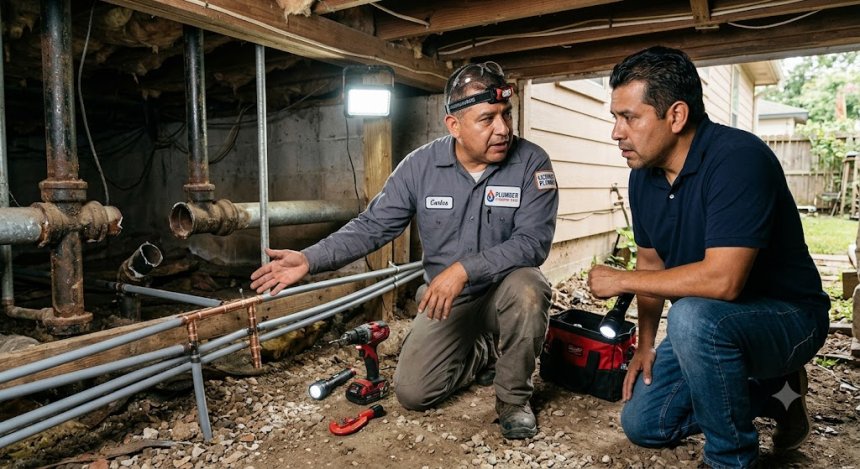
A professional inspection usually begins with an evaluation of the symptoms.
Step 1: Discuss the Symptoms
The plumber asks when the problem began, which fixtures are affected, whether backups have occurred, and whether previous repairs have been performed.
Step 2: Locate an Appropriate Access Point
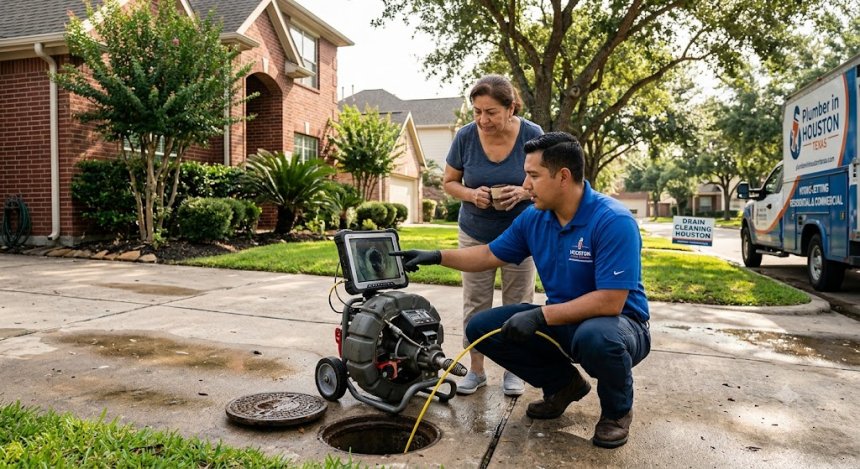
The plumber may use an existing cleanout or another suitable access point.
Step 3: Run a Sewer Camera
A specialized inspection camera can travel through the sewer line and provide a view of the pipe interior.
The camera may reveal:
- Roots
- Cracks
- Corrosion
- Scale
- Blockages
- Offset joints
- Collapsed sections
- Standing water
- Structural defects
Step 4: Locate the Problem
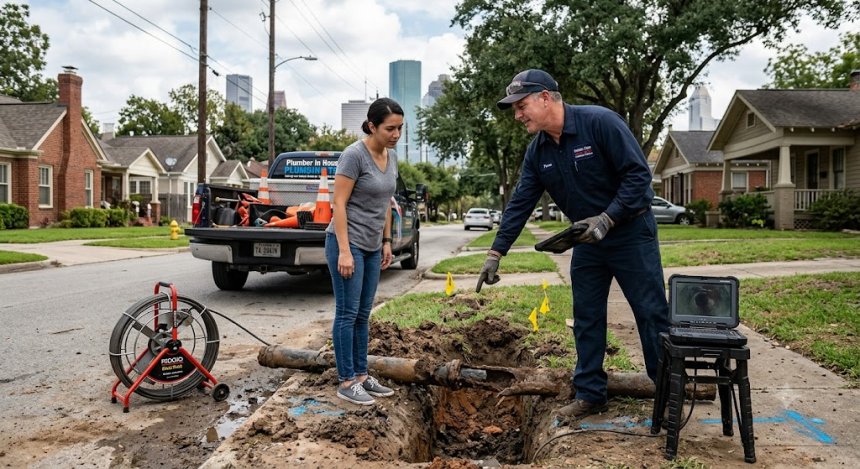
If necessary, locating equipment can help determine where the defect sits underground.
Step 5: Determine the Scope
The plumber evaluates whether the issue is localized or affects a larger section of the line.
Step 6: Discuss Options
Possible solutions may include cleaning, localized repair, pipe rehabilitation, or replacement.
Step 7: Test the System
After work is completed, the drainage system should be tested to confirm proper operation.
Can You Fix a Sewer Line Problem Yourself?
Homeowners can safely perform basic observations, but sewer-line repairs are generally not a good DIY project.
You can:
- Note which drains are affected
- Check whether toilets gurgle
- Look for visible yard moisture
- Avoid flushing inappropriate materials
- Reduce water use during a backup
- Locate the sewer cleanout if you know where it is
- Photograph visible damage
Avoid:
- Digging into the sewer line without knowing its location
- Cutting underground pipes
- Using aggressive chemicals repeatedly
- Opening a contaminated sewage area unnecessarily
- Attempting structural sewer repairs without appropriate equipment
If wastewater is backing up into the home, professional assistance should be obtained promptly.
What Tools Do Sewer Professionals Use?
Modern sewer diagnostics can provide much more information than simply running a drain snake.
Sewer Inspection Cameras
A camera provides a direct view of the interior pipe.
Pipe Locators
These can help identify the approximate location and depth of an underground defect.
Hydrostatic Testing
In certain situations, hydrostatic testing may be used to evaluate whether a sewer system is losing water because of a leak.
Isolation Testing
Where appropriate, sections of a drainage system can be isolated to help narrow down the source of a suspected leak.
Hydro Jetting Equipment
High-pressure water can remove certain types of buildup and debris.
However, hydro jetting should not automatically be used on severely damaged piping without first evaluating the pipe's condition.
Houston sewer inspection providers describe a diagnostic process involving camera inspection, hydrostatic testing, and isolation testing when a suspected underground sewer leak needs further confirmation.
How Long Does a Sewer Inspection or Repair Take?
A camera inspection is generally much faster than a major sewer replacement because the inspection does not necessarily require excavation.
The actual repair timeline depends on the problem.
Simple Blockage
A straightforward obstruction may be addressed relatively quickly.
Root Intrusion
Root removal can take longer depending on the severity and location of the intrusion.
Localized Pipe Repair
A single damaged section may require excavation or another appropriate repair method.
Major Sewer Replacement
A complete replacement can take considerably longer because access, excavation, pipe installation, testing, and surface restoration may all be involved.
Factors include:
- Pipe length
- Pipe depth
- Soil conditions
- Location
- Landscaping
- Concrete or pavement
- Pipe material
- Number of damaged sections
- Required permits
- Repair method
- Restoration requirements
How Much Does Sewer Line Repair Cost?
There is no responsible fixed price for sewer-line repair.
Costs can vary significantly depending on:
- Diagnostic work
- Camera inspection
- Labor
- Pipe material
- Sewer-line length
- Depth
- Accessibility
- Excavation
- Root removal
- Repair versus replacement
- Trenchless rehabilitation
- Concrete or landscaping restoration
- Permit requirements
- Local labor rates
A small localized repair can be dramatically different from replacing a sewer line beneath a slab or landscaped property.
Before approving major work, ask for a written scope that explains what will be repaired, how access will be created, what restoration is included, and whether additional work could become necessary.
Repair, Cleaning, or Replacement?
Not every sewer problem requires replacement.
Cleaning May Be Appropriate When:
- The pipe is structurally sound
- The problem is primarily buildup
- Roots are causing a removable obstruction
- There is no significant structural damage
Repair May Be Appropriate When:
- One section is cracked
- A joint has failed
- Damage is localized
- Most of the pipe remains structurally sound
Replacement May Be Appropriate When:
- Multiple sections have failed
- The pipe is severely deteriorated
- A section has collapsed
- Repairs keep failing
- Structural damage is widespread
- The remaining pipe has reached the end of its practical service life
A camera inspection can help distinguish between these situations.
Hidden Truths Homeowners Should Know
A Drain Cleaning Does Not Always Solve the Real Problem
If the same blockage keeps returning, the pipe itself may need inspection.
Sewer Problems Can Be Hidden
A sewer line can deteriorate underground without producing obvious indoor flooding.
Roots Often Point to an Opening
Repeated root intrusion can indicate a damaged joint, crack, or other pathway into the pipe.
A New House Can Still Have Sewer Problems
Age is a risk factor, not a guarantee. Installation quality, soil movement, landscaping, pipe material, and previous repairs all matter.
The Cheapest Repair May Not Be the Longest-Lasting
A temporary blockage removal may restore flow but leave a structural defect untouched.
Sewer Backups Are More Than a Plumbing Nuisance
Houston Public Works notes that sanitary sewer overflows can create contamination, property damage, and public-health concerns.
Know Who Owns the Problem
Private wastewater pipes closer to the home are generally the homeowner's responsibility, while problems in the public sewer system may fall under municipal responsibility. Houston Public Works provides guidance for distinguishing these situations using the cleanout and 311 system.
15 Common Mistakes Homeowners Make
- Ignoring recurring clogs — Repeated symptoms deserve diagnosis.
- Assuming every blockage is local — Multiple affected fixtures can indicate a main-line problem.
- Waiting for a sewage backup — A backup can be the late-stage symptom of an existing restriction.
- Using chemical drain cleaners repeatedly — They do not repair damaged sewer pipes.
- Flushing wipes — Products marketed as flushable can still contribute to drainage problems.
- Pouring grease down the drain — Grease can accumulate and restrict drainage.
- Ignoring sewage odors — Persistent odors deserve investigation.
- Ignoring toilet gurgling — Repeated gurgling can be an early warning sign.
- Planting trees directly over sewer routes — Roots can create future maintenance problems.
- Assuming roots are the entire problem — Roots may be entering through an existing crack or damaged joint.
- Replacing the entire sewer without inspection — Know what actually failed first.
- Choosing a contractor only by price — Compare the diagnostic findings and scope of work.
- Skipping camera inspection — Visual evidence can be valuable before major excavation.
- Ignoring previous repairs — A history of repeated sewer repairs can indicate broader deterioration.
- Delaying action after a backup — Repeated wastewater exposure can create additional property and sanitation concerns.
Sewer Maintenance Tips for Memorial Homeowners
- Know where your sewer cleanout is located.
- Keep the cleanout accessible.
- Never flush wipes or paper towels.
- Keep grease and cooking oil out of drains.
- Avoid flushing feminine hygiene products.
- Monitor recurring toilet clogs.
- Pay attention to slow drains.
- Investigate persistent sewage odors.
- Watch for unusual yard moisture.
- Monitor areas with mature trees.
- Address root intrusion promptly.
- Keep records of sewer repairs.
- Consider a camera inspection after repeated blockages.
- Have aging sewer systems evaluated before major renovations.
- Ask for documentation when significant sewer defects are found.
- Do not repeatedly rely on temporary blockage removal.
- Ask about trenchless options when replacement is recommended.
- Confirm whether a suspected problem is private or municipal.
- Reduce water usage during an active sewer backup.
- Have significant sewer work performed by an appropriately qualified plumbing professional.
When Is a Sewer Problem an Emergency?
Call for urgent plumbing assistance when you experience:
- Sewage backing into the home
- Multiple fixtures backing up
- Wastewater overflowing from drains
- A suspected collapsed sewer line
- A major underground wastewater leak
- Rapidly worsening drainage
- Strong sewage odors combined with backups
- Wastewater entering living spaces
If wastewater is backing up, stop using unnecessary sinks, showers, washing machines, and other fixtures until the problem is evaluated.
Houston Public Works advises homeowners to check the area around the street-side cleanout during a toilet backup. If sewer water is standing there, the issue may involve the city's public system and should be reported through Houston 311; if there is no sewer water at that cleanout, Houston Public Works advises contacting a certified plumber for a private-line blockage.
People Also Ask About Sewer Line Problems
How do I know if my sewer line is clogged?
Common signs include recurring drain clogs, multiple slow drains, toilet gurgling, sewage odors, and wastewater backing up into tubs or other fixtures.
What are the first signs of a broken sewer line?
Early signs can include recurring blockages, sewage odors, unexplained wet areas, gurgling fixtures, and drainage problems. A camera inspection is often needed to determine whether the pipe is actually damaged.
Can a clogged drain mean I have a sewer-line problem?
Yes, particularly when multiple fixtures are affected or the same blockage repeatedly returns.
How do plumbers inspect sewer lines?
A plumber can often use a specialized sewer camera inserted through an accessible cleanout to visually inspect the inside of the pipe.
Is a sewer camera inspection worth it?
For recurring or unexplained sewer problems, a camera inspection can provide useful information about roots, cracks, corrosion, blockages, and structural defects before major repair decisions are made.
Can tree roots damage a sewer line?
Yes. Roots can enter through cracks or defective joints and create blockages. Repeated root intrusion may indicate an underlying pipe defect.
How do I know whether the city or homeowner is responsible for a sewer problem?
It depends on where the problem is located. Houston Public Works provides guidance distinguishing public sewer problems from private wastewater piping closer to the property.
Can hydro jetting damage an old sewer pipe?
It can if the equipment or pressure is inappropriate for the pipe's condition. The sewer should be evaluated before aggressive cleaning is performed, especially when structural deterioration is suspected.
Should I replace my sewer line or repair it?
That depends on the extent of damage. Localized defects may be repairable, while widespread deterioration or repeated failures may make replacement more practical.
How long does a sewer line last?
There is no single lifespan that applies to every sewer line. Material, soil, installation, maintenance, corrosion, roots, and other environmental factors all affect service life.
Can sewer problems cause bad smells inside a house?
Yes. Sewer odors can occur when wastewater, sewer gas, damaged piping, or drainage problems affect the plumbing system. The exact source should be professionally identified.
Should I get a sewer inspection before buying an older Houston home?
It can be a sensible precaution, especially when the property has older plumbing, recurring drainage problems, large mature trees, or a history of sewer repairs.
Why Choose a Qualified Plumber for a Memorial Sewer Inspection?
Sewer problems are difficult to diagnose accurately from symptoms alone.
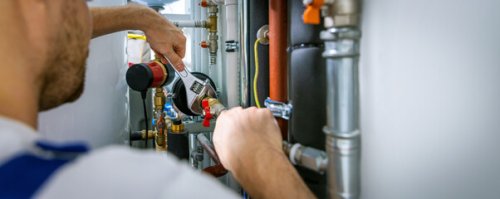
A reliable plumbing professional should explain what was found, where it was found, and why a particular repair is being recommended.
When selecting a plumber serving Memorial, Houston, look for:
- Appropriate Texas licensing and qualifications
- Experience with sewer diagnostics
- Sewer camera inspection capability
- Experience with older plumbing systems
- Clear written estimates
- Transparent repair recommendations
- Conventional and trenchless repair knowledge
- Appropriate permitting knowledge
- Clear communication about restoration
- Warranty information when applicable
The Houston Permitting Center confirms that the city conducts residential and commercial sewer inspections and provides information about plumbing permits and inspection requirements.
Schedule a Sewer Line Inspection in Memorial
Sewer problems rarely become easier or less expensive when they are ignored.
If your Memorial home has recurring clogs, multiple slow drains, gurgling toilets, sewage odors, unexplained yard moisture, or wastewater backups, a professional plumbing inspection can help determine whether the problem is a fixture, drain, or main sewer line.
For plumbing assistance in Memorial, Houston, Harris County, and nearby communities such as River Oaks, Spring Branch, West Houston, Hedwig Village, and Piney Point Village, contact Emergency Plumbing in Houston Heights at 844-833-2093.
Ask about a professional sewer inspection before committing to major repair or replacement work.
Call 844-833-2093 to schedule a plumbing inspection or discuss your sewer line problem.