Water Heater Emergency in Spring, TX: Leaking Tank Guide
Is your water heater leaking in Spring, TX? Learn what to do immediately, warning signs, repair options, costs, and when to replace the tank.
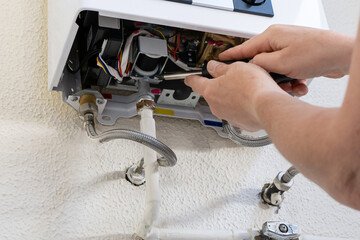
What Should You Do When Your Water Heater Tank Is Leaking?
A leaking water heater should never be treated as just another household drip.
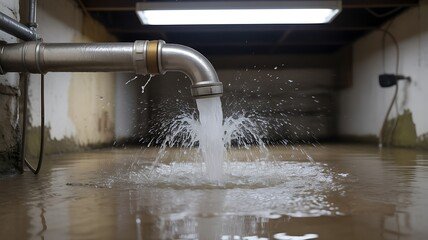
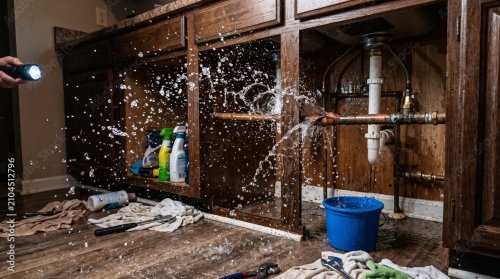
A water heater can hold a large volume of water, and a small leak can become a major release if the tank, drain valve, connection, or pressure-relief components fail.
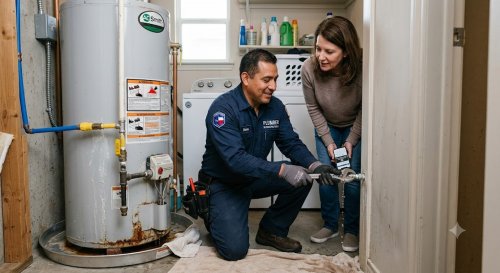
For homeowners in Spring, Texas, the first priority is to determine whether water is actively escaping, protect the surrounding area, and shut down the water heater safely when possible.
If the tank itself is leaking, especially from the bottom or through the metal body, the problem may indicate internal tank corrosion or failure. In that situation, replacing the water heater may make more sense than attempting a permanent repair.
On the other hand, water around a water heater does not automatically mean the tank has failed. A loose connection, leaking valve, temperature-and-pressure relief valve, drain valve, or nearby plumbing connection may be responsible.
That distinction can make a major difference in the recommended repair.
What Does a Leaking Water Heater Mean?
A water heater leak means water is escaping from somewhere in or around the water-heating system.
Common sources include:
- Water-supply connections
- Flexible water connectors
- Temperature-and-pressure relief valve
- Drain valve
- Tank fittings
- Heating-system components
- Corroded tank
- Internal tank failure
- Nearby plumbing
- Expansion-related problems
The location of the water is an important clue.
For example, water at the top of the heater may point toward a connection or valve, while water coming directly through the bottom of the tank can indicate a much more serious tank failure.
A plumber should identify the actual source before recommending replacement.
Why Do Water Heater Tanks Leak?
Internal Corrosion
Traditional tank water heaters contain a large steel storage tank.
Over time, corrosion can weaken the tank.
Once the tank itself develops a hole, a permanent patch is generally not a reliable solution. The practical answer is often replacement.
Sediment Accumulation
Minerals and sediment can settle at the bottom of a tank.
A thick sediment layer can reduce efficiency and contribute to operating problems.
Regular maintenance can help reduce sediment-related issues, although maintenance cannot reverse advanced tank corrosion.
High Water Pressure
Excessive pressure can place additional stress on plumbing components.
Pressure problems may affect valves, connections, and other parts of the system.
Faulty Temperature-and-Pressure Relief Valve
The temperature-and-pressure relief valve is a safety component designed to release pressure under specified conditions.
If water is continuously discharging from the valve, the valve and the system conditions should be evaluated.
Do not simply cap, plug, or disable the relief valve.
Loose Connections
Supply connections above the tank can develop leaks.
These may be relatively straightforward to repair compared with a failed tank.
Damaged Drain Valve
The drain valve near the bottom of the heater can sometimes leak.
A leaking valve does not necessarily mean the entire water heater needs replacement.
Aging Equipment
Older water heaters are more likely to experience component deterioration.
The question becomes whether repairing one component is sensible when the rest of the unit is already near the end of its useful service life.
Signs Your Water Heater Leak May Be Serious
Water Around the Bottom of the Tank
Water beneath the tank deserves immediate investigation.
If the water appears to originate from the tank itself rather than a valve or connection, internal tank failure may be involved.
A Steady Stream of Water
A continuous flow is more urgent than a small occasional drip.
Rust Around the Tank
Visible corrosion can indicate deterioration.
Rust around a connection is different from rust appearing through the tank body, so the exact location matters.
Water Coming From the Tank Seam
A leak through the tank body or seam can indicate that the storage tank itself has failed.
Hot Water on the Floor
Hot water escaping from a water heater can cause burns and damage flooring.
Keep children and pets away from the area.
Water Spreading Into Other Rooms
A leaking heater located in a garage, closet, utility room, or upper floor can cause significant property damage if water continues escaping.
No Hot Water Along With a Leak
A leak accompanied by loss of hot water can indicate a broader water-heater failure.
What Should You Do Immediately?
Step 1: Stop Using Hot Water
Avoid using fixtures unnecessarily while you determine the severity of the problem.
Step 2: Shut Off the Water Supply
Most tank water heaters have a cold-water shutoff valve on the incoming water line.
If it is accessible and safe to operate, closing the valve can reduce additional water entering the tank.
Do not force a severely corroded valve.
Step 3: Turn Off the Energy Source Safely
For a gas water heater, use the manufacturer's instructions for safely shutting down the gas appliance.
Do not attempt to disconnect gas piping yourself.
For an electric water heater, the electrical supply should be shut off at the appropriate circuit breaker when it is safe to do so.
If water is near electrical equipment or you cannot safely reach the electrical disconnect, do not put yourself at risk.
Step 4: Contain the Water If Practical
If the leak is small and safe to approach, place a container beneath the drip.
For a major leak, focus on shutting off the water and protecting people rather than attempting an improvised repair.
Step 5: Move Nearby Items
Move boxes, furniture, electronics, tools, and other belongings away from the water if doing so is safe.
Step 6: Call a Qualified Plumber
If the tank is leaking heavily, the source cannot be identified, or the water heater appears damaged, professional inspection is appropriate.
Is a Leaking Water Heater an Emergency?
It can be.
Call for emergency plumbing assistance when:
- Water is rapidly leaving the tank
- The tank appears to be ruptured
- Water is flooding the room
- You cannot stop the incoming water
- Water is approaching electrical equipment
- A gas-water-heater problem is suspected
- Hot water is creating a burn hazard
- Water is spreading into walls or other rooms
- The leak occurs overnight or outside normal service hours and is causing active damage
A slow leak from a replaceable valve may not require the same response as a tank that is actively releasing water.
The severity of the leak matters.
Can You Repair a Leaking Water Heater Yourself?
There are a few safe emergency actions homeowners may be able to perform.
You can generally:
- Identify the water shutoff
- Shut off the incoming water if accessible
- Move belongings away from the leak
- Turn off the electric circuit when it can be done safely
- Follow the manufacturer's shutdown instructions
- Document the leak with photographs
However, avoid attempting to:
- Open a gas appliance
- Disconnect gas lines
- Remove safety valves
- Plug a pressure-relief discharge
- Cut water-heater piping without knowing the system
- Repair a corroded tank
- Work on electrical components while standing in water
A water heater combines water, electricity or gas, heat, pressure, and potentially heavy equipment.
That is not a good environment for trial-and-error repairs.
How Does a Professional Diagnose the Leak?
A plumber will usually begin by identifying exactly where the water originates.
Step 1: Visual Inspection
The technician checks:
- Tank body
- Top connections
- Bottom connections
- Drain valve
- Relief valve
- Water lines
- Surrounding plumbing
Step 2: Determine Whether the Tank Is Leaking
This is one of the most important diagnostic questions.
A leaking connection may be repairable.
A tank that has failed internally generally requires replacement.
Step 3: Inspect the Plumbing Connections
The plumber checks valves, fittings, supply lines, and connections for signs of leakage or corrosion.
Step 4: Evaluate the Water Heater's Condition
The technician considers:
- Age
- Visible corrosion
- Previous repairs
- Sediment
- Overall condition
- Energy source
- Capacity
- Installation
Step 5: Recommend Repair or Replacement
The recommendation should be based on the actual condition of the unit.
Repair or Replace: Which Is Better?
Repair May Make Sense When:
- The tank itself is sound
- A valve is leaking
- A connection is loose
- A replaceable component has failed
- The unit is otherwise in good condition
For example, replacing a leaking drain valve can be very different from replacing an entire water heater.
Replacement May Make More Sense When:
- The tank itself is leaking
- Corrosion is widespread
- The heater has experienced repeated failures
- Repair costs are becoming excessive
- The unit is near the end of its service life
- Replacement parts are difficult to source
- The heater no longer meets the household's needs
A homeowner should ask the plumber to explain what failed and why replacement is being recommended.
How Long Does Water Heater Repair Take?
The timeline depends on the problem.
Simple Valve or Connection Repair
A straightforward component repair may take considerably less time than replacing an entire unit.
Tank Replacement
A replacement involves:
- Disconnecting the old unit
- Removing it
- Preparing the installation area
- Installing the new heater
- Connecting water lines
- Connecting the appropriate energy source
- Testing the system
Complicated Installations
Additional time may be needed for:
- Difficult access
- Relocation
- Code-related corrections
- Venting changes
- Drain-pan modifications
- Expansion-control requirements
- Electrical upgrades
- Gas-line work
- Permit or inspection requirements
Ask for a realistic project timeline based on your actual installation.
How Much Does a Leaking Water Heater Cost to Repair?
There is no reliable fixed price without identifying the problem.
Costs can depend on:
- Diagnostic work
- Replacement parts
- Labor
- Water-heater type
- Tank capacity
- Energy source
- Accessibility
- Emergency service
- Required code upgrades
- Venting
- Electrical work
- Gas-line work
- Drain-pan requirements
- Water-damage restoration
- Disposal of the old unit
- Permit or inspection requirements, when applicable
A leaking drain valve and a failed 50-gallon tank are completely different repair situations.
The most useful estimate is one based on the actual equipment and installation conditions.
Hidden Truths Homeowners Should Know
A Leak Does Not Automatically Mean the Tank Is Ruined
Water may be escaping from a replaceable valve or connection.
A Tank Leak Is a Different Story
If the tank shell itself has failed, replacement is generally the practical long-term solution.
Water Damage Can Cost More Than the Plumbing Repair
A relatively inexpensive plumbing problem can become costly if water damages drywall, flooring, cabinets, insulation, or other building materials.
Turning Off the Water Does Not Solve Everything
The heater may still contain hot water.
Follow appropriate shutdown procedures and allow the system to cool before attempting any service.
Do Not Disable Safety Devices
Never cap, plug, or otherwise defeat a temperature-and-pressure relief valve.
Older Equipment Deserves a Broader Evaluation
If an older heater has one failing component, ask whether other components are also deteriorating.
A Cheap Repair May Not Be the Cheapest Long-Term Option
Repeated repairs can eventually cost more than replacing an aging, failing unit.
Water Heaters Need Maintenance
Sediment, corrosion, pressure, and component wear can all affect performance and service life.
15 Common Water Heater Mistakes Homeowners Make
- Ignoring a small leak — Small leaks can become larger failures.
- Assuming every leak requires replacement — First identify the source.
- Trying to patch a leaking tank — A failed tank generally needs replacement rather than a temporary patch.
- Ignoring corrosion — Corrosion can provide an important clue about equipment condition.
- Blocking the relief valve — Never disable a safety device.
- Using electrical equipment around standing water — Eliminate electrical hazards first.
- Attempting gas repairs without proper qualifications — Gas work can be dangerous.
- Continuing to use a visibly failing heater — Continued operation can increase water damage.
- Choosing a replacement based only on tank price — Installation requirements and efficiency matter too.
- Buying the wrong capacity — A heater should match household demand.
- Ignoring unusual noises — Popping, rumbling, or banging can indicate sediment or other problems.
- Skipping maintenance — Periodic inspection can identify developing problems.
- Ignoring pressure problems — Excessive pressure can affect plumbing components.
- Forgetting about the surrounding area — A water heater can damage flooring and walls when it leaks.
- Waiting until the heater completely fails — Planned replacement is often easier than emergency replacement.
Maintenance Tips for Spring, TX Water Heaters
- Know where the water-heater shutoff is located.
- Know how to shut off the home's main water supply.
- Inspect visible connections periodically.
- Look for corrosion around valves.
- Check for moisture beneath the unit.
- Watch for rust-colored water.
- Pay attention to unusual noises.
- Monitor changes in hot-water availability.
- Have persistent leaks professionally evaluated.
- Follow the manufacturer's maintenance recommendations.
- Have the system inspected when appropriate.
- Check the condition of accessible supply connections.
- Make sure the area around the water heater remains accessible.
- Keep storage materials away from the appliance.
- Monitor water pressure.
- Address pressure problems promptly.
- Consider the age and condition of the heater when planning maintenance.
- Have an older unit evaluated before it becomes an emergency.
- Check the manufacturer's recommendations for anode-rod and sediment maintenance.
- Consider replacing aging equipment proactively when repeated failures begin occurring.
What About Houston-Area Hard Water?
Water chemistry can affect plumbing equipment over time.
Mineral deposits and sediment can accumulate inside tank-style water heaters, potentially affecting efficiency and operation.
The severity depends on the water supply, equipment, usage, temperature settings, and maintenance history.
If your water heater repeatedly develops sediment-related problems, ask a qualified plumber whether additional maintenance or water-treatment measures are appropriate for your home.
When Should You Replace Instead of Repair?
Replacement deserves consideration when:
- The tank itself is leaking
- The unit has significant corrosion
- The heater has recurring failures
- Repair costs are becoming frequent
- The unit is old and unreliable
- The household has outgrown its capacity
- Replacement parts are becoming difficult to obtain
- Energy performance is no longer satisfactory
The decision should consider both today's repair cost and the likely future reliability of the equipment.
A qualified plumber can compare the repair and replacement options rather than automatically recommending one.
People Also Ask About Leaking Water Heaters
Can I still use my water heater if it is leaking?
It depends on the source and severity of the leak, but continued operation of a visibly failing water heater can increase the risk of property damage. If the tank itself is leaking or water is rapidly escaping, shut the system down safely and seek professional assistance.
What should I do first if my water heater is leaking?
If it is safe, shut off the incoming water supply and the appropriate energy source, keep people away from the affected area, protect nearby belongings, and contact a qualified plumber.
How do I know if my water heater tank is leaking?
Water coming directly from the tank body, seam, or bottom can indicate tank failure. Water around the unit may instead come from a valve or connection, so the exact source should be identified.
Can a leaking water heater be repaired?
Some leaks can be repaired when they originate from valves, fittings, or connections. If the storage tank itself has failed, replacement is generally more appropriate.
Why is my water heater leaking from the bottom?
Possible causes include a leaking drain valve, condensation, a plumbing connection, or failure of the tank itself. The exact source needs to be inspected.
Why is my water heater leaking from the top?
A top leak may come from a water-supply connection, fitting, valve, or other component above the tank. It does not automatically mean the tank itself has failed.
Is a leaking water heater an emergency?
A rapidly leaking tank, flooding, inability to shut off the water, water near electrical equipment, or a suspected gas-related problem should be treated as urgent.
How long do water heaters last?
Service life varies with equipment type, water conditions, installation, usage, maintenance, and other factors. Instead of replacing a unit based solely on age, evaluate its condition and repair history.
Can a leaking water heater damage my floor?
Yes. Continued water leakage can damage flooring and nearby walls, cabinets, insulation, and other building materials.
Should I turn off the water if my water heater leaks?
If the leak is active and the shutoff is accessible, turning off the water supply to the heater can help limit additional water loss. Do not force a damaged or stuck valve.
Can high water pressure cause a water heater to leak?
Excessive pressure can place stress on plumbing components and may contribute to leaks or relief-valve discharge. The pressure should be professionally evaluated if it is suspected.
How much does it cost to repair a leaking water heater?
The cost depends on the failed component, labor, heater type, accessibility, emergency service, and whether the tank requires replacement. A professional diagnosis is needed for an accurate estimate.
Should I repair or replace a leaking water heater?
If the tank itself has failed, replacement is generally more practical. If a valve or connection is leaking and the tank remains in good condition, repair may be appropriate.
Why Choose a Qualified Spring, TX Plumbing Professional?
A leaking water heater combines water, heat, pressure, and either electricity or gas.
That makes proper diagnosis and safe repair important.
When choosing a plumbing professional in Spring, ask whether the company can:
- Diagnose the actual source of the leak
- Explain repair versus replacement
- Provide a clear estimate
- Work safely with the applicable water-heater system
- Identify potential code or installation issues
- Explain what is included in the replacement
- Test the system after service
- Explain warranty coverage when applicable
- Address emergency leaks promptly when emergency service is available
Avoid choosing a contractor solely because of the lowest advertised price.
For a major replacement, ask about the equipment model, capacity, installation requirements, disposal, permits, warranty, and any additional work required.
Water Heater Emergency Help in Spring, TX
A leaking water heater can start with a small puddle and quickly become a much larger plumbing and property problem.
If you discover water around your heater, do not automatically assume the tank has failed—but do not ignore the leak either.
Safely shut off the water supply when possible, address the energy source according to the manufacturer's safety instructions, keep people away from electrical or hot-water hazards, protect nearby belongings, and have the source professionally evaluated.
For homeowners and businesses in Spring, TX, including Spring Creek, Northampton, Gleannloch Farms, Imperial Oaks, Windrose, Bridgestone, Enchanted Oaks, Benders Landing, Alden Bridge, and surrounding communities, contact Emergency Plumbing in Houston Heights at 844-833-2093.
Professional diagnosis can determine whether you need a valve repair, connection repair, tank replacement, or another solution.
Call 844-833-2093 to request emergency water-heater assistance, an inspection, or a replacement estimate.