Leaking Ceiling in Houston: Is Plumbing Responsible?
Is your Houston ceiling leaking? Learn how to tell if plumbing is responsible, what to check, emergency warning signs, repair costs, and prevention tips.


Why a Leaking Ceiling Should Never Be Ignored
A water stain, dripping ceiling, or damp spot overhead can be caused by several different problems. The source might be a plumbing pipe, an upstairs bathroom, an HVAC system, the roof, or another part of the building.
The difficult part is that the visible ceiling damage is not necessarily directly below the actual source of the leak. Water can travel along framing, insulation, drywall, and other building materials before appearing through the ceiling.
In Houston homes, plumbing is one possible source, especially when the ceiling is below a bathroom, kitchen, laundry room, water heater, or other plumbing area. But homeowners should not automatically assume every ceiling stain is a plumbing problem.
A brown or yellow stain, bubbling paint, musty odor, sagging drywall, or active dripping deserves investigation. These signs can indicate water intrusion that may eventually damage building materials and create conditions favorable to mold growth.
The first priority is not painting the stain.
The first priority is finding and stopping the source of the water.
What Causes a Ceiling to Leak?
A leaking ceiling can result from several sources.
Common possibilities include:
- Broken or leaking water pipes
- Drain pipe leaks
- Upstairs toilet leaks
- Bathtub or shower leaks
- Sink supply-line leaks
- Washing machine connections
- Water heater problems
- HVAC condensate problems
- Roof leaks
- Damaged flashing
- Plumbing fixture failures
- Condensation
- Overflowing drains
- Storm-related water intrusion
The location and timing of the leak can provide useful clues.
For example, a ceiling leak that appears during heavy rain may point toward the roof or exterior envelope. A leak that appears whenever someone takes a shower upstairs may point toward plumbing or waterproofing around the bathroom.
A professional inspection is often necessary when the source is hidden.
How Can You Tell If the Ceiling Leak Is Plumbing-Related?
There is no single visual sign that proves a ceiling leak comes from plumbing.
However, several clues can make a plumbing source more likely.
The Leak Appears When Someone Uses Water
If the ceiling begins dripping shortly after someone:
- Flushes an upstairs toilet
- Takes a shower
- Runs a bathtub
- Uses a sink
- Runs the washing machine
- Uses a dishwasher
the plumbing system deserves investigation.
This timing can help a plumber narrow down the source.
The Leak Continues When It Is Not Raining
If water continues appearing even during dry weather, plumbing becomes one possible source.
That does not completely rule out other causes, but it is an important clue.
The Ceiling Is Below a Bathroom
A ceiling directly beneath an upstairs bathroom is particularly worth checking.
Potential sources include:
- Toilet supply or drain connections
- Shower valves
- Tub drains
- Shower pans
- Sink plumbing
- Supply lines
- Drain pipes
Your Water Bill Suddenly Increases
An unexplained increase in water consumption can indicate a hidden plumbing leak.
It is not proof that the ceiling leak is plumbing-related, but the combination of a ceiling stain and unexplained water usage deserves attention.
You Hear Water When Fixtures Are Off
Dripping, running, or hissing sounds inside walls or ceilings can indicate water movement where it should not be.
Hidden plumbing leaks can be difficult to locate because the sound and visible damage may occur in different places.
How Can You Tell If the Leak Is From the Roof?
Roof leaks often have a different pattern.
A ceiling leak that:
- Appears during or shortly after rain
- Gets worse during storms
- Occurs near an exterior wall
- Appears around skylights or roof penetrations
- Changes depending on wind direction
may point toward the roof or exterior structure.
However, water can travel significantly before reaching the ceiling.
A roof leak should therefore be considered alongside plumbing rather than assumed from the location of the stain alone.
What Does a Plumbing-Related Ceiling Leak Look Like?
Common signs include:
Brown or Yellow Water Stains
Discoloration often indicates that water has entered the ceiling material.
Bubbling Paint
Paint may bubble or peel when moisture accumulates behind the surface.
Sagging Drywall
A ceiling that bows or sags may have absorbed a significant amount of water.
This deserves immediate attention.
Musty Odors
A persistent musty smell can indicate ongoing moisture.
Houston's humid climate makes moisture control especially important when water intrusion occurs. Local Houston leak-detection guidance also identifies musty odors, ceiling stains, and unexplained water usage as common warning signs of hidden leaks.
Dripping Water
Active dripping means the problem is currently occurring and should not be ignored.
Cracking or Soft Areas
Water-damaged drywall can become weak and soft.
Do not press heavily on a swollen or sagging ceiling.
What Should You Do Immediately?
If water is actively coming through your ceiling, take the following steps.
Step 1: Stay Away From Electrical Hazards
If water is near:
- Light fixtures
- Ceiling fans
- Electrical outlets
- Wiring
- Electrical panels
do not touch electrical components while standing in water.
If it is unsafe to reach a breaker without entering a wet area, leave the area and seek appropriate emergency assistance.
Step 2: Stop the Water If You Can
If you know which plumbing fixture is responsible, you may be able to close its fixture shutoff valve.
If the source is unknown or the leak is substantial, shutting off the home's main water supply may be appropriate.
Do not force a stuck or severely corroded valve.
Step 3: Protect the Area
Move furniture, electronics, rugs, and valuables away from the leaking area if it is safe.
Place a container beneath an active drip when practical.
Step 4: Do Not Stand Under a Sagging Ceiling
A water-damaged ceiling can become unstable.
If a ceiling is severely bulging, sagging, cracking, or showing signs of structural failure, keep people away from the area.
Step 5: Document the Damage
Take photographs and video of:
- The stain
- Active dripping
- Damaged drywall
- Flooring
- Furniture
- Fixtures
- Nearby plumbing
Documentation can be useful when communicating with contractors or your insurance provider.
Step 6: Arrange Professional Inspection
A plumber can determine whether the source is a plumbing system, while a roofer or HVAC professional may be needed when the evidence points elsewhere.
Can a Ceiling Leak Be a Plumbing Emergency?
Yes.
A ceiling leak should be treated as an emergency when:
- Water is actively pouring through
- The ceiling is rapidly becoming saturated
- Water is near electrical equipment
- The ceiling is sagging significantly
- A pipe has burst
- The main water supply cannot be stopped
- Multiple areas are flooding
- Water is damaging occupied areas
A slow, old stain without active moisture may not require an emergency response, but it should still be investigated.
Common Plumbing Problems That Can Cause Ceiling Leaks
Supply Pipe Leak
Pressurized water lines can leak inside walls or ceilings.
Drain Pipe Leak
Drain connections can leak when joints, seals, or pipe sections deteriorate.
Toilet Leak
An upstairs toilet can leak from its supply connection, tank components, or base connection.
Bathtub or Shower Leak
Water can escape through plumbing connections or waterproofing failures.
Sink Plumbing
Supply lines, shutoff valves, traps, and drain connections can leak.
Washing Machine Supply Lines
A failed hose or connection can release a large amount of water quickly.
Water Heater Leak
A leaking water heater or its plumbing connections can send water into surrounding areas.
Condensate Drain Problem
An HVAC drain or condensate system can also cause ceiling moisture and should not automatically be mistaken for a plumbing pipe leak.
Why Is Finding the Exact Source So Difficult?
Water does not always travel in a straight line.
A pipe can leak several feet away from the visible stain.
Water may travel:
- Along ceiling framing
- Through insulation
- Along pipes
- Across drywall
- Around beams
- Through wall cavities
That means cutting open the ceiling directly beneath a stain may not immediately reveal the source.
This is why professional leak detection can be valuable when the plumbing is hidden.
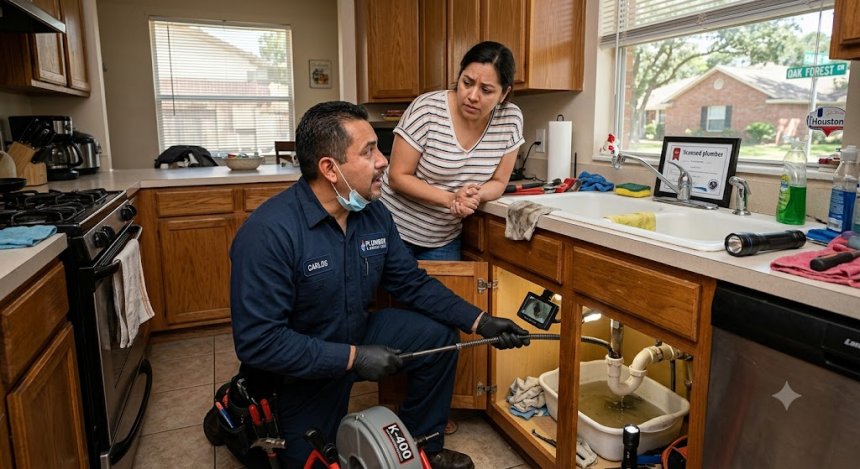
How Do Plumbers Find a Hidden Ceiling Leak?
A professional inspection may include several steps.
Step 1: Review the Leak Pattern
The plumber asks when the leak occurs and what activities seem to trigger it.
Step 2: Inspect Nearby Plumbing
The technician checks fixtures and exposed connections above the affected ceiling.
Step 3: Check Water Pressure
Pressure testing can help determine whether a pressurized supply line is leaking.
Step 4: Measure Moisture
Moisture-detection equipment can help identify areas affected by hidden water.
Step 5: Use Specialized Leak Detection
Depending on the situation, professionals may use acoustic equipment, thermal imaging, or other diagnostic tools.
Modern leak-detection techniques can help identify hidden leaks while reducing unnecessary wall or ceiling demolition.
Step 6: Inspect Drainage
If the leak appears only when a fixture is used, the drain system may need to be tested.
Step 7: Confirm the Source
The goal is to identify the actual source before recommending a permanent repair.
What Tools Do Professionals Use?
Depending on the problem, a plumber may use:
- Moisture meters
- Thermal imaging cameras
- Acoustic leak detection equipment
- Pressure gauges
- Pipe inspection cameras
- Drain cameras
- Smoke testing equipment
- Electronic leak detection tools
These tools do not replace professional judgment.
They help the technician gather better evidence before opening walls or ceilings.
Step-by-Step Professional Repair Process
Step 1: Inspection
The plumber examines the ceiling damage and nearby plumbing.
Step 2: Diagnosis
The technician determines whether the source appears to be a supply line, drain, fixture, water heater, or another plumbing component.
Step 3: Leak Location
Specialized detection may be used when the leak is hidden.
Step 4: Estimate
The plumber explains the repair scope and expected costs.
Step 5: Repair
The damaged pipe, fitting, fixture, or connection is repaired or replaced.
Step 6: Testing
The system is tested to confirm that the source of the leak has been addressed.
Step 7: Moisture Assessment
The affected ceiling and surrounding materials should be evaluated for remaining moisture.
Step 8: Restoration
Extensive drywall, insulation, paint, flooring, or structural restoration may require a separate qualified contractor.
Can You Fix a Ceiling Plumbing Leak Yourself?
Homeowners can safely perform basic emergency steps when circumstances allow.
You may be able to:
- Shut off a fixture valve
- Shut off the main water supply
- Place a container beneath a small drip
- Move furniture
- Document the damage
However, plumbing repairs inside ceilings or walls can become dangerous and complicated.
Avoid DIY work when:
- The source is unknown
- The pipe is inside a wall
- Water is near electricity
- The ceiling is sagging
- The leak involves a main water line
- The plumbing is difficult to access
- The repair requires cutting structural materials
- You are unsure which pipe is leaking
How Long Does Ceiling Leak Repair Take?
The plumbing repair itself may be relatively simple or highly involved.
Simple Fixture Leak
A leaking valve, supply line, or connection may be repaired relatively quickly.
Hidden Pipe Leak
Locating and accessing a concealed pipe can take longer.
Drain Leak
The plumber may need to test multiple fixtures to determine which drain connection is leaking.
Major Water-Line Failure
A larger pipe failure can require more extensive work.
The overall timeline can also depend on ceiling access, drywall removal, drying requirements, replacement materials, and restoration.
How Much Does Ceiling Leak Repair Cost?
There is no responsible fixed price without identifying the source.
Costs can vary based on:
- Diagnostic fees
- Labor
- Pipe materials
- Fixture parts
- Leak location
- Ceiling access
- Wall or ceiling demolition
- Emergency service
- Equipment required
- Water damage
- Drying and mitigation
- Drywall repair
- Painting
- Flooring restoration
- Permit requirements, when applicable
A plumbing repair may be only one part of the total cost.
For example, repairing a leaking fitting could be straightforward, while replacing a concealed pipe and restoring a damaged ceiling can involve several trades.
Hidden Truths Homeowners Should Know
The Stain Is Often Not the Source
The visible mark may be several feet from the actual leak.
Painting Over the Stain Does Not Fix the Leak
A fresh coat of paint hides evidence without solving the underlying problem.
A Dry Ceiling Does Not Always Mean the Problem Is Gone
A leak can stop temporarily and return when a fixture is used or when another condition occurs.
Not Every Ceiling Leak Is Plumbing
Roof, HVAC, condensation, and exterior water intrusion can produce similar symptoms.
Small Leaks Can Cause Large Damage
Water can travel through building materials before the homeowner sees it.
The Cheapest Repair Is Not Always the Correct Repair
The source should be identified before choosing a repair.
Hidden Moisture Matters
Drying the visible surface does not necessarily mean moisture has been removed from insulation, framing, or wall cavities.
Repeated Ceiling Stains Deserve Investigation
If a stain returns after cleaning or painting, find out why.
15 Common Mistakes Homeowners Make
- Painting over the stain — This hides the symptom without fixing the source.
- Assuming the roof is responsible — Plumbing and HVAC systems can create similar damage.
- Assuming plumbing is responsible — The source needs to be confirmed.
- Ignoring a small stain — A slow leak can continue behind the ceiling.
- Waiting until the ceiling drips — Visible dripping can mean the problem has progressed.
- Using the affected electrical fixture — Water and electricity create serious safety risks.
- Standing beneath a sagging ceiling — Damaged drywall may become unstable.
- Cutting the ceiling randomly — Unnecessary demolition can increase repair costs.
- Ignoring musty odors — Persistent odors can indicate ongoing moisture.
- Ignoring water-bill increases — Unexpected usage can be an important clue.
- Repairing only visible plumbing — The actual leak may be hidden elsewhere.
- Using temporary patches as permanent repairs — Temporary measures do not necessarily address the cause.
- Delaying professional inspection — Continued moisture can increase damage.
- Choosing a plumber solely by price — Diagnostics and repair quality matter.
- Forgetting about restoration — Plumbing repair may not include drywall, insulation, flooring, or painting.
Maintenance Tips to Prevent Ceiling Plumbing Leaks
- Inspect exposed plumbing regularly.
- Check under sinks for moisture.
- Look around toilets for unexplained dampness.
- Inspect washing-machine supply hoses.
- Replace visibly deteriorated hoses and fittings.
- Monitor your water bill.
- Investigate sudden changes in water usage.
- Pay attention to unusual dripping or hissing sounds.
- Repair small leaks promptly.
- Do not ignore recurring ceiling stains.
- Have unexplained pressure changes investigated.
- Inspect water heater connections periodically.
- Keep fixture shutoff valves accessible.
- Know where the main water shutoff is located.
- Learn how to shut off your home's water before an emergency.
- Have older plumbing evaluated periodically.
- Keep bathroom caulking and waterproofing in good condition.
- Clean HVAC condensate systems according to manufacturer recommendations.
- Inspect your roof regularly, particularly after severe weather.
- Investigate musty odors or persistent moisture promptly.
When Should You Call an Emergency Plumber?
Call an emergency plumber when a ceiling leak involves:
- Active water flow
- A burst pipe
- Rapidly spreading water damage
- Water near electrical equipment
- A failed main water line
- Significant flooding
- Multiple plumbing fixtures losing pressure
- A ceiling that is rapidly sagging
- Water entering occupied living areas
If the water source is unknown but the ceiling is actively leaking, professional diagnosis can help prevent unnecessary damage.
People Also Ask About Leaking Ceilings
How do I know if my ceiling leak is from plumbing?
Look for timing associated with water use, plumbing fixtures directly above the ceiling, unexplained water consumption, dripping or running-water sounds, and moisture around bathrooms or plumbing areas. A professional inspection may be needed to confirm the source.
Can a leaking ceiling be caused by a pipe?
Yes. Supply pipes, drain lines, fixture connections, and appliance plumbing can leak inside walls or ceilings.
How can I tell a roof leak from a plumbing leak?
A leak that appears primarily during rain may suggest a roof or exterior problem. A leak that occurs when an upstairs fixture is used may point toward plumbing. However, water can travel, so the source should be confirmed.
Why is my ceiling leaking when nobody is using water?
Possible causes include a continuously leaking supply line, water heater, HVAC condensate problem, roof leak, or another source of water intrusion.
What should I do first when my ceiling starts leaking?
Protect people from electrical and structural hazards, shut off the water if a plumbing source is suspected and it is safe to do so, contain the water where practical, and arrange professional inspection.
Can a small ceiling leak cause serious damage?
Yes. Water can remain inside drywall, insulation, framing, and other materials even after the visible dripping stops.
Why is there a brown spot on my ceiling?
A brown or yellow stain commonly indicates previous or ongoing water intrusion. Possible sources include plumbing, roofing, HVAC condensation, or other moisture problems.
Can a plumber find a leak behind a ceiling?
Yes. Depending on the situation, plumbers may use moisture meters, thermal imaging, acoustic detection, pressure testing, or other diagnostic techniques.
Should I cut open my ceiling to find a leak?
Randomly cutting into a ceiling is generally not the best first step. Professional leak detection may help identify the source before unnecessary demolition.
Can a bathroom leak cause damage to the ceiling below?
Yes. Toilet connections, shower plumbing, bathtub drains, sink plumbing, and supply lines can leak and damage the ceiling below.
Can a water heater cause a ceiling leak?
If plumbing connected to a water heater fails or the heater is located above the affected area, water can potentially reach ceilings below.
How much does it cost to repair a leaking ceiling caused by plumbing?
Costs vary according to the leak location, repair complexity, materials, emergency service, accessibility, and resulting water damage. A professional diagnosis is needed for an accurate estimate.
Why Choose a Qualified Houston Plumbing Professional?
A ceiling leak requires more than finding the wet spot.
The important question is where the water is actually coming from and why it is escaping.
When choosing a plumbing professional in Houston, consider:
- Appropriate Texas licensing and qualifications
- Experience with hidden plumbing leaks
- Leak-detection capabilities
- Pressure-testing equipment
- Experience with residential plumbing
- Clear estimates
- Transparent repair recommendations
- Appropriate repair materials
- Emergency availability when needed
- Clear warranty information when applicable
Avoid approving major demolition or repiping without understanding what the inspection found and why the recommended repair is necessary.
Plumbing Help for a Leaking Ceiling in Houston
A leaking ceiling can be caused by something as simple as a failed fitting or something more complicated such as a concealed pipe, drain-line failure, roof leak, or HVAC problem.
The safest approach is to stop active water when possible, protect people and property from electrical and structural hazards, document the damage, and identify the actual source before beginning permanent repairs.
For homeowners and businesses throughout Houston, Harris County, Sugar Land, Katy, Cypress, The Woodlands, Memorial, River Oaks, Montrose, Meyerland, West University Place, and surrounding communities, contact Emergency Plumbing in Houston Heights at 844-833-2093.
A professional inspection can help determine whether the water is coming from plumbing and what repair is appropriate.
Call 844-833-2093 to request a plumbing inspection, leak diagnosis, or emergency plumbing assistance.