How to Tell if a Houston Home Has a Sewer Line Problem
Learn the warning signs, hidden clues, and diagnostic steps to determine if your Houston property has a failing or damaged sewer line.

Recognizing the Warning Signs of a Compromised Sewer System
A failing sewer line rarely announces itself all at once. Instead, it usually begins with subtle, seemingly unrelated quirks in your home's plumbing. Recognizing these early clues can prevent a minor underground issue from escalating into a messy indoor sewage backup. Whether you own a historic property in the Houston Heights or a newer construction in the suburbs, understanding how your home's drainage network behaves is the first step toward accurate diagnosis.
When a main sewer lateral fails or becomes restricted, wastewater cannot properly exit the property. Because gravity dictates flow, the entire drainage system from your kitchen sinks, bathroom showers, and toilets relies on a clear, unbroken path out to the municipal main or private septic system. When that path is blocked or compromised, the physics of your plumbing change immediately.
Key Symptoms and Clues That Matter
Diagnosing a sewer line issue requires looking at how multiple plumbing fixtures interact rather than focusing on just one slow drain. Here are the primary physical symptoms that point directly toward the main sewer line:
- Multiple fixture backups: If flushing a toilet causes water to bubble up into your bathtub or shower floor drain, you are almost certainly dealing with a main sewer restriction rather than a localized clog.
- Synchronous fixture behavior: When running the washing machine causes a toilet bowl to overflow or gurgle, it reveals that wastewater is backing up into branch lines because the main pipe cannot handle the volume.
- Gurgling drainage sounds: If sinks or tubs make a distinct gurgling noise when draining, trapped air is escaping through the water trap because a downstream blockage is blocking normal ventilation and water flow.
- Unpleasant sewage odors: Persistent sulfur or raw sewage smells inside the house or pooling in the yard often indicate a cracked, broken, or unvented sewer pipe.
- Soggy lawn patches: An unexpectedly green, spongy patch of grass directly above the underground sewer path during dry weather can signal an active underground leak or saturation from a broken pipe.
Safe Homeowner Checks and Observations
Before calling for professional help, homeowners can perform several safe, non-invasive observations to gather valuable diagnostic data:
- Map the affected areas: Note exactly which fixtures drain slowly and which drain normally. If every fixture on the lower level is sluggish while upper-level fixtures work fine, the problem is likely downstream.
- Check the cleanout plug: Locate your outdoor sewer cleanout access pipe. If you carefully unscrew the cap and find standing water right at the opening, the blockage is located between that point and the street. Warning: Stand clear when opening a cleanout, as pressurized wastewater can spray outward.
- Monitor water usage patterns: Observe whether the drainage speed changes after heavy rainfall. If your drains slow down only after major downpours, stormwater may be infiltrating a compromised, cracked sewer line through displaced joints or structural breaks.
Hidden Causes Frequently Overlooked in Houston Properties
Houston's unique environmental conditions present specific challenges to underground plumbing infrastructure. While standard clogs are caused by grease, wipes, or foreign objects, main sewer lines often suffer from structural failures driven by environmental factors:
- Subsurface soil dynamics: Extended dry periods cause local clay soils to shrink and pull away from underground structures, while heavy tropical rainfall swells the earth rapidly. This continuous seasonal shift can place intense stress on rigid cast-iron or clay sewer laterals, leading to joint separation or shear breaks.
- Root intrusion: Trees and aggressive landscaping shrubs constantly seek moisture. Tiny cracks or sweating pipe joints invite root fibers inside, where they multiply rapidly and form dense, hair-like mats that catch solid waste.
- Aging pipe material: Older homes built decades ago often feature aging cast-iron piping. Over time, internal corrosion creates a rough, scaled interior surface that catches debris, eventually leading to structural collapse as the pipe wall thins out entirely.
What DIY Attempts Make Worse
When faced with a slow drain, many property owners reach for chemical drain openers or rent heavy mechanical augers from a local hardware store. However, these methods can easily backfire:
Chemical drain cleaners contain harsh caustic acids or lye designed to melt organic clogs. If the actual problem is a completely blocked, sagging, or broken sewer pipe, the chemical liquid will sit stagnant inside the pipe. This can corrode metal pipes, damage rubber seals, and create a severe chemical hazard for any technician who later has to service or hydro-jet the line.
Similarly, running an oversized or rigid mechanical snake through a brittle, corroded, or root-damaged pipe can punch right through the pipe wall, causing soil and gravel to collapse into the line or turning a simple blockage into a major excavation repair.
How a Professional Diagnoses a Sewer Line Problem
A qualified plumber does not rely on guesswork. Professional diagnosis relies on specialized technology to locate the exact depth, distance, and nature of the defect:
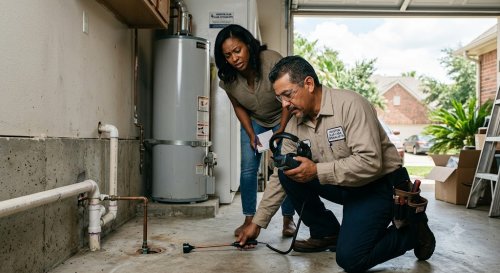
- High-resolution sewer camera inspection: A flexible push-rod camera is fed through the cleanout, transmitting live video of the pipe interior. This allows the technician to see cracks, roots, grease buildup, Bellies (low spots where water pools), and offset joints directly.
- Electronic line locating: If the camera reveals a structural break, a sonde transmitter attached to the camera head emits a radio frequency. The plumber uses an above-ground receiver to pinpoint the exact surface location and burial depth of the problem area.
- Hydrostatic pressure testing: Plumbers may plug the sewer line temporarily and fill it with water to measure pressure loss, confirming whether the system holds water or leaks into the surrounding ground.
Repair, Replacement, and Modern Solution Options
Once a sewer problem is diagnosed, the appropriate solution depends entirely on the structural condition and location of the pipe:
- Hydro Jetting: Best for severe grease buildup, scale, or heavy root intrusion where the pipe structure remains fully intact. High-pressure water scouring cleans the pipe interior down to its original walls.
- Trenchless Pipe Lining (CIPP): If the existing pipe is structurally intact but cracked or damaged, a resin-coated structural liner can be pulled or inverted through the old pipe and cured in place, creating a seamless 'pipe-within-a-pipe' without digging up landscaping or driveways.
- Traditional Excavation and Replacement: Necessary for completely collapsed pipes, severe pipe offsets, or lines with drastic structural sagging (bellies) where trenchless methods cannot restore proper gravity slope.
Factors That Influence Repair Costs
Sewer repair pricing varies widely based on specific project site conditions. Understanding these factors helps explain why estimates differ:
- Depth of the pipe: A shallow line buried two feet down requires far less labor and shoring than a line buried eight feet deep beneath a commercial parking lot or residential yard.
- Surface restoration requirements: Repairing a line running through an open grassy yard is straightforward. Repairing a line running underneath concrete patios, driveways, sidewalks, or interior slab foundations requires specialized cutting, removal, and replacement work.
- Accessibility and obstacles: Proximity to electrical lines, gas mains, mature trees, or property fences can restrict excavation equipment access, requiring more hand-digging and careful shoring.
Questions to Ask Before Approving Major Sewer Work
Before moving forward with costly sewer repairs or full replacements, ask your contractor these essential questions:
- Can I review the unedited video footage from the sewer camera inspection?
- Is trenchless lining a viable option for this specific break, or is full excavation mandatory?
- Does the repair quote include complete surface and landscaping restoration, or just backfilling the dirt?
- What warranty is provided for the new materials and the labor?
- Are all required local municipal permits included in the proposed scope of work?
Frequently Asked Questions
Can tree roots really break a healthy underground sewer pipe?
Healthy, unbroken pipes with sealed joints are generally immune to root intrusion. However, roots readily exploit even microscopic gaps, hairline cracks, or sweating rubber gaskets. Once inside, they feed on nutrient-rich wastewater and expand rapidly, widening the opening and eventually fracturing the pipe wall.
What is a sewer belly and how does it happen?
A sewer belly occurs when a section of underground pipe sinks or sags due to unstable soil shifting beneath it. This creates a low spot where water and solid waste pool instead of flowing smoothly outward, frequently resulting in recurring localized clogs.
How long does a modern trenchless pipe liner last?
Cured-in-place pipe (CIPP) liners are manufactured from industrial-grade structural resins and felt tubes designed to last for decades, often exceeding fifty years. They frequently outlast the original metallic or clay piping materials they reinforce.
Is it safe to continue using my indoor plumbing while my sewer line is partially blocked?
If drains are draining sluggishly but not backing up into living spaces, light usage may be temporarily manageable. However, if multiple fixtures backup or raw sewage appears in floor drains, stop using all water immediately to prevent hazardous indoor contamination and structural water damage.
Will homeowners insurance cover the cost of a damaged sewer line repair?
Standard homeowner insurance policies typically exclude underground plumbing, pipe deterioration, and wear-and-tear. However, coverage sometimes applies if the damage was caused by a sudden, catastrophic event like an insured vehicle impact or specific accidental utility strikes. Check your individual policy endorsements or optional water-backup riders for exact details.