Houston Home Plumbing Maintenance Guide: Year-Round Checks
Protect your Houston home with a practical year-round plumbing maintenance guide. Learn what to inspect, seasonal risks, and warning signs to watch for.

Protecting Your Property with a Structured Plumbing Maintenance Routine
Plumbing systems work constantly behind walls, beneath floors, and underground, making it easy to overlook them until a sudden failure occurs. A proactive maintenance schedule helps catch minor wear before it develops into an expensive emergency. Because local environmental factors—such as intense summer heat, sudden winter freezes, shifting clay soils, and heavy seasonal rainfall—place unique demands on residential infrastructure, routine oversight should be tailored specifically to regional conditions rather than treated as a generic checklist.
This guide outlines a practical, year-round approach to inspecting, testing, and maintaining your home's water supply, drainage, and fixture networks. By establishing a consistent schedule, property owners can extend the lifespan of critical components, safeguard structural integrity, and minimize unexpected repair bills.
Spring Maintenance: Preparing for Heavy Rains and Summer Heat
As spring arrives in the Gulf Coast region, weather patterns shift toward heavy downpours and rapidly rising temperatures. This transitional period requires focused attention on drainage systems and outdoor fixtures.
Inspecting Outdoor Drainage and Sump Pumps
Heavy spring storms can overwhelm residential drainage paths. Property owners should clear debris from yard drains, area drains, and surface grates to ensure stormwater moves freely away from the foundation. For homes equipped with sump pumps, spring is the ideal time to test operation by pouring a bucket of water into the basin to verify that the float switch activates the pump and that discharge water exits well clear of the foundation.
Checking Hose Bibs and Outdoor Backflow Preventers
Outdoor faucets should be tested for proper operation after surviving winter temperatures. Turn on each hose bib, place a thumb over the opening to check for backpressure, and verify that the shutoff valve inside the home operates smoothly without leaking around the packing nut. If an anti-siphon vacuum breaker is attached, confirm it is not cracked or leaking when the water is running.
Summer Monitoring: Managing High Demand and Humidity
Summer brings prolonged periods of intense heat and heavy water usage, particularly for irrigation systems, pool auto-fills, and indoor cooling drain lines.
Monitoring Water Meters for Hidden Leaks
Continuous hot weather often coincides with increased water bills. To check for hidden underground supply leaks or silent toilet flapper leaks, turn off all indoor and outdoor water fixtures, then observe the low-flow indicator triangle on your water meter. If the dial is moving, water is escaping somewhere in the system. This simple test helps detect underground supply line issues beneath yards before soil erosion causes significant structural stress.
Checking Condensate Drain Lines
High-humidity environments cause air conditioning systems to pull large volumes of moisture from indoor air. This moisture drains through condensate lines, which frequently clog with algae or organic slime. Regularly inspect the primary and secondary condensate drain lines to ensure water is flowing freely. A blocked condensate line can quickly back up into ceilings, drywall, or utility closets, creating water damage that mimics a pressurized plumbing leak.
Fall Preparation: Anticipating Cooler Temperatures
Fall offers a brief window of mild weather before the threat of freezing temperatures arrives. This season focuses on thermal protection and appliance health.
Insulating Outdoor Pipes and Backflow Assemblies
While deep freezes are infrequent in the Houston area, severe winter events do occur unpredictably. Use the fall season to inspect foam insulation on exposed outdoor water supply lines, backflow preventers, and irrigation manifolds. Replace deteriorated insulation sleeves and verify that you know the exact location of the main water shutoff valve in case an emergency shutoff is required.
Flushing Water Heaters and Testing Safety Relief Valves
Sediment accumulation accelerates when water heaters work continuously through high-demand cycles. Fall is an ideal time to flush tank-style water heaters to remove mineral buildup from the bottom of the tank. Additionally, lift the lever on the Temperature and Pressure (T&P) relief valve briefly to ensure it discharges safely into its drain tube and reseals correctly. If a T&P valve drips continuously after testing, the internal seat is worn and the valve must be replaced immediately.
Winter Vigilance: Freeze Protection and Emergency Readiness
Winter weather monitoring centers around safeguarding exposed infrastructure against sudden freezing drops in temperature.
Protecting Exposed Outdoor Plumbing
When freezing forecasts are announced, disconnect all garden hoses, drain hose bibs, and install insulated covers over outdoor faucets. If your home features an elevated foundation or exposed crawl space plumbing, ensure foundation vents are closed during severe freezes to prevent cold wind from chilling vulnerable water lines.
Recognizing Freeze Warning Signs
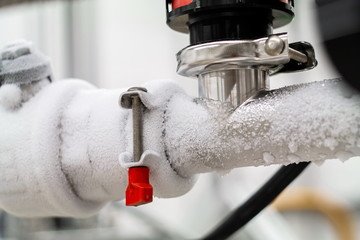
If a faucet produces only a trickle or fails completely during freezing weather, a pipe may be beginning to freeze. Locate the main water shutoff valve immediately and prepare to shut off supply if a pipe splits as it thaws. Never use an open flame or high-heat torch to thaw a frozen pipe, as this drastically increases the risk of fire or explosive pipe rupture.
Year-Round Essential Checklist
Regardless of the season, certain core components require periodic monthly or quarterly inspection:
Toilets: Check for silent leaks by adding a few drops of food coloring to the tank. If color appears in the bowl within ten minutes without flushing, the flapper is deteriorating and wasting water.
Under-Sink Supply Lines: Feel flexible braided supply lines beneath kitchen and bathroom sinks for stiffness, bulging, or moisture beads, replacing them every five to seven years.
Water Pressure: Periodically screw a water pressure gauge onto an outdoor hose bib. Normal residential pressure generally ranges between 40 and 80 psi. Consistently high pressure stresses joints and appliances.
Washing Machine Hoses: Inspect rubber washing machine supply hoses for cracking, blistering, or bulging, and consider upgrading to braided stainless steel lines.
Frequently Asked Questions
How often should a residential plumbing system be professionally inspected?
A comprehensive professional plumbing inspection is recommended every two to three years, or annually for homes older than forty years. Regular professional evaluations catch hidden corrosion, failing pressure regulators, and subtle drainage restrictions before they cause catastrophic property damage.
What causes water pressure to fluctuate throughout a home?
Fluctuating water pressure usually indicates a failing pressure reducing valve (PRV), a partially closed main shutoff valve, or mineral scaling accumulating inside older supply pipes. If pressure drops sharply only when a specific hot water tap is opened, the restriction is likely localized to the water heater inlet or supply nipple.
Why do tree roots frequently invade sewer lines in residential yards?
Tree roots seek moisture and nutrients, entering microscopic cracks or loose joints in underground sewer laterals. Once inside, roots proliferate rapidly in the nutrient-rich environment, catching grease and paper waste until a complete structural backup occurs.
Is it safe to use chemical drain cleaners for routine maintenance?
Chemical drain cleaners are generally not recommended for routine maintenance. Strong chemical formulas generate heat that can warp PVC pipes or corrode older metal lines, and they rarely resolve the root cause of a stubborn blockage, leaving residue that creates a safety hazard for technicians if manual cabling becomes necessary.
How can I locate my home's main water shutoff valve?
The main water shutoff valve is typically located near the front perimeter wall of the home where the water supply line enters from the street, often inside a utility closet, garage, or outdoor in-ground meter box near the property boundary. Every adult member of the household should know its exact location and how to operate it.
What indicates that a water heater needs replacement rather than repair?
A water heater generally requires replacement if the inner storage tank itself begins leaking, if the unit is more than ten to twelve years old, or if repeated component failures occur on an aging system. Repairing individual parts such as thermostats or elements makes sense on newer units, but tank corrosion signals the end of the appliance's reliable service life.