Old Plumbing Pipes in Houston Heights: When to Repipe
Do old pipes mean your Houston Heights home needs repiping? Learn the warning signs, pipe materials, repair options, costs, timelines, and maintenance tips.
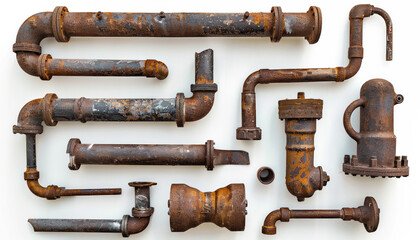
When Should You Repipe an Older Houston Heights Home?
Owning an older home in Houston Heights comes with plenty of character—but aging plumbing can become an expensive problem if it is ignored.
A house may still have some of its original plumbing hidden behind walls, beneath floors, or under cabinets. Depending on the home's construction date and renovation history, the plumbing system could contain galvanized steel, copper, cast iron, PVC, CPVC, PEX, or a combination of materials.
Age alone does not automatically mean you need a whole-house repipe.
The better question is:
What condition are the pipes actually in?
If your home has recurring leaks, rusty water, declining water pressure, multiple pipe repairs, or widespread corrosion, it may be time to investigate whether replacing individual sections still makes financial sense—or whether a complete repipe is the more practical long-term solution.
Houston plumbing professionals report that older Heights homes can contain original galvanized supply piping and cast-iron drain systems, particularly in houses constructed during earlier decades.
What Does Repiping a House Mean?
Repiping means replacing some or all of a home's water-supply piping.
A whole-house repipe generally involves replacing the existing supply lines that deliver water to fixtures such as:
- Kitchen faucets
- Bathroom sinks
- Toilets
- Showers
- Bathtubs
- Washing machines
- Outdoor hose connections
- Water heaters
- Other plumbing fixtures
Repiping is different from repairing one leaking pipe.
If one fitting fails in an otherwise healthy system, a localized repair may be appropriate.
If multiple sections are deteriorating, continuing to repair individual leaks may eventually become more expensive and disruptive than replacing the aging supply system.
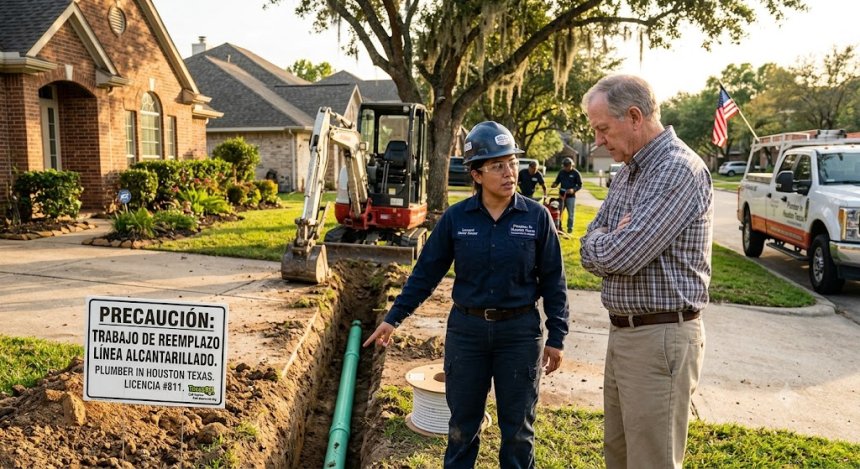
It is also important to distinguish water-supply repiping from sewer or drain replacement. Replacing old water lines does not automatically replace underground sewer piping.
Why Do Old Plumbing Pipes Fail?
Plumbing materials do not all age the same way.
Galvanized Steel Corrosion
Galvanized steel was commonly used in older homes.
Over time, corrosion can accumulate inside the pipe, reducing the available opening for water.
Possible symptoms include:
- Low water pressure
- Rust-colored water
- Repeated leaks
- Reduced flow
- Corroded fittings
Houston plumbing sources identify galvanized steel as a significant concern in older local homes because internal corrosion can restrict flow and eventually contribute to leaks.
Copper Pipe Deterioration
Copper is a proven plumbing material, but it is not immune to failure.
Leaks can develop at:
- Joints
- Fittings
- Connections
- Pinhole locations
- Areas affected by corrosion
A copper system with one isolated leak does not automatically require replacement.
The condition of the overall system matters.
Polybutylene Plumbing
Some homes built or remodeled during the late 20th century may contain polybutylene piping.
If you discover gray plastic water-supply piping, have it professionally identified rather than assuming what material it is.
Because certain polybutylene systems have known failure concerns, homeowners should consider professional evaluation when this material is present.
Poor Previous Repairs
Older homes often contain layers of plumbing modifications.
You may find:
- Original pipe
- Newer pipe
- Different fittings
- Multiple repair sections
- Mixed materials
- Previous remodeling connections
A home that has been repaired repeatedly may need a more comprehensive plumbing assessment.
Signs Your Houston Heights Home May Need Repiping
Several warning signs should make you consider a professional plumbing inspection.
1. Frequent Pipe Leaks
One isolated leak can happen in almost any plumbing system.
Multiple leaks over a relatively short period are different.
If you keep calling a plumber for another leaking pipe, the system may have reached a point where spot repairs are no longer the most practical strategy.
2. Persistent Low Water Pressure
If water pressure has gradually declined throughout the house, restricted or deteriorating supply pipes could be one possible cause.
However, low pressure can also come from:
- A faulty pressure-reducing valve
- Municipal supply issues
- A partially closed valve
- Fixture aerators
- Plumbing restrictions
- A water-service problem
Do not assume repiping is the answer until the cause has been diagnosed.
3. Rust-Colored Water
Brown, orange, or rust-colored water can indicate corrosion somewhere in the plumbing system.
If discoloration occurs consistently at multiple fixtures, older supply piping should be investigated.
Temporary discoloration can also occur after water-main work or disturbances in the supply system, so context matters.
4. Repeated Pinholes
Multiple pinhole leaks are an important warning sign.
If one section of pipe has already developed several failures, ask whether other sections are likely to be in similar condition.
5. Poor Flow at Multiple Fixtures
If showers, faucets, and other fixtures throughout the home have noticeably reduced flow, the problem may involve the supply piping rather than one individual fixture.
6. Visible Corrosion
Look at accessible pipes under sinks, near water heaters, and in utility areas.
Heavy corrosion, flaking, staining, or deteriorated connections should be professionally evaluated.
7. Your Home Still Has Original Plumbing
Age by itself is not a repiping diagnosis.
But knowing the home's construction era and plumbing history can help determine whether an inspection is worthwhile.
Houston Heights contains older housing stock, including properties where original plumbing systems may still be present.
8. Repeated Plumbing Repairs Are Becoming Expensive
If you have paid for multiple pipe repairs in recent years, compare the cumulative cost and disruption with the cost and benefits of a comprehensive repiping project.
Does an Old House Automatically Need New Pipes?
No.
This is one of the most important points homeowners should understand.
A 70-year-old home may have partially or completely updated plumbing.
A newer home may also have a plumbing problem caused by installation defects, material failure, or other circumstances.
The correct decision should be based on:
- Pipe material
- Pipe condition
- Number of previous failures
- Water pressure
- Water quality symptoms
- Leak history
- Plumbing accessibility
- Renovation history
- Remaining serviceability
- Cost of continued repairs
A qualified plumber should explain the evidence supporting a repiping recommendation.
Repair vs. Repiping: Which Is Better?
When a Repair May Make More Sense
A localized repair can be reasonable when:
- Only one pipe is damaged
- The remaining system is in good condition
- The pipe material is still serviceable
- There are no recurring failures
- The problem has a clear isolated cause
For example, replacing one damaged fitting in an otherwise healthy copper system may make much more sense than replacing every water line in the home.
When Repiping May Make More Sense
Whole-house repiping deserves serious consideration when:
- Multiple pipes are leaking
- Corrosion is widespread
- Water pressure has progressively declined
- Rust-colored water repeatedly occurs
- Repairs are becoming frequent
- The existing material has significant known concerns
- Several areas of the house require plumbing work
- The cost of repeated repairs is becoming difficult to justify
The goal should be to solve a system-wide problem when one exists—not sell a larger project simply because the house is old.
What Happens During a Professional Repiping Project?
A typical project may involve the following stages.
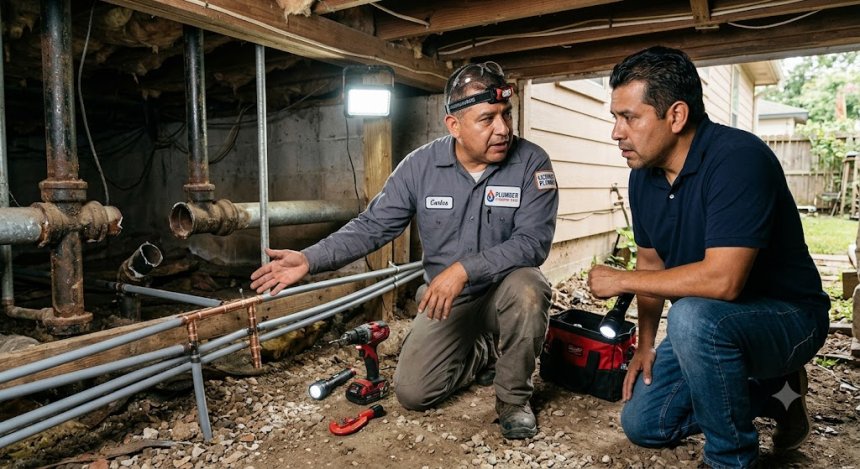
Step 1: Plumbing Inspection
The plumber evaluates the existing water-supply system.
Step 2: Identify Pipe Materials
The technician determines what materials are installed and where.
Step 3: Assess Pipe Condition
Visible plumbing, pressure, leak history, water quality symptoms, and other evidence are considered.
Step 4: Develop a Repiping Plan
The plumber determines which lines need replacement and how the new piping will be routed.
Step 5: Provide an Estimate
The homeowner should receive a clear explanation of:
- Materials
- Labor
- Access
- Wall openings
- Fixtures
- Permits, if applicable
- Restoration
- Testing
- Warranty, if offered
Step 6: Install New Supply Lines
New piping is routed to the home's fixtures.
PEX and copper are among the materials commonly used for residential repiping projects; the appropriate material should be selected based on the home's design, local requirements, and professional assessment.
Step 7: Connect Fixtures
The new piping is connected to appropriate fixtures and valves.
Step 8: Pressure Test
The plumbing system should be tested to identify leaks and confirm proper operation.
Step 9: Restore Access Areas
Wall or ceiling openings may require drywall repair and painting. The extent of restoration depends on how the repipe was performed.
PEX vs. Copper: Which Should You Choose?
There is no universal answer.
PEX
PEX is flexible and can often be routed through a home with fewer connections than rigid piping.
Potential advantages include:
- Flexibility
- Efficient installation
- Resistance to many forms of corrosion
- Ability to route through difficult spaces
- Generally lower material cost than copper
Copper
Copper has a long history in residential plumbing.
Potential advantages include:
- Proven material
- Rigid construction
- Familiarity among plumbers
- Long history of residential use
Potential disadvantages can include:
- Higher material cost
- More labor-intensive installation
- Susceptibility to certain corrosion conditions
The best material depends on the property, budget, installation requirements, and applicable plumbing code.
How Long Does a Whole-House Repiping Take?
The timeline varies considerably.
A smaller, accessible home may require less time than a larger two-story house with difficult access.
Factors include:
- Home size
- Number of fixtures
- Number of bathrooms
- Pipe routing
- Slab versus pier-and-beam construction
- Attic access
- Wall access
- Material selected
- Permit requirements
- Inspection requirements
- Drywall restoration
The plumbing installation may be completed before all cosmetic restoration is finished.
Ask the contractor for a realistic project schedule rather than relying on a generic one-day or two-day promise.
How Much Does Repiping a Houston Home Cost?
There is no reliable single price for every Houston Heights home.
The cost can depend on:
- Square footage
- Number of fixtures
- Number of bathrooms
- Pipe material
- Number of stories
- Access to plumbing
- Slab or pier-and-beam construction
- Wall and ceiling access
- Labor
- Permit requirements
- Fixture replacement
- Drywall repair
- Painting
- Water shutoff requirements
- Existing plumbing condition
Recent Houston-area estimates published by plumbing companies show that repiping prices can vary substantially depending on the home's size, material selection, and construction. Treat online price ranges as general planning information—not a quote for your property.
A written estimate based on an actual inspection is much more useful.
What About Slab Homes in Houston Heights?
Some older Houston homes have plumbing routed beneath or through concrete slabs.
This can make certain repairs more disruptive.
If a water-supply line beneath a slab is leaking, the homeowner may face a choice between:
- Localized access and repair
- Rerouting the affected plumbing
- Partial replacement
- Broader repiping
The correct approach depends on the pipe location, condition, access, and overall plumbing system.
A slab leak does not automatically mean the entire house needs repiping.
Hidden Truths Homeowners Should Know
Old Does Not Automatically Mean Bad
A plumbing system should be evaluated based on condition, not simply its age.
One Leak Does Not Automatically Mean Repiping
A single failure can be isolated.
Multiple Failures Tell a Different Story
Repeated failures throughout the home are more concerning.
Spot Repairs Can Become Expensive
If the same system requires frequent repairs, the cumulative cost can eventually become significant.
Repiping Is Not the Same as Sewer Replacement
Replacing freshwater supply pipes does not necessarily address underground sewer or drain problems.
Walls May Need to Be Opened
Homeowners should ask how the plumber plans to access the existing pipes.
Restoration May Be Separate
Drywall, painting, flooring, cabinetry, or other restoration may not be included in the plumbing contract.
Material Choice Matters
PEX and copper have different characteristics, costs, and installation requirements.
Get More Than One Opinion for Major Work
When a contractor recommends a whole-house repipe, obtaining another qualified assessment can help you make a more informed decision.
15 Common Mistakes Homeowners Make
- Assuming age alone means repiping is necessary — Have the actual condition assessed.
- Ignoring repeated leaks — Multiple failures may indicate broader deterioration.
- Repairing the same problem repeatedly without investigating — Ask why the failures keep happening.
- Ignoring low water pressure — Persistent pressure loss deserves diagnosis.
- Assuming rusty water is harmless — Repeated discoloration can indicate corrosion.
- Choosing a pipe material based only on price — Installation conditions and long-term performance matter.
- Accepting a repipe without a written scope — Know exactly what will be replaced.
- Forgetting drywall restoration — Wall access can create additional costs.
- Assuming sewer pipes are included — Confirm whether the project covers supply, drain, or sewer piping.
- Ignoring pressure testing — New plumbing should be tested after installation.
- Hiring solely on the lowest bid — Compare materials, scope, access, permits, and warranty.
- Failing to ask about permits — Requirements can vary by project and jurisdiction.
- Leaving old plumbing unidentified — Know what materials remain in the house.
- Waiting until a major leak occurs — Planned replacement is generally easier than emergency repiping.
- Not considering the home's future needs — Remodeling and fixture additions can affect the repiping plan.
Maintenance Tips for Older Houston Heights Plumbing
- Know where your main water shutoff is located.
- Inspect accessible pipes periodically.
- Look for corrosion around fittings.
- Watch for recurring leaks.
- Monitor your water pressure.
- Investigate sudden pressure changes.
- Monitor unexplained increases in water bills.
- Pay attention to rust-colored water.
- Repair small leaks promptly.
- Keep plumbing access points clear.
- Know the age and material of your water-supply piping.
- Keep records of previous pipe repairs.
- Have recurring leaks professionally evaluated.
- Inspect water heater connections.
- Check under sinks for moisture.
- Inspect washing-machine supply hoses.
- Avoid unnecessary chemical drain cleaners.
- Do not ignore damp walls or ceilings.
- Consider a professional plumbing inspection before major remodeling.
- Ask for a system-wide assessment if multiple pipes begin failing.
When Should You Schedule a Plumbing Inspection?
You do not have to wait for a pipe to burst.
Consider scheduling an inspection if:
- Your Houston Heights home has original plumbing
- You do not know what pipe materials are installed
- Multiple leaks have occurred
- Water pressure has declined
- Water frequently looks rusty
- You have had several plumbing repairs
- The home is undergoing renovation
- You are considering purchasing an older property
- You are planning a bathroom or kitchen remodel
A proactive inspection can help you understand the condition of the plumbing before an emergency occurs.
When Is Repiping an Emergency?
Repiping itself is generally a planned project rather than an emergency.
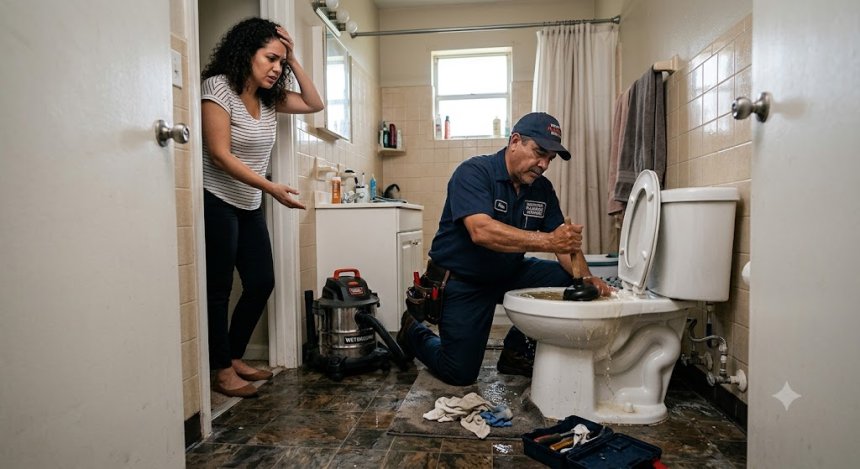
However, the conditions leading to repiping can become emergencies.
Call for urgent plumbing assistance when:
- A pipe is actively bursting
- Water cannot be shut off
- A major leak is flooding the home
- Water is entering electrical areas
- Multiple supply lines have failed
- A slab leak is causing significant water loss
- A hidden leak is rapidly damaging the structure
In an emergency, the immediate priority is to stop the water and limit damage. The decision about repair versus repiping can be made after the system has been stabilized and evaluated.
People Also Ask About Old Plumbing Pipes
How old do pipes have to be before a house needs repiping?
There is no universal age at which every house needs repiping. Material, condition, leak history, corrosion, pressure, and previous repairs matter more than age alone.
How do I know if my Houston Heights home needs repiping?
Frequent leaks, widespread corrosion, persistent low pressure, rusty water, and repeated repairs can indicate that a professional repiping assessment is worthwhile.
Should I replace galvanized pipes in an old Houston home?
If galvanized pipes are heavily corroded, repeatedly leaking, or significantly restricting flow, replacement may be more practical than continued spot repairs. A professional should evaluate their actual condition.
Can one leaking pipe mean the whole house needs new plumbing?
Not necessarily. One isolated failure may be repairable without replacing the entire system.
Is PEX better than copper for repiping?
Neither is universally better. PEX and copper have different installation characteristics, costs, and performance considerations. The appropriate choice depends on the property and project.
How long does a whole-house repipe take?
The timeline depends on home size, number of fixtures, pipe routing, accessibility, construction type, material, permitting, and restoration requirements.
How disruptive is repiping?
Repiping can require access through walls, ceilings, attics, or other areas. The disruption varies significantly by the home's layout and the installation method.
Does repiping include sewer pipes?
Usually, the term whole-house repiping refers to water-supply lines. Sewer and drain replacement are separate projects unless specifically included in the contract.
Can repiping improve low water pressure?
It can when restricted or severely corroded supply pipes are responsible for the pressure loss. However, low pressure has many possible causes, so diagnosis should come first.
How much does it cost to repipe a house in Houston?
Costs vary based on home size, number of fixtures, materials, accessibility, construction type, labor, permits, and restoration. A property-specific estimate is more reliable than a generic online price.
Should I repair or repipe old plumbing?
If the problem is isolated, repair may make sense. If failures are widespread or recurring, repiping may provide a more practical long-term solution.
Can old plumbing affect water quality?
Deteriorating plumbing can contribute to discoloration or other water-quality concerns. If you have concerns about drinking water, consider both the home's plumbing and the municipal water supply and seek appropriate testing or professional advice.
Why Choose a Qualified Houston Plumbing Professional?
Repiping is a major plumbing decision.
A reputable plumber should be willing to explain why replacement is being recommended, what evidence supports the recommendation, what materials will be used, and what areas of the home will be affected.
When choosing a plumbing professional for a Houston Heights repiping project, consider:
- Appropriate Texas licensing and qualifications
- Experience with older Houston homes
- Knowledge of galvanized, copper, PEX, and other plumbing materials
- Leak-detection capabilities
- Clear written estimates
- Detailed project scope
- Transparent material recommendations
- Proper pressure testing
- Knowledge of applicable permitting requirements
- Clear information about warranty coverage
- Explanation of drywall or restoration responsibilities
For a major repiping project, homeowners should feel comfortable asking questions and obtaining a second professional opinion.
Old Plumbing Pipes in Houston Heights: Know Before You Repipe
If your Houston Heights home has aging plumbing, the answer is not automatically “replace everything.”
The smarter approach is to determine what you have, where the problems are occurring, and whether the failures are isolated or part of a larger pattern.
If you are seeing repeated leaks, rusty water, declining water pressure, visible corrosion, or frequent plumbing repairs, schedule a professional plumbing inspection before the next failure becomes an emergency.
For homeowners and businesses in Houston Heights, The Heights, Greater Heights, Shady Acres, Woodland Heights, Garden Oaks, Independence Heights, Northside Village, Montrose, Downtown Houston, and surrounding Houston communities, contact Emergency Plumbing in Houston Heights at 844-833-2093.
Ask for an inspection and a clear explanation of whether your plumbing needs a localized repair, partial replacement, or whole-house repiping.
Call 844-833-2093 to schedule a plumbing inspection or request a repiping estimate.