How to Tell Where a Plumbing Problem Is Coming From | Plumber Guide
Learn how to diagnose plumbing problems, trace the root source of leaks, clogs, and pressure drops, and know when to call a professional plumber.

Diagnosing the Source of Plumbing Failures
When a plumbing issue arises in a home or commercial building, the visible symptom is rarely the actual source of the problem. Water pools away from its origin, a slow drain might indicate a local blockage or a failing main sewer line, and a pressure drop could stem from a single clogged fixture or a failing water pressure regulator. Tracing a plumbing failure back to its origin requires systematic observation rather than guesswork.
Understanding how to isolate the problem saves time, prevents unnecessary demolition, and helps you communicate accurately if professional intervention becomes necessary. Whether you are dealing with moisture, strange noises, slow drainage, or pressure irregularities, analyzing the scope of the symptom is the first step toward a correct diagnosis.
Isolating Fixture-Level Versus System-Wide Problems
The most reliable diagnostic starting point is determining whether an issue affects a single fixture or multiple areas of the property. This single distinction separates minor localized repairs from major system failures.
Single Fixture Symptoms: If only one sink drains slowly, one toilet overflows, or one faucet has low water pressure, the problem is almost always confined to that specific fixture, its immediate supply line, or its individual trap and branch drain.
Multiple Fixture Symptoms: When multiple plumbing fixtures begin acting up simultaneously—such as multiple drains backing up when a washing machine empties, or every faucet in the house experiencing a sudden pressure drop—the problem lies within a shared main line, a supply manifold, or the main service entry.
The Multi-Fixture Drainage Test
If you suspect a drainage issue, observe how other fixtures behave when water is running nearby. Flush a toilet on the second floor and watch whether a basement or ground-floor shower drain begins to gurgle or pool with water. If it does, the restriction is not inside the toilet or the shower branch; it is located further downstream where their drainage paths merge, often near the main stack or the main building sewer lateral.
Tracing Water Leaks and Moisture Sources
Water follows the path of least resistance. A wet spot on a ceiling, wall, or floor rarely sits directly beneath the leak. Gravity, framing members, insulation, and subfloor materials can pull water several feet horizontally before it finally finds an exit point.
How to Trace a Hidden Leak
Check the Water Meter: If you suspect a hidden water leak but see no visible puddles, turn off all indoor and outdoor water-using appliances. Go to your water meter and observe the leak indicator dial (often a small red or blue triangle). If it is spinning, water is actively moving through the system.
Perform the Isolation Test: Turn off the supply valves beneath individual sinks, behind toilets, and at the water heater one by one while checking the meter. If the meter stops spinning when you shut off a specific supply valve, you have narrowed the leak down to that appliance or branch line.
Analyze the Pattern: Water damage from a supply line leak is typically pressurized, meaning it often sprays or flows continuously, creating constant moisture regardless of whether a fixture is in use. Water damage from a drain or waste line leak usually appears intermittently, corresponding directly with when a shower, sink, or washing machine is being actively used.
Decoding Plumbing Noises and Odors
Your plumbing system communicates through sound and smell long before a catastrophic failure occurs. These sensory clues offer major diagnostic value.
Gurgling Drains
If a sink or tub gurgles when another fixture drains, it means air is being pulled through the trap because the plumbing vent stack is restricted or because a heavy downstream flow is displacing air in the drainage pipe. This is a classic early warning sign of a venting deficiency or an accumulating main sewer line blockage.
Water Hammer
A loud bang or shuddering sound within the walls when a valve or washing machine solenoid shuts off quickly is known as water hammer. This indicates that moving water has hit a sudden dead end, causing a shockwave. It usually points to water hammer arrestors that have failed or water supply pipes that are no longer securely strapped to framing members.
Intermittent Sewer Odors
If you smell sewer gas intermittently, it rarely means your main pipe has broken open. More frequently, it indicates a dried-out P-trap in a guest bathroom that is rarely used, a cracked wax ring beneath a toilet, or a roof vent stack that has become partially blocked by leaves or debris, siphoning water out of fixture traps.
Supply-Side Versus Drainage-Side Pressure and Flow Issues
Low water pressure or flow problems can be confusing because the symptoms can mimic either a supply restriction or a clogged drain, depending on the context.
| Symptom | Likely Supply-Side Cause | Likely Drainage-Side Cause |
|---|---|---|
| Water backing up | N/A - Supply brings clean water | Main sewer restriction or root intrusion |
| Slow drainage | N/A | Hair buildup, grease, or scale in branch line |
| Low pressure at one sink | Clogged faucet aerator or closed shutoff valve | N/A |
| Low pressure everywhere | Failing pressure reducing valve or main supply restriction | N/A |
If only hot water has low pressure, the issue is typically isolated to the water heater supply valves, an inlet screen on the tankless unit, or heavy mineral scale buildup inside the hot water piping. If both hot and cold pressure drop simultaneously at a single fixture, inspect the aerator cartridge or flexible supply connectors for kinks or debris.
When DIY Troubleshooting Ends and Professional Diagnosis Begins
Homeowners can safely perform visual inspections, test water meters, clear accessible sink traps, clean faucet aerators, and check visible shutoff valves. However, certain symptoms require professional diagnostic tools that go beyond surface observation.
A professional plumber relies on specialized equipment to locate the exact source of complex problems:
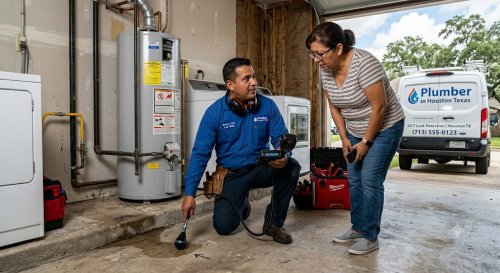
Electronic Leak Detection: Uses acoustic listening devices and thermal imaging to pinpoint pressurized pipe leaks beneath concrete slabs or behind finished walls without exploratory demolition.
Sewer Camera Inspections: Pushes a high-resolution waterproof camera through drain lines to visually identify root intrusions, cracked pipes, offset joints, or belly sections holding standing water.
Manometer Testing: Used in gas plumbing to measure pressure drops and confirm system integrity safely.
Factors That Influence Repair Complexity and Cost
When a plumbing problem is accurately traced, the cost to repair or replace the affected component depends heavily on several operational factors rather than just the part itself:
Accessibility: A leaking pipe exposed in an open garage ceiling is inexpensive and fast to repair. That same leak located beneath a post-tension concrete slab or behind custom tile requires specialized access, increasing labor and restoration costs.
Material Compatibility: Older galvanized steel or brittle polybutylene piping requires different repair techniques and transitional fittings compared to modern cross-linked polyethylene (PEX) or rigid copper piping.
Scope of Failure: Replacing a localized fixture cartridge is a minor service call. Replacing a collapsed sewer lateral running underneath a driveway or mature landscaping involves heavy equipment, excavation, and site restoration.
Questions to Ask Before Approving Major Plumbing Work
If a professional diagnosis reveals a significant plumbing failure, ask targeted questions before approving extensive repairs:
Did the technician perform a camera or pressure test to verify the entire run, or is the diagnosis based solely on visible symptoms?
Does this repair address the root cause of the failure, or are we only treating a recurrent symptom?
What are the long-term trade-offs between a localized spot repair versus a complete pipe replacement?
Does the estimate include surface restoration, drywall patching, or landscaping repair, or will those be an additional out-of-pocket expense?
Frequently Asked Questions
Why do multiple drains back up at the same time in my home?
When multiple plumbing fixtures clog simultaneously, the issue is located in the main sewer line or the primary drainage stack rather than individual branch lines. When a blockage forms in the main pipe, wastewater from upper levels has nowhere to go and escapes out of the lowest available drain openings in the home.
How can I tell if a water bill spike is caused by a leak or a billing error?
Check your water meter with all fixtures turned off. If the meter is actively moving, water is escaping somewhere on your property. Utility billing errors do occur, but a spinning meter provides definitive physical proof of continuous water movement, pointing directly toward a running toilet, irrigation leak, or concealed pipe failure.
Can a slow-draining sink be caused by a venting problem instead of a clog?
Yes. If a drain vents improperly, air cannot enter the pipe behind the flowing water, creating a vacuum that slows down drainage significantly. Unlike physical clogs caused by hair or grease, venting issues often cause intermittent bubbling, slow drainage accompanied by gurgling sounds, or sluggish performance even after the drain pipe has been thoroughly snaked.
What does it mean when only one faucet has low hot water pressure?
If cold water pressure is normal but hot water pressure is weak at a single fixture, the restriction is usually localized near that fixture. Common causes include mineral scale buildup inside the hot water supply line, a partially closed stop valve under the sink, or a clogged mixing cartridge inside a single-handle faucet assembly.
Why does my toilet periodically run for a few seconds without anyone using it?
This is commonly known as a ghost flush. It happens when the flapper valve at the bottom of the toilet tank develops a slow leak, allowing water to bleed down into the bowl. Once the water level drops below a certain threshold, the fill valve automatically kicks on to refill the tank, wasting water silently over time.