Why a Drain Snake Fails on Recurring Clogs & What to Do Next
Discover why a drain snake cannot clear recurring clogs. Learn about structural pipe issues, hidden obstructions, and professional diagnostic steps.

Understanding Why a Drain Snake Fails
When you run a drain snake—often called a hand auger or a motorized drum machine—down a slow or blocked pipe, you expect it to bore through the obstruction and restore normal flow. But when the cable pushes through, the water drains temporarily, and the exact same clog returns days or weeks later, the snake has only treated a symptom rather than the root cause. A standard drain snake is designed to punch a temporary hole through soft blockages like hair, grease, or soap scum. If the underlying pipe geometry, structural integrity, or physical layout is compromised, no amount of manual cable spinning will resolve the issue permanently.
In many properties across Houston, Texas, shifting clay soils, aging infrastructure, or heavy tree root intrusion create hidden conditions that standard DIY snakes simply cannot overcome. Recognizing why your mechanical efforts keep failing helps prevent wasted time, potential pipe damage, and repeated frustration.
The Difference Between Clearing and Pushing Aside
A drain snake operates by rotating a flexible steel cable through the interior of the pipe. When the tip encounters resistance, it either drills through the mass, hooks onto it, or pushes it out of the way. However, standard snake blades are often smaller than the internal diameter of the pipe. They carve out a narrow tunnel through grease buildup or thick sludge while leaving a thick ring of debris plastered against the pipe walls. As soon as you run water again, loose particles catch on that remaining residue, rapidly reforming the blockage.
Physical Culprits Behind Recurring Clogs
When a recurring clog defies multiple attempts with a drain snake, the problem usually stems from a structural, mechanical, or environmental failure within the drainage system. Here are the most common hidden causes that manual snaking cannot fix:
- Pipe Bellies and Sagging Sections: Ground movement or improper initial installation can cause a section of underground pipe to dip downward. This creates a low spot or 'belly' where water and solid waste pool permanently, regardless of how clean the rest of the line is.
- Root Intrusion: Tiny cracks or loose joints in underground lateral lines invite tree roots seeking moisture. A snake may poke a hole through a dense mat of roots, but the remaining roots quickly regenerate and trap waste all over again.
- Offset Pipe Joints: When sections of pipe shift apart or sink unevenly, a jagged interior lip forms. Toilet paper and solid waste snag on this lip, building up a stubborn dam that a cable slides right past without correcting the alignment.
- Heavy Scale and Corrosion: Older cast iron pipes develop interior rough patches and tuberculation—a crusty buildup of rust and mineral deposits. This transforms a smooth interior into a surface resembling sandpaper, catching every piece of debris that passes by.
How Houston Environment and Soil Conditions Play a Role
Property owners in the Houston area frequently deal with expansive gumbo clay soils. During prolonged dry spells, this soil shrinks significantly, then swells intensely during heavy rainfall and tropical weather events. This constant ground movement places severe mechanical stress on underground sewer laterals and foundation plumbing. When the earth shifts, rigid or aging pipe connections can crack, separate, or develop negative slopes, turning minor drainage quirks into chronic, recurring clogs that render a standard drain snake completely ineffective.
Safe Homeowner Checks Before Calling a Professional
Before assuming the worst, a homeowner can perform a few safe, non-invasive observations to gather critical diagnostic data that will help a professional plumber later:
- Perform a Multi-Fixture Audit: Check whether other drains in the house are reacting. If flushing the toilet causes water to bubble up in the bathtub or shower, the issue is not a simple fixture branch line; it is a main drain or sewer line problem.
- Track the Timeline: Note exactly how long after snaking the drain begins to back up again. A clog that returns within hours points to an active structural obstruction, while one that takes months points to normal accumulation on a rough pipe wall.
- Inspect Visible Cleanouts: Locate your outdoor or indoor sewer cleanout plugs. If you notice damp soil, unusual lush grass patches, or foul odors near the cleanout, the blockage may reside in the main line leaving the foundation.
Warning: Never force an oversized or stiff commercial-grade steel auger through delicate household fixture traps or thin PVC pipes. Aggressive DIY snaking can easily crack older fittings, puncture plastic pipes, or cause the cable to become hopelessly knotted inside the wall.
How Professionals Diagnose Stubborn Drain Restrictions
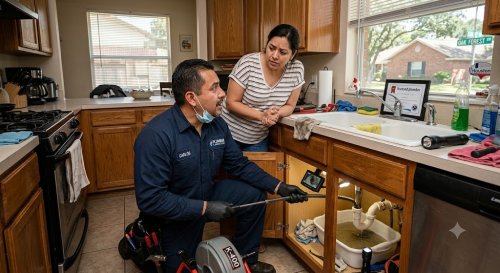
When a snake fails, a professional plumber shifts from mechanical clearing to comprehensive diagnostics. Understanding this diagnostic process helps you evaluate repair recommendations intelligently.
Video Camera Inspection
The single most valuable tool for a recurring clog is a sewer camera inspection. A high-resolution waterproof camera is pushed directly into the drainage line, transmitting real-time footage to a monitor. This allows the plumber to see the exact interior condition of the pipe. A camera reveals whether you are dealing with root intrusion, a broken fitting, a pipe belly, or grease accumulation. It also allows technicians to locate the exact depth and surface location of the problem using a radio transmitter attached to the camera head.
Hydro Jetting vs. Mechanical Snaking
If the camera reveals heavy grease, scale, or mineral buildup rather than a broken pipe, a professional may recommend hydro jetting instead of snaking. Hydro jetting uses specialized high-pressure water streams—often ranging from 1,500 to 4,000 PSI—to scour the entire 360-degree interior wall of the pipe. While a snake cuts a narrow path, a hydro jet strips away all residue, returning the pipe interior to a like-new condition.
Repair and Replacement Solutions
When physical damage or structural defects cause recurring clogs, cleaning alone will not provide a permanent fix. The appropriate solution depends entirely on the severity and location of the defect:
- Spot Repair: If a camera inspection shows a single localized break, offset joint, or localized sag, a plumber may excavate and replace just that specific section of pipe.
- Trenchless Pipe Lining: For pipes with widespread root intrusion or interior corrosion located beneath a slab foundation or expensive landscaping, a structural epoxy liner can be inverted and inflated inside the old pipe, creating a seamless jointless pipe within a pipe.
- Traditional Pipe Replacement: Severely collapsed lines, extreme structural damage, or improper pitch that cannot be lined require traditional excavation and replacement of the affected run.
Cost Factors and Pricing Variables
When facing a recurring clog that requires advanced diagnosis or repair, costs can vary significantly based on several practical factors:
- Accessibility: Accessing a main line located deep beneath a concrete slab foundation or behind finished interior walls requires significantly more labor than accessing an outdoor cleanout.
- Diagnostic Scope: Comprehensive video camera inspections and electronic line locating require specialized equipment and technical interpretation.
- Required Equipment: Mobilizing high-pressure hydro jetting equipment involves different operational costs than standard mechanical drum machines.
- Depth and Soil Conditions: Excavation depth and local soil stability dictate how much shoring or safety equipment is needed for underground repairs.
A reputable plumbing estimate should clearly itemize diagnostic fees, labor rates, equipment usage, and proposed repair methods, distinguishing clearly between temporary clearing services and permanent structural repairs.
Frequently Asked Questions
Why does my sink drain fine for a few days after I snake it, then clog again?
A standard drain snake only punctures a small hole through the center of the blockage, leaving grease, hair, and sludge clinging to the pipe walls. As you use the fixture, new debris immediately catches on this residual buildup, rapidly rebuilding the full blockage.
Can tree roots grow back after being cut by a drain snake?
Yes. Roots inside a sewer line grow back vigorously because moisture and nutrients are abundant. A snake merely trims the roots like mowing a lawn; until the cracked joint or hole allowing them entry is sealed or replaced, they will return.
What is a pipe belly and why does it cause recurring clogs?
A pipe belly is a section of drainage pipe that has sagged downward due to shifting soil or poor installation. This creates a permanent pool of standing water where solid waste settles and accumulates instead of washing away down the main line.
Is hydro jetting safe for older plumbing pipes?
It depends heavily on the material and age of the pipe. A professional must perform a video camera inspection first to evaluate pipe thickness and structural integrity. Severely rusted cast iron or fragile, deteriorated pipes may be damaged by extreme water pressure.
How can I tell if my recurring clog is a main sewer line issue?
If multiple plumbing fixtures—such as toilets, bathtubs, and sinks—are draining sluggishly or backing up simultaneously, or if flushing a toilet causes water to surge into a shower pan, the problem originates in the main drain or sewer lateral rather than an individual fixture branch.