How Grease Buildup Blocks Kitchen Drains | Causes & Removal
Learn how kitchen grease clogs pipes, what safe DIY steps work, what risks to avoid, and how professionals diagnose and clear stubborn grease blockages.

Understanding Kitchen Grease Clogs
When a kitchen sink begins draining slowly or stops completely, cooking grease is frequently the hidden culprit. Unlike solid debris that creates an instant obstruction, liquid fat, cooking oil, shortening, and butter enter the plumbing system in a fluid state. As they travel down the drain pipe, they cool, solidify, and coat the interior walls of the pipe. Over weeks and months, this layer thickens, trapping food particles, coffee grounds, and soap scum until the pipe is completely choked off.
Property owners in Houston, Texas, often notice this problem worsening during cooler weather snaps when indoor water temperatures drop, accelerating the hardening process of fats inside exterior-facing walls or under slab foundations. Understanding how this buildup develops can help prevent recurring kitchen sink backups.
The Underlying Plumbing Mechanism
Kitchen drain lines typically consist of 1.5-inch or 2-inch diameter PVC or cast-iron pipes. When warm grease enters these pipes, it floats on the water surface and adheres to the upper and side walls of the conduit. Unlike hair clogs in a bathroom shower drain which pull together into a tight mass, grease behaves like a sticky lining.
As the effective diameter of the pipe shrinks, water flow slows down. This reduced velocity prevents the system from self-scouring. Food debris that normally flushes away easily begins to embed itself in the grease ring. Eventually, the passage narrows to the point where even ordinary dishwashing water cannot force its way through, resulting in a stubborn blockage.
Symptoms and Clues of a Grease Blockage
Recognizing the early warning signs of a grease restriction can prevent a sudden kitchen flood:
- Sluggish Drainage: Water takes longer to empty from the sink basin after washing dishes or running the dishwasher.
- Gurgling Sounds: Air trapped behind the grease restriction bubbles up through the sink drain or adjacent fixtures like a garbage disposal or dishwasher air gap.
- Foul Odors: Decaying food particles trapped within the sticky grease lining emit a sour, rancid smell from the drain opening.
- Simultaneous Fixture Backups: Water from the kitchen sink bubbling up into the dishwasher hose or secondary basin indicates a branch-line restriction.
Safe Homeowner Checks and Low-Risk DIY Steps
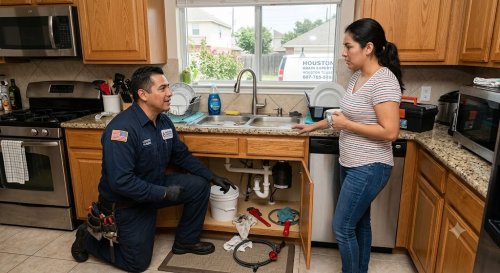
Before calling for professional help, a homeowner or tenant can safely perform several diagnostic checks and mild maintenance steps:
- Check Multiple Fixtures: Run water in the bathroom and flush toilets. If only the kitchen sink is draining slowly, the issue is isolated to the kitchen branch line rather than the main sewer line.
- Inspect the P-Trap: Place a bucket beneath the curved P-trap pipe under the sink, loosen the slip nuts by hand, and remove the trap. Often, a portion of the grease and debris collects right in this accessible bend. Clean it out thoroughly and reassemble.
- The Boiling Water Flush: If the blockage is very minor and located close to the fixture, pouring a kettle of boiling water down the drain can sometimes soften mild soap and fat residues. Caution: Avoid boiling water if your home has older PVC pipes with glued joints that could weaken under sustained extreme heat, or if you have flexible accordion pipes.
Dangerous DIY Actions to Avoid
When dealing with grease, certain common DIY attempts can make the situation much worse or cause structural plumbing damage:
- Harsh Chemical Drain Cleaners: Pouring liquid chemical drain openers into a grease-clogged pipe is rarely effective. The chemical liquid flows past the top of the grease or dilutes without dissolving the solid fat. If the chemical fails to clear the clog, it remains trapped in the pipe. This creates a severe safety hazard for anyone or any professional who later has to open the pipe or use mechanical cabling equipment, as caustic chemicals can splash onto skin and eyes.
- Aggressive Manual Snaking: Pushing a standard handheld hand-snake through a heavy grease barrier often just punches a small hole through the center of the mass. Water drains temporarily, but the snake immediately bores a path without cleaning the pipe walls. The remaining grease quickly traps new debris, causing the sink to clog again within days.
Hidden Causes and Complications
Sometimes a kitchen drain keeps clogging even after being cleared. Several hidden factors can contribute to persistent grease issues:
- Improper Pipe Slope: Drain pipes require a consistent downward slope (typically a quarter-inch drop per foot of run) to maintain proper drainage velocity. If a section of pipe has sagged due to ground shifting or poor initial installation, grease pools in the low spot rather than washing away.
- Rough Pipe Interiors: Older galvanized steel or deteriorating cast-iron pipes develop internal scaling and roughness. Grease clings aggressively to rough metal surfaces compared to smooth modern PVC.
- Garbage Disposal Misuse: Disposals grind food into a pulp, but they do not liquefy fats. Starchy foods, coffee grounds, and oils combined in a disposal create an ideal paste that accelerates grease accumulation.
How a Professional Diagnoses and Clears Grease
When home methods fail, a professional plumber employs specialized equipment to restore full pipe diameter:
- Sewer Camera Inspection: A small waterproof camera is threaded through the cleanout to view the interior condition of the pipe, identifying the exact location of the grease, pipe offsets, or structural damage.
- Mechanical Augers (Snaking): Heavy-duty motorized drain cleaning machines use specialized cutting blades matched to the pipe diameter to scrape grease and scale away from the walls.
- Hydro Jetting: For severe or recurring grease buildup, high-pressure water jetting is the most effective solution. A specialized nozzle propels a high-pressure stream of water backward and forward, scouring 360 degrees of the pipe interior and completely stripping away hardened grease, oils, and embedded debris down to the bare pipe wall.
Repair, Replacement, and Prevention Options
Choosing the right long-term solution depends on the condition of the plumbing system:
- Routine Maintenance Cleaning: Properties that handle high volumes of cooking (such as commercial kitchens or large households) benefit from scheduled preventative hydro jetting every 12 to 24 months.
- Pipe Replacement: If an inspection reveals that aging cast-iron pipes have completely lost their interior lining or developed structural cracks, localized pipe repair or repiling of the affected kitchen branch may be necessary.
- Grease Interceptors: For commercial spaces or heavy-duty residential setups, installing an exterior or under-sink grease trap captures fats before they enter the drainage system.
Factors That Affect Service Costs
The cost to clear a grease-blocked kitchen drain varies based on several specific operational factors:
- Severity and Extent: A simple blockage in the P-trap requires minimal labor, whereas hardened grease packed solid across a 30-foot branch line requires intensive mechanical or hydro-jetting equipment.
- Accessibility: The presence of an accessible outdoor cleanout makes the job faster and cleaner than accessing the line from beneath a cramped kitchen cabinet or through interior roof vents.
- Pipe Condition: If underlying structural damage or severe pipe corrosion is discovered during the cleaning process, additional repair measures will affect the overall project scope.
When evaluating estimates for drain cleaning services, ask whether the quote includes a camera inspection to verify that the entire blockage has been removed and whether the cleaning method strips the pipe walls or merely punches a temporary hole through the grease.
Frequently Asked Questions
Can I use dish soap and hot water to clear a heavy grease clog?
Hot water and liquid dish soap can help emulsify and loosen very light, fresh grease films near the sink opening. However, they cannot dissolve a hardened, established grease plug that has accumulated further down inside the branch drain line.
Why does my kitchen sink keep clogging even after I use a plunger?
Plunging relies on moving water back and forth to dislodge loose blockages. With grease clogs, the sticky mass acts like a flexible plug. Plunging may force a small channel through the grease to drain water temporarily, but the greasy residue remains glued to the pipe walls and quickly traps new debris.
Are commercial enzyme drain cleaners safe for regular maintenance?
Biological or bacterial enzyme treatments use live cultures to digest organic matter and oils over time. They are generally safe for residential pipes and do not damage plumbing materials, but they work slowly and are not effective at clearing an already fully blocked pipe.
How can I prevent kitchen grease from building up in my pipes?
Never pour liquid cooking oils, bacon grease, or pan drippings down the drain. Instead, let grease cool and solidify in a container, then toss it in the trash. Wipe greasy pots and pans with a paper towel before washing them in the sink.
Does running a garbage disposal prevent grease clogs?
No. A garbage disposal only shreds food solids into smaller pieces. When combined with oils, coffee grounds, and starches, these shredded particles form a dense sludge that adheres to pipe walls even faster than grease alone.