Sewer Inspection Before Buying a Houston Home: What to Know
Learn why a sewer camera inspection is vital before buying a Houston home. Discover hidden red flags, pipe materials, soil factors, and what repairs cost.

Why a Sewer Scope Is Critical When Buying a Houston Home
When purchasing a residential property, standard home inspections typically focus on visible components like roofing, electrical panels, and HVAC performance. However, one of the most expensive hidden liabilities sits entirely underground: the private sewer lateral connecting the house to the municipal main or septic system. Relying on a standard visual home inspection is not enough to catch failing sewer pipes because the entire drainage network is buried beneath floors, yards, and concrete foundations.
For anyone evaluating a property in the Houston area, a specialized sewer camera inspection is an essential due diligence step. Regional environmental conditions—including shifting expansive clay soils, heavy tropical rainfall events, and mature root systems from large trees—place continuous stress on underground drainage infrastructure. Identifying a compromised sewer line before closing can save a homebuyer thousands of dollars in unexpected excavation and repair expenses.
Understanding the Houston Subsurface and Sewer Risks
Drainage performance depends heavily on the surrounding ground conditions. Much of the Houston area features heavy clay soils that swell significantly when saturated with rainwater and shrink during extended dry summer periods. This constant ground movement creates severe physical stress on underground pipes, often leading to joint separation, pipe sagging, or complete structural failure.
Furthermore, local property ages vary widely. Older neighborhoods feature decades-old clay tile or cast iron pipes that may be nearing the end of their operational lifespans. Meanwhile, newer developments often utilize PVC piping, which is generally more resilient but still vulnerable to improper installation angles, settling backfills, or heavy construction traffic prior to final grading.
What a Professional Sewer Inspection Actually Reveals
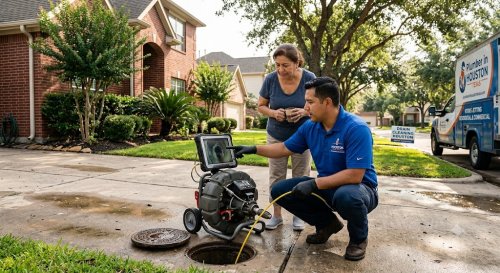
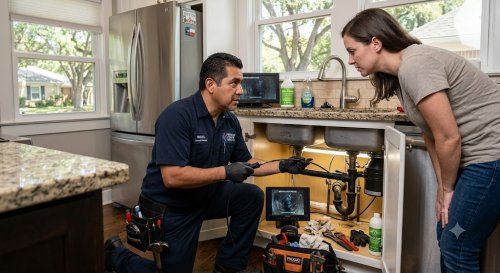
A sewer scope involves inserting a specialized high-resolution fiber-optic camera through an accessible cleanout. A qualified plumbing technician guides the camera down the line to record the interior condition of the pipe all the way to the city connection or property boundary. Key conditions identified during this process include:
- Root Infiltration: Tree roots seek out moisture and can penetrate tiny gaps in pipe joints, eventually expanding to block flow or crack the pipe wall entirely.
- Structural Cracks and Collapses: Ground shifting can snap rigid pipe materials or crush aging clay and transite lines.
- Bellies and Sags: Sections of pipe that have sunk into soft soil create low spots where standing water, grease, and solid waste accumulate, leading to chronic recurring clogs.
- Offset Joints: When pipe sections shift vertically or horizontally, creating a lip that catches toilet paper and debris.
- Scale and Corrosion Buildup: Interior tuberculation in older cast iron lines drastically narrows the internal diameter, severely reducing flow capacity.
Hidden Details Homebuyers Often Overlook
Many buyers mistakenly assume that if drains currently flush quickly, the sewer line is healthy. However, a pipe can remain partially functional while actively leaking wastewater or tree roots into the surrounding soil. Another common misconception is that a clean home inspection report guarantees a clear sewer line; standard home inspectors are rarely licensed plumbers and rarely possess the specialized camera equipment required to inspect beyond the visible surface cleanout.
It is also vital to determine who holds financial responsibility for the service lateral. In many municipalities across the region, the homeowner owns and maintains the entire sewer line all the way to the tap at the city main in the street, even the portion running underneath public right-of-ways or sidewalks.
Interpreting Camera Findings: Repair Versus Replacement
Discovering an issue on a sewer scope does not automatically mean a deal must be canceled or that a full replacement is required. Professional interpretation of the footage determines the appropriate remedy:
- Spot Repairs: Localized structural damage or a single broken joint can often be addressed via a targeted excavation or a trenchless structural liner patch.
- Hydro Jetting: If the primary issue is heavy grease accumulation, scaling, or minor root masses without structural collapse, high-pressure water jetting can restore full interior pipe diameter.
- Full Replacement: Extensive corrosion, widespread collapses, or multiple severe sags across the entire run typically require a full trenchless pipe bursting or traditional open-trench replacement.
Factors That Drive Sewer Repair and Replacement Costs
If a sewer inspection uncovers significant defects, negotiating repair credits or pricing future work depends on several technical variables:
- Depth of the Pipe: Lines buried deep require more extensive shoring, safety equipment, and labor during excavation.
- Surface Obstructions: Breaking through concrete driveways, stone patios, mature landscaping, or interior slab foundations substantially increases restoration expenses compared to digging through a simple grassy yard.
- Pipe Material and Access: Working with older brittle materials or confined crawl spaces limits repair techniques and increases labor time.
- Permitting and Engineering: Depending on the municipality, official permits and engineered drawings may be required for major sewer line replacements.
Strategic Questions to Ask Before Finalizing a Purchase
When reviewing sewer inspection findings with a qualified plumbing professional, buyers should ask targeted questions to protect their investment:
- What is the exact material of the sewer lateral (cast iron, clay, PVC, Orangeburg, or transite)?
- Is the observed damage an active emergency, or is it a minor condition that can be monitored over time?
- Does the line exhibit any 'bellies' or negative slopes that will trap solid waste?
- Where is the failure located (under the interior concrete slab, beneath the driveway, or out in the front yard)?
- What is the estimated remaining lifespan of the pipe material based on its current internal condition?
Frequently Asked Questions
Is a sewer inspection included in a standard home purchase inspection?
No. Standard home inspectors evaluate readily accessible components like fixtures, visible supply lines, and basic drainage function. A dedicated sewer scope using an optical camera pushed through the cleanout requires specialized plumbing diagnostic equipment and must be requested as an optional specialty service.
What should I do if the seller refuses to allow a sewer camera inspection?
Denial of access for a non-destructive sewer inspection is often a significant warning sign. Purchasing a home without verifying the condition of the underground drainage system leaves the buyer fully financially liable for any pre-existing structural failures, root intrusions, or collapsed lines once the transaction closes.
Can a sewer camera see through cast iron pipe scale?
A camera provides a clear visual of the interior pipe walls, but heavy scale, grease, or standing water can occasionally obscure minor hairline fractures or pitting. In some instances, a professional may recommend hydro jetting the line first to clear debris before performing a definitive final camera assessment.
Are older homes in Houston guaranteed to have bad sewer lines?
Not guaranteed, but older properties featuring original cast iron or clay tile lines carry a statistically higher risk of structural degradation, corrosion, and root intrusion. Age alone is not the sole factor; soil stability, surrounding vegetation, and previous maintenance habits play an equally massive role.
Who pays for sewer line repairs discovered during a real estate transaction?
Repair costs, financial credits, or price reductions are entirely matters of real estate contract negotiation between the buyer and the seller. Having a formal, detailed video recording and a professional plumbing report provides factual leverage during these negotiations.