Why a Sink Drain Leaks Under the Cabinet: Causes & Fixes
Discover why your sink drain leaks under the cabinet. Learn how to diagnose loose connections, worn gaskets, and hidden cracks with safe DIY steps.


Understanding Under-Cabinet Sink Leaks
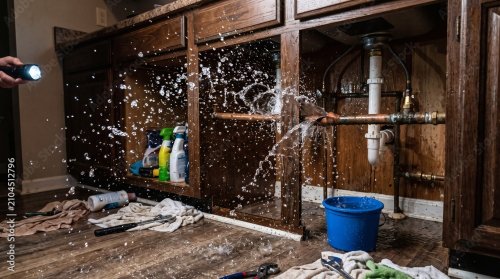
Opening your under-sink cabinet to find a pool of water, warped particle board, or a musty odor is an unwelcome surprise. When a sink drain leaks under the cabinet, the issue is almost always located somewhere along the non-pressurized drainage assembly rather than the pressurized water supply lines. Unlike supply lines that spray water when compromised, drain leaks typically manifest as slow drips or intermittent puddles that only appear when the basin is actively draining or holding a full load of water.
In many Houston homes—ranging from older properties with aging brass and galvanized assemblies to newer builds utilizing modern PVC and ABS plastic—under-sink leaks develop gradually. Recognizing the specific mechanism, symptoms, and exact source of the leak prevents unnecessary panic and guides you toward the correct repair.
The Anatomy of an Under-Sink Drainage System
To diagnose why water is pooling beneath your kitchen or bathroom sink, it helps to understand how the drainage pathway is constructed. Gravity pulls wastewater downward from the sink strainer basket, through a tailpiece, down into a curved section called a P-trap, and eventually out through the wall or floor drain stub-out.
Most modern residential sink assemblies rely on slip-joint connections. These connections use threaded plastic or metal slip nuts that compress a tapered washer—often made of rubber, polyethylene, or nylon—against the pipe to create a watertight seal. When these components experience thermal expansion, physical bumps from stored cleaning supplies, or material degradation over time, the seal compromises, and water escapes.
Common Causes and Diagnostic Clues
Not all under-sink leaks are created equal. By observing when and where the water appears, you can isolate the root cause before grabbing a wrench.
- The P-trap Slip Nuts are Loose: If moisture appears primarily around the threaded connections of the U-shaped trap bend after running water, the slip nuts may have loosened due to vibration or expansion.
- Worn, Hardened, or Misaligned Washers: Inside slip-joint nuts are plastic or rubber washers. Over years of use, these washers dry out, flatten, or split. Furthermore, if a pipe section was installed slightly crooked, the washer will pinch unevenly, creating a persistent drip.
- Corroded Tailpieces or Metal Traps: In older Houston properties featuring chrome-plated brass slip-joint assemblies, internal corrosion can eat away at the metal from the inside out. You might wipe the pipe dry only to find a pinhole leak or crumbling metal underneath.
- Sink Strainer Basket Failure: If you notice water tracking down the vertical tailpiece from the very underside of the sink basin itself, the failure lies at the sink strainer assembly. The plumber's putty or rubber gasket sealing the strainer body to the porcelain or stainless steel sink bowl has likely broken down.
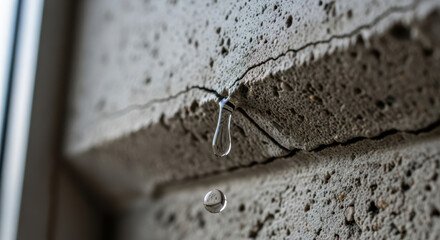
- Micro-Cracks in Plastic Pipes: Plastic PVC and ABS traps can develop stress fractures—particularly if items stored under the sink frequently bang against the plumbing or if the house has experienced severe temperature fluctuations during hard winter freezes.
Safe DIY Inspections and Temporary Checks
Before calling a professional or attempting a repair, you can safely perform several visual and tactile checks to map out the issue.
- Dry the Area Completely: Use a dry towel or paper towel to wipe every surface of the drain pipes, nuts, and cabinet floor until bone dry.
- Run the Water with Purpose: Fill the sink basin completely, then pull the plug. Watch the upper strainer assembly. Next, let a steady stream run while holding a dry paper towel under each slip nut and joint. The paper towel will instantly reveal where the moisture originates.
- Check Stored Item Interference: Look to see if bottles, cleaning buckets, or trash cans are pressed tightly against the P-trap or vertical pipes. Even slight pressure can shift slip joints out of alignment and break the seal.
Safety Warning: Never use chemical drain openers if you suspect a physical leak at a joint or trap. Chemical drain cleaners sit inside the P-trap and can weaken compromised metal or plastic, or splash back dangerously if a connection gives way while dissolving a clog.
Safe DIY Repairs vs. When to Call a Plumber
Many under-sink drain leaks are manageable DIY tasks for homeowners comfortable with basic hand tools.
- Hand-Tightening Slip Nuts: If a slip nut is simply loose, hand-tightening it is often enough. Avoid using heavy pliers or channel-locks to crank down plastic slip nuts; overtightening crushes the internal washer and cracks the plastic threads, turning a minor drip into a major break.
- Replacing a P-Trap Assembly: Standard PVC P-trap kits are inexpensive at hardware stores. If a trap is cracked, corroded, or warped, replacing the entire trap assembly takes less than thirty minutes. Ensure the beveled edge of the slip washer faces the correct direction—pointing toward the receiving fitting.
However, professional help becomes necessary when:
- The leak originates inside the wall or floor behind the slip-joint connections (such as a compromised drain stub-out or corroded cast-iron sanitary tee).
- The sink strainer assembly on a cast-iron or heavy fireclay sink requires specialized basin wrenches to remove and reseal.
- The home's main drainage stack is blocked, causing wastewater to back up under pressure through the sink connection rather than leaking from a loose joint.
Factors Affecting Professional Repair Costs
If you choose to hire a licensed plumber to resolve a persistent under-sink leak, several factors dictate the final cost:
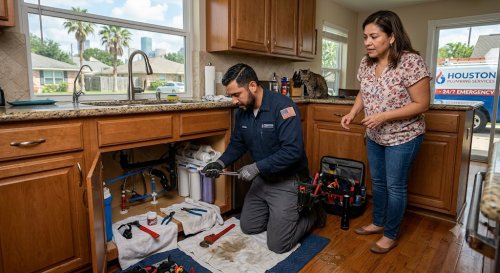
- Access and Cabinet Obstructions: Vanities with complex shelving, narrow compartments, or built-in organizers increase labor time because the plumber must carefully disassemble cabinetry elements to reach hidden drain connections.
- Material Type: Replacing standard PVC slip joints is straightforward and inexpensive. Working with custom, high-end brass, copper, or integrated designer plumbing fixtures requires specialized matching components and delicate handling, increasing material and labor expenses.
- Associated Drain Clogs: If the sink drain is leaking because a downstream blockage is forcing water past poorly sealed joints, clearing the primary clog is required before fixing the leak.
- Structural Water Damage: If long-term leaking has rotted the cabinet base or subfloor, structural carpentry or cabinet replacement falls outside basic plumbing scope, though emergency bypass plumbing may be needed while repairs are made.
Questions to Ask Before Approving Plumbing Work
If you bring in a professional service technician for a persistent sink leak, ask targeted questions to ensure transparency:
- Does this repair address the root cause, or are we simply replacing a worn washer on an aging pipe assembly?
- Are the replacement drain components made of durable, schedule-40 PVC/ABS or standard thin-wall plastic?
- Is the sink strainer basket flange compromised, or is the leak strictly isolated to the lower P-trap assembly?
- Does the estimate include testing the drainage flow and checking for secondary leaks behind the wall?
Frequently Asked Questions
- Why does my sink drain only leak when I empty a full basin of water?
When a basin drains slowly or a full tub of water discharges at once, water fills the upper horizontal and vertical tailpieces under slight hydrostatic pressure. If a slip-joint washer is worn or a micro-crack exists above the static water line of the P-trap, water escapes only during high-volume drainage.
- Can humidity in Houston cause under-sink pipes to leak?
High indoor humidity combined with cold water running through drain pipes can cause heavy condensation to form on the exterior of plastic or metal pipes. This moisture drips down and pools on the cabinet floor, often mimicking a plumbing leak when the pipes themselves are structurally sound. Wrapping lines in insulation or managing cabinet humidity resolves this.
- Should I use Teflon tape on slip-joint drain threads?
No. Slip-joint threads do not hold water; the internal washer creates the seal. Applying Teflon tape to slip-joint threads prevents proper tightening and can distort the nut. Teflon tape is reserved for threaded pipe connections with tapered pipe threads (NPT), such as supply lines and shower arms.
- Is it safe to keep using a sink with a slow under-cabinet drip?
No. Even a slow drip quickly rots wooden cabinet bases, breeds mold, and can suddenly worsen into a full separation if the pipe shifts. Placing a bucket underneath offers temporary relief, but the underlying seal must be addressed promptly.
- Why does my replacement P-trap keep leaking even after tightening everything?
This usually indicates a misalignment between the vertical tailpiece coming down from the sink and the horizontal pipe leading into the wall. If the pipes are crooked, the washer cannot seat flush, creating a gap. Adjusting the height of the tailpiece or trimming the pipe with a hacksaw corrects the alignment.