Why Is Your Sink Faucet Flow Low? Causes & Fixes
Discover what causes low water flow at a sink faucet, from clogged aerators to hidden supply-line issues. Learn safe DIY checks and professional diagnostic tips.


Understanding Low Water Flow at a Sink Faucet
When you turn on a bathroom or kitchen sink and the water trickles out instead of streaming cleanly, it is immediately frustrating. Low water flow at a single sink faucet usually points to a localized restriction rather than a whole-house supply issue, but understanding the underlying plumbing mechanics helps you determine whether you can fix it yourself or need professional support.
Low flow means the volume of water exiting the spout per minute has dropped significantly. Unlike low water pressure—which affects every fixture in a property—low flow confined to one sink is typically caused by debris accumulation, mechanical wear inside the faucet, or a partial blockage in the immediate supply lines beneath the sink basin.
The Primary Causes of Restricted Sink Water Flow
Before attempting any repairs, it helps to know what is actually happening inside your plumbing fixtures. Several distinct mechanical and environmental issues can choke off water volume at a sink:
- Aerator Blockages: The aerator is the small screen device screwed onto the tip of the faucet spout. Over time, mineral scale, rust flakes, and sediment circulating through the water lines get trapped against this fine mesh screen, physically blocking water from exiting smoothly.
- Cartridge or Valve Failures: Modern single-handle and two-handle faucets rely on internal ceramic or plastic cartridges to regulate water mixing and volume. If internal seals warp, break, or become choked with debris, the internal pathways narrow, severely restricting flow even when the handle is wide open.
- Kinked or Restricted Supply Lines: Flexible supply tubes running from the wall shutoff valves to the faucet base can become twisted, pinched, or structurally compromised, especially if items stored under a sink cabinet bump against them repeatedly.
- Partially Closed Shutoff Valves: Angle stop valves under the sink can slip out of position or suffer internal stem failure, leaving the valve only partially open despite the handle appearing to be in the full-on position.
- Sediment Accumulation in Branch Lines: Older properties in Houston with aging galvanized steel or even degraded copper piping can experience internal pipe scaling that breaks loose and lodges right where the supply line narrows into the faucet assembly.
How to Diagnose Whether the Problem is Local or Systemic
The very first diagnostic step any experienced plumber takes is isolation testing. You must determine if the restriction is happening at just one fixture or across multiple locations in the property.
Test both the hot and cold sides of the affected sink independently. Does the flow drop on both settings, or only when you turn the handle to hot? If low flow happens exclusively on the hot side, the issue is likely tied to the hot water supply line, the angle stop valve, or mineral accumulation originating near the water heater. If both hot and cold flows are equally restricted, the problem is almost certainly at the faucet aerator, the mixing cartridge, or the individual shutoff valves.
Next, check other sinks, showers, and toilets in the building. If every fixture in the home has weak flow, the issue is likely a failing pressure-reducing valve (PRV), a partially closed main water meter valve, or a broader municipal supply restriction. If only one sink is affected, you can focus your troubleshooting entirely on that fixture.
Safe Homeowner Troubleshooting and DIY Checks
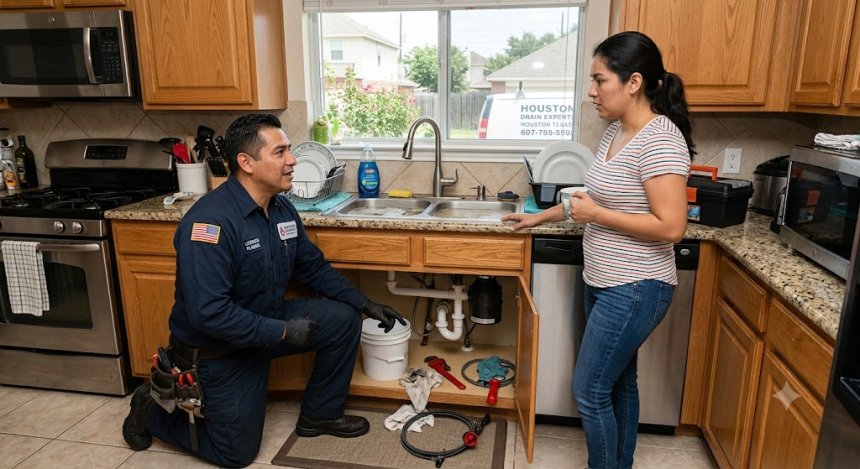
You can safely perform several inspection and maintenance steps without specialized tools or professional risk. Always shut off the local water valves under the sink before attempting to disassemble any plumbing connections.
- Inspect and Clean the Aerator: Unscrew the aerator tip from the end of the faucet spout. (Use a rag and pliers gently if it is tight to avoid scratching the finish.) Inspect the internal screens. If you see white mineral crust or tiny debris particles, soak the aerator in a small container of white vinegar for 30 minutes, brush it clean with an old toothbrush, and screw it back on.
- Check the Angle Stop Valves: Look beneath the sink cabinet and ensure both the hot and cold water shutoff valves are turned completely counterclockwise into the fully open position. Sometimes a valve stem slips so that the exterior handle turns while the internal gate stays partially closed.
- Test Flow Without the Aerator: After cleaning the aerator, briefly turn the faucet on with the aerator removed. If water gushes out with strong, normal volume, your aerator was the sole culprit. If the flow remains weak, the restriction lies further upstream in the cartridge or supply lines.
- Flush Supply Lines (Advanced Safe DIY): Place a bucket beneath the shutoff valve, disconnect the flexible supply line from the faucet tailpiece, hold the open end inside the bucket, and briefly open the shutoff valve. This allows you to see if water surges freely out of the wall supply. If pressure is strong at the wall but weak at the faucet, the blockage is inside the faucet body or cartridge.
- Cleaning or Adjustment: Appropriate when mineral buildup is light or an aerator is simply clogged. This restores function instantly with minimal effort.
- Cartridge or Valve Replacement: Makes sense for modern, high-end faucets where the main body is structurally sound, but internal ceramic seals have failed or become jammed with mineral scale.
- Full Faucet Replacement: Recommended when the fixture is deeply corroded, leaking from hidden internal seals, obsolete, or when repair parts are no longer manufactured. Replacing the fixture eliminates recurring flow failures and updates the plumbing hardware securely.
- Fixture Accessibility: Working beneath a cramped pedestal sink or an undermount kitchen sink with complex garbage disposal and soap dispenser attachments requires delicate maneuvering and extra labor time compared to an open vanity with wide cabinet doors.
- Condition of Existing Infrastructure: If angle stop valves under the sink are old, corroded, or leaking when manipulated, they must be replaced alongside the faucet to ensure long-term reliability. Replacing rusted shutoff valves adds material and labor time.
- Faucet Type and Design: Single-hole deck-mounted bathroom faucets are straightforward to service, whereas widespread multi-hole faucets, wall-mounted spouts, or commercial-grade pre-rinse restaurant units involve intricate multi-point connections and specialized mounting hardware.
- Parts Availability: Standard replacement cartridges are readily available, but proprietary or imported luxury designer fixtures often require specialty manufacturer parts that demand targeted sourcing.
What DIY Actions to Avoid
Never force stuck threaded connections with excessive torque, as twisting fragile brass tailpieces or cracking older sink basins can turn a simple flow restriction into a major leak emergency. Avoid inserting sharp metal objects or wire coat hangers into flexible supply hoses, as puncturing a braided steel or plastic line will cause an immediate indoor flood.
In humid coastal environments like Houston, moisture under sink cabinets can accelerate corrosion on threaded metal fittings. If you notice severe green or white corrosion crust around supply nuts or valve bodies, applying heavy wrench force can snap old pipes. In such cases, professional replacement is safer.
When Professional Diagnosis and Repair Become Necessary
If you have cleaned the aerator, verified that the shutoff valves are wide open, and confirmed that the supply lines are unkempt, the restriction usually involves internal faucet components or aging infrastructure that requires specialized attention.
A professional plumber will approach low flow by systematically testing static and dynamic water pressure, inspecting valve seats, and examining cartridge assemblies. If the faucet is an older model where internal parts are heavily calcified or obsolete, replacing the entire faucet assembly is often more practical and cost-effective than trying to force-clean corroded internal channels.
Repair Versus Replacement Considerations
Understanding Factors That Influence Repair and Replacement Costs
When professional intervention is required, pricing varies based on several distinct logistical and mechanical variables rather than a flat fixed rate.
Before approving extensive plumbing work, always ask your service provider whether the quoted price includes new supply lines and angle stop valves, whether the repair carries a warranty on labor and parts, and if the fixture replacement accounts for potential modifications to existing supply stub-outs.
Frequently Asked Questions
Why did my sink faucet flow suddenly drop overnight?
A sudden drop usually indicates that a chunk of mineral scale, calcium deposit, or pipe sediment broke loose somewhere in your plumbing system and traveled downstream, instantly lodging sideways against the aerator screen or trapping itself inside the narrow ports of the faucet cartridge.
Can a water heater cause low flow at only one sink?
Yes, but exclusively on the hot water side. If sediment accumulation inside the water heater tank or a failing thermal expansion tank restricts hot water delivery, or if debris clogs the hot water outlet nipple, you may notice reduced flow when turning a sink handle to full hot while cold water flows normally.
Should I try to clear a clogged faucet cartridge with vinegar?
You can soak removable ceramic or plastic cartridges in a vinegar solution to dissolve minor mineral scaling. However, if internal rubber seals are deteriorated, warped, or torn, chemical soaking will not restore proper mechanical performance, and cartridge replacement is required.
Why does the water flow sputter and spit when I first turn on the faucet?
Sputtering typically indicates trapped air or partial vapor lock within the aerator or supply line. If air mixes with restricted water flow as it forces past a blockage, it creates a spitting stream until pressure stabilizes.
Is low water flow a sign that my main water line is failing?
Generally no. If your main water line or pressure regulator is failing, you will notice reduced volume and pressure across multiple fixtures throughout the entire property, not just a single isolated sink faucet.